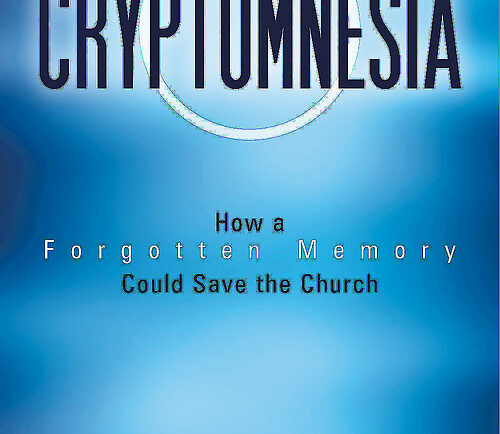
 by Christine A. Chakoian
Abingdon Press, Nashville, Tenn. 136 pages
The world has changed a great deal in the last 60 years. The rate of change is increasing rather than decreasing. Denominationally, we see the effects of this change in declining church membership, stressed budgets, lessening political and moral clout in the community, and fewer new church developments and mission initiatives. Even healthy congregations face these stressors.
The decline of the Protestant church in North America leaves many church leaders wringing their hands, uncertain how to lead their congregations well. Christine Chakoian faces these changes head-on, acknowledging the way that technology influences people’s daily lives and the institutions that contribute to North American culture. Quickly tracing the impact technological change has on retailers, the entertainment industry, the corporate and manufacturing sector, educational institutions, governments and non-profits, Chakoian rightly asks, “Why should we expect religious institutions to be exempt?”
The premise of the book, however, is not to outline the cultural change or reasons for decline, but rather, to remind church leaders of what we have forgotten: that Christian community has faced a similar cultural moment before — and thrived in the midst of it. Chakoian makes the claim that the changes facing the church in North America today — rapid advances in technology and digital communication that lead to the creation of a “global village,” the flattening of hierarchy, an increase in cultural plurality and religious choices — are similar to those changes experienced in the days of early church.
“Just as the Internet is presently linking far-flung people,” she writes, “the ancient world found itself connected by a new engineering marvel: the massive Roman-road building enterprise.” Roman citizens were exposed to new cultures, ideas, marketplaces, philosophies and religions. Amidst the disorientation of that era, Christianity emerged as a religion and thrived.
With any change, of course, comes conflict. This was true for the early church just as it is true now. With pastoral grace, Chakoian weaves together individual story, corporate experience and Scripture that will guide the reader through language, processes and concepts that will be helpful to local congregations and governing bodies as they come to terms with the changes and resulting conflict many are experiencing in mainline Protestant churches. Pointing back to the reactions and responses to change that the early disciples encountered, she encourages discernment of what is essential and should be carried forward and what is adiaphora, or indifferent, and can be left behind in our own time. Essential to this sifting process, she notes, is the practice of listening to one another’s witness of what is of the Spirit that needs to be preserved in the faith. It is through holy conversation in community with one another that we will determine what is essential to carry our Christian witness forward in our day.
In an era where many church leaders and members are stymied by change and the resultant conflict, this quick read is packed full of helpful images and processes — reminders really — of how disciples have encountered change in the past and can graciously, generously and faithfully navigate the change in front of us.
 JESSICA TATE is the director of NEXT Church. She lives in Washington, D.C.