I am grateful to these reviewers for taking the time and effort to respond to my writing. Because the central issue of the book is so complex and contested, it is not surprising that we three articulate different judgments on the matter.
William Pitt responds as “an activist, a person of faith, and a pragmatic realist.” He patiently ponders what it will take to become “unstuck” and answers that it will require “a will to change.” I quite agree with his identification of the key issues: the question of inclusiveness and “tribe,” the issue of who is “my neighbor” as genuine “other,” the losability of the land and ultimately the end of the occupation. His analysis is given poignancy and powerful credibility by the narrative specificity with which he concludes his comment. It is precisely such specificity with the “other” that there may come a “will to change.” Plitt’s analysis makes clear that no “will to change” can arise from power, control, coercion or threat. It is only human vulnerability that will result in being “unstuck,” a vulnerability mostly crowded out by loud ideology.
Christopher Leighton writes as a well-informed, passionate, partisan advocate. Since Leighton has disapproved of my way of thinking for a while, it is no surprise that he disapproves of this effort as well. His response amounts to a disappointment that I did not write the book he would have written. But of course, that was never my intent.
Leighton faults me for not including “historical or political background” in my judgment about the failure of a two-state solution. Of course that background is behind my work and I am fully familiar with it. But my aim is to invite readers into the conversation, and it is not necessary for such a purpose to recite all of that background. It is enough, in entering into the conversation, to see the reality of the present situation that I have accurately described.
Leighton insists, as do I, that the biblical legacy is only a part of the matter in this complex situation. Of course! But that biblical legacy is a highly important component to the argument, because the most ancient land promises fund the contemporary claims of the state of Israel in a completely uncritical way. Appeal to the biblical legacy, moreover, is not limited to sectarian interests or to U.S. evangelicals who give cover to Zionist claims. The biblical legacy, while often tacit, is at the center of the dominant ideology of Israel that skews political reality. And while Leighton may not prefer the terms I have used, there is no doubt that the biblical promise of land is taken in current Israeli claim as absolute and beyond discussion. Such a reading may be “one-sided,” as Leighton judges, but the absoluteness of claims made in contemporary discussion is not in doubt.
Of course I have not, as Leighton claims, introduced an “ancient anti-Jewish trope” into the conversation. All I have done is to see that when appeal to biblical land promise is made central to contemporary policy and practice, one must pay attention to the follow-up in the biblical tradition. In the Exodus tradition and in the tradition of Deuteronomy, the land is indeed losable, as is the status of chosenness. I have no interest in guilt, punishment and sin, and I have said nothing in that direction. Rather the practical question is whether the “land of promise” is absolutely guaranteed, or if there are restraints and requirements that place such absoluteness in jeopardy. The biblical tradition is quite clear on this. It is not “ancient anti-Jewish trope” to recognize this voice in the tradition. It is rather taking seriously the witness of the Hebrew Bible itself. The attempt to silence that dimension of the tradition, as Leighton seeks to do with his unfounded accusation, is unhelpful, to say the least.
I did not engage “Jewish or Muslim thinkers” because my intent is otherwise. My purpose is to see how the biblical tradition functions amid the current complexity, and to see that such absolutist appeal to a part of the textual tradition is a misreading. It is not necessary for such a recognition to load up the pages with other references. Nor is my writing a monologue. It is rather a dialogical engagement with the biblical tradition.
While Zionism may be, as Leighton asserts, “contested and variegated,” there is no such serious contestation or variegation in the actual policy of the state of Israel. I am fully familiar with the work of Butler and I have written a review of Novak’s book that is simply one more reiteration of the absolutist claims of Zionism.
Leighton makes an appeal for “balanced … analysis.” But the wretchedness of the treatment of Palestinians that appears to be unspoken state policy is Israel makes “balance” a category mistake. Balance can hardly be entertained in the midst of systemic injustice. It is of no help at all to add leaned commentary to an issue in which the violation of human safety and well-being are at stake. My writing is an attempt to consider that human violation in light of the biblical tradition. It is a modest claim on my part, but one that must not be made more complex than it in fact is.
My intent in this little book is to invite readers into an urgent conversation, an intent greatly aided by the study guide David Maxwell has prepared for the book. It is my expectation that these reviews and my response to them will serve to summon more folk into this demanding issue upon which so much depends for our common well-being.
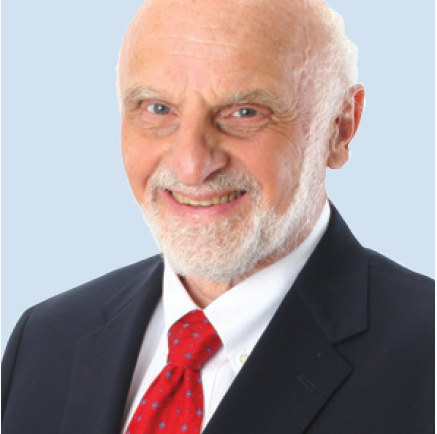
 WALTER BRUEGGEMANN is William Marcellus McPheeters Professor Emeritus of Old Testament at Columbia Theological Seminary. He is a past president of the Society of Biblical Literature and an ordained minister in the United Church of Christ.