 Editors: Jason Byassee and L. Roger Owens
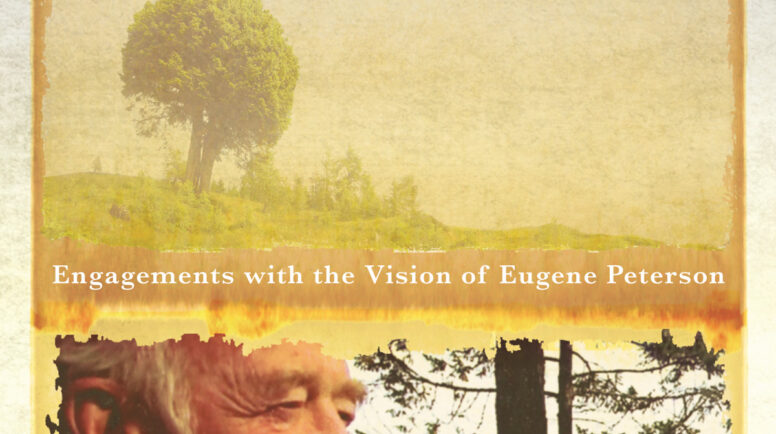
Wipf and Stock Publishers, Eugene, Ore. 222 pages
I often give a gift book by Eugene Peterson to pastor colleagues, particularly those beginning ministry. A friend did the same for me on the occasion of my ordination, a gift far more influential than any other. (At that time, those outside evangelical circles looked upon Peterson with suspicion, notwithstanding his admiration for Wendell Berry.) “The Contemplative Pastor” set a vision for my pastoral life that had been deeply shaped by social activism. Since then, I’ve read nearly every book Peterson has written, and it is safe to say that few people have influenced my understanding of the practice of pastoral ministry more than him. His commentary on Revelation, “Reversed Thunder,” remains among the most imaginative theological commentaries of my shelf. (And he is no longer looked upon with suspicion by fellow mainline Presbyterians.)
One is tempted to borrow a title of one of his books and say simply, “Eat This Book.” Jason Byassee and Roger Owens have assembled a stellar company of pastor-theologians to write essays (“engagements”) of how the vision of Peterson has influenced their lives. Many of the contributors are well known with a following of their own: Anthony Robinson, Lillian Daniel, Will Willimon, Stephanie Pausell, Martin Copenhavor, Carol Howard Merritt and James Howell, among others. Each testifies with gratitude to some aspect of Peterson’s practice that has sharpened their own work. Sabbath keeping, prayer, Scripture, imagination, steady attention to the local, God-centered ministry: These are the themes of Peterson’s life that come under loving scrutiny in these “engagements” with his body of work/writing.
The authors, though, have much more respect for Peterson and more experience in ministry to offer simple adulation. They probe his usual themes as conversation partners who are interested in questioning the limits and sharpening their practice by offering critical responses. This critical engagement is what makes the book so valuable. Many pastors under the influence of Peterson find it hard to question his vision for pastoral ministry because it is such a welcome difference to contemporary practice. How does one properly question the quiet pastor who has consistently done the very things that most pastors yearn to do: pray, study Scripture, read deeply, write, tell stories, provide spiritual guidance and prophetic criticism without descending into frenetic church activities?
I am among many, including several of these writers, who declare Peterson to be the reason they stayed in pastoral ministry during particularly difficult times. This makes his own confession in his memoir “The Pastor” so ironic. Most of the time, he says, he didn’t know what he was doing and considered himself a failure. To the rest of us, that is stunning news (and strangely helpful). The authors, seasoned pastor-theologians in a variety of settings, show us how to engage Peterson critically with profound appreciation for his life and vision. The four sections focus on particular aspects of ministry where Peterson has been influential: words, institutions, people and life.
It’s the kind of conversation that Peterson would learn from and appreciate. In fact, his response would have made this book even better. Anyone who has been influenced by Eugene Peterson, or wants to know why so many others have been, will appreciate these engagements.
 ROY HOWARD is the pastor of Saint Mark Presbyterian Church in North Bethesda, Maryland, and book editor of the Presbyterian Outlook.