 by George Hunsinger
Wm. B. Eerdmans Publishing Co., Grand Rapids, Mich. 296 pages
REVIEWED BY MICHAEL BUSH
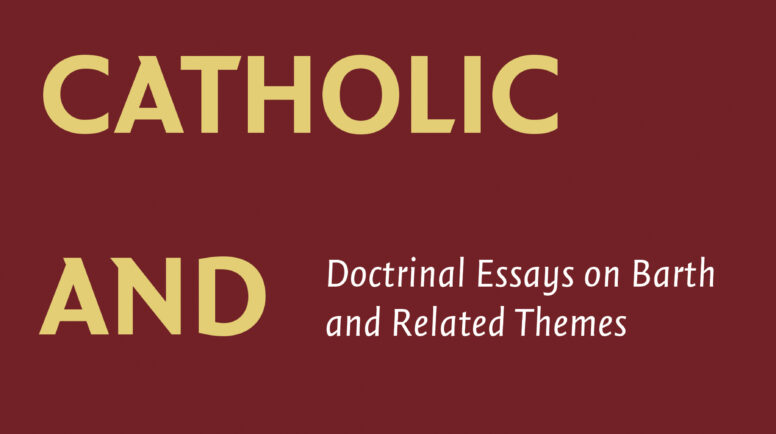
Though the title suggests that this is a book about the theology of Karl Barth, it is mainly a book about God. Here as elsewhere, George Hunsinger seeks the truth about God using the theology of Barth as his lens. In a time when theological writing has long been largely about method, Hunsinger continues to help us think less about ourselves, our thinking and our thinkers, and more about God. He sees Barth’s apprehension of God as at once evangelical (that is, confessionally Protestant), Catholic (because of his approach to ecumenically shared doctrine) and Reformed (in that this is Barth’s tradition and because of the way Barth configures the doctrine of election).
This volume begins in the territory of Hunsinger’s previous book: his debate with his Princeton Seminary colleague Bruce L. McCormack. These scholars’ disagreement has clarified important issues, among them the hopeful thought that we can still engage doctrinal questions such as the relationship between Trinity and election in a way that shows they matter. Yet surely we have learned from that debate what can be learned. Here, Hunsinger offers in the third chapter a modified and, one might hope, final version of his previously published “25 Theses,” having prepared the ground in the first two chapters. He then turns his attention to other matters. The range of theologians and topics Hunsinger engages makes good on the promise of the title. Along with straightforward exposition of Barth, he seeks theological insight by comparing and contrasting him at certain points with Irenaeus, Thomas, Calvin and others. In one of the essays on sanctification, we work through Luther, Calvin and Barth, finding that Luther’s “again and again” approach has much to recommend it alongside the “more and more” typical of the Reformed thinkers. An engagement with Rudolph Smend’s mostly-forgotten essay on Barth’s theological exegesis contributes to a discussion that has borne good fruit in the last 15 years.
An English translation of the introduction to the German edition of Hunsinger’s “How to Read Karl Barth,” is printed as an appendix, and yet is among the most valuable contributions in the book. Here is useful advice for beginners with Barth, which may help those who have given up to attempt the “Church Dogmatics” again. For those familiar with Hunsinger’s original book, his further reflections on the motif of actualism in Barth clarify material that he had not yet “fully worked out” when he wrote it. In this new material, he outlines the importance for grasping this motif of Jesus Christ’s “threefold temporal form,” in which Christ is “the same yesterday, today, and forever” (Hebrews 13:8).
Nearly 20 years ago, T.F. Torrance told me he believed George Hunsinger had one of the most able theological minds in America. Assuredly the essays in this volume provide examples of the kind of hard-won theological insight that led Torrance to that assessment. If Reformed theology is ever to regain the will to speak about God, untethered from long-standing but doubtful obsessions with theological method and merely ethical concerns imported from political discourse, it will be because we learn from such examples of close attention to God, the subject matter of theology, as Hunsinger offers in these essays.
MICHAEL BUSH is interim pastor of First Presbyterian Church in Athens, Alabama.