Guest commentary by Rachel Srubas
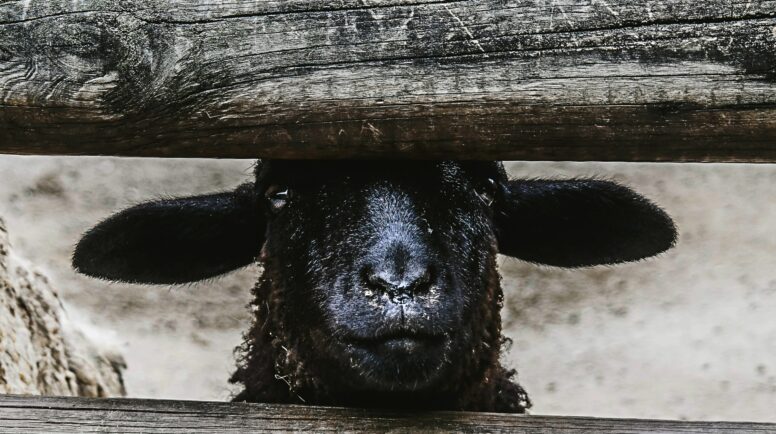
I have other sheep that do not belong to this fold. I must bring them also, and they will listen to my voice. So there will be one flock, one shepherd. – John 10:16
The fact that my name, Rachel, means “lamb” in Hebrew partially explains why the Good Shepherd is my favorite of Jesus’ metaphors for himself. A deeper reason why I love the Good Shepherd is that I was, and am, one of his “other sheep.” Even when my belonging to his fold seemed impossible, Jesus had me in his care.
Raised by parents who rejected the Christian traditions of their own upbringings, I was unchurched for my life’s first 22 years — and was an angry atheist for seven of those. Yet true to his word, Jesus brought me along. Summoned by his imperceptible, irresistible voice in young adulthood, I found my way to worship, faith and baptism in the Presbyterian Church (U.S.A.). And now, since the turn of the millennium, I have been a pastor, which is another word for shepherd.
You might think that by now I would see myself as a full-fledged member of the flock. But my sense of myself as one of the “other sheep” persists. Vocationally, my dual occupations as a preacher and as a poet set me apart from the majority. A pulpit can be a lonelier place than many realize, especially for a solo pastor. So, sometimes I seek solace in belonging to the Good Shepherd who values otherness. He implies that his flock will remain incomplete and disunited until all are welcomed, including those considered odd.
Temperamentally, I’m susceptible to feeling like a misfit. It’s a sensation that warrants good-humored and compassionate examination. As I’ve grown older, I’ve learned to laugh lovingly at my tendency to identify with Radiohead’s weirdo anthem, “Creep.” I realize that there’s a difference between a self-indulgent sense of terminal uniqueness and genuine otherness. I know I’m not as other as many others. I’m straight, white and married.
However, several times during my ministry, I have been reviled and persecuted by people who seemed to feel threatened by the otherness of a woman who proclaims the good news in an unsettling way. My most wounding ministry experiences have been the occasions when churchfolk treated me as though I did not belong among them or deserve their respect. I have been stunned by the reactionary unkindness of a few of Jesus’ own followers. But why? From ostracizing to scapegoating, Scripture makes clear that human beings commit manifold exclusionary sins for the sake of social dominance and other, lesser aspirations than unconditional love.
Many of the religionists who heard his Good Shepherd sermon subsequently demonized Jesus, imposing diabolical otherness on him (John 10:20). Small wonder. He invoked and claimed a far higher, holier power than that which they derived from institutional prestige. Comparably, some present-day North American preachers risk castigation when they point out to members of their own flocks that the practice of biblical hospitality means welcoming Middle Eastern refugees.
As we move deeper into this U.S. presidential election year, I foresee a hazardous season for preachers determined to remind worshippers that Jesus has sheep other than those who agree with them, look like them and worship like them. Some of those other sheep may never belong to a church, but they belong nonetheless to the Lord. We would do well to pray for pastors’ courage and for their flocks’ receptivity to the whole, demanding, life-giving gospel. And while we’re at it, let us also pray for our denomination, potentially as divided as the fractured faith community that first heard Jesus describe himself as the Good Shepherd. The long-term integrity of the PC(USA) depends in part on our openness to people who hear in Jesus’ words other messages than those that keep our minds and congregations cozily unchanged.
 RACHEL M. SRUBAS is the pastor of Mountain Shadows Presbyterian Church in Tucson, Arizona, where she also practices spiritual direction.