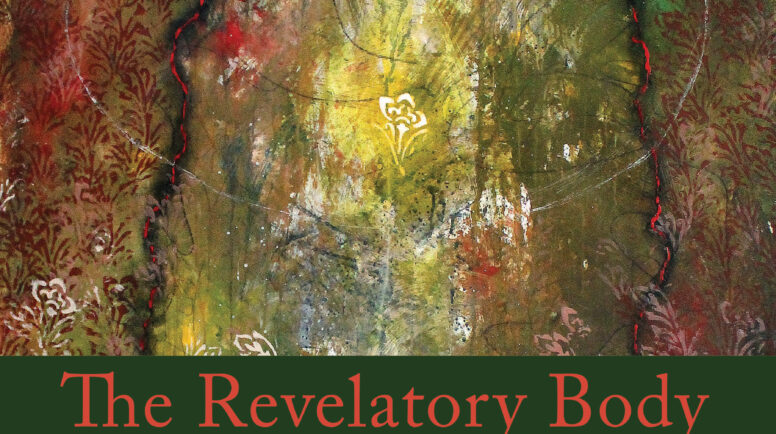
 by Luke Timothy Johnson
Wm. B. Eerdmans Publishing Co., Grand Rapids, Mich., 256 pages
This is an extraordinary collection of essays by a first-rate scholar and theologian who has written extensively on early Christian traditions. In his book “Living Jesus” he famously declared to his Jesus seminar critics, “if Jesus is not raised, then Easter is nothing more than autopsy report.” Here, Johnson argues “theology must always begin and always find renewal, not with words found in texts, but with the experience of actual human bodies.” His proposal directly offends and challenges the Barthian tradition, yet Johnson does not abandon Scripture or the creeds. Rather, he is clear in his intention to enliven both the reading and interpretation of sacred texts by paying careful attention to the presence and power of God in actual experiences. Mincing no words, he writes, “The idolatrous dimension of theological language appears when it claims to be sufficient to the interpretation of God’s work in the world as well as necessary to such interpretation.”
This process of discernment is necessary, Johnson argues, for theology to be engaged with the living God rather than enclosed by idolatry of words without life. He is concerned that textual experts or fearful readers encase God in texts that are easily controlled and managed. Although Scripture itself certainly testifies to the presence and power of God active in human experience, the process of shifting attention to the text rather than the experience began early in the Christian tradition. The consequence of such a shift is a dead God addressed in proper sounding theological, biblical and liturgical language, but who is no longer truly present in actual life. “A turn to human experience actually opens Scripture to what it was intended to address in the first place; likewise, attention to the ever active self-disclosure of God in the world actually supports the statements of the creeds.”
Theology, according to Johnson, must be an inductive art, perceiving the Spirit of God disclosed in human bodies. “I hold that theology seeks to articulate and praise the presence and power of God in the world, and that this power and presence is an ever-emergent reality.” He probes this conviction by exploring the body in play and in work, the sexual body, the aging body and the exceptional body. There is fresh honesty here about both the limits of Scripture and the depth of human experience that remains as mysterious as the living God. As he ponders the challenges of the aging body in a culture that adores youth and denies death, Johnson writes poignantly, “more and more, I have been struck by the truth that the world leaves us before we leave the world. I am increasingly aware of how strange the world appears to me.”
Johnson is a careful scholar; his enormous gifts are displayed here with humility and honesty. He believes that God is a living God whose presence and power is revealed in bodily experience. In the end, his argument is an invitation to discern this God in all experiences.
 ROY W. HOWARD is the Outlook book editor and pastor of Saint Mark Presbyterian Church in North Bethesda, Maryland.