Guest commentary by Kristin Willett
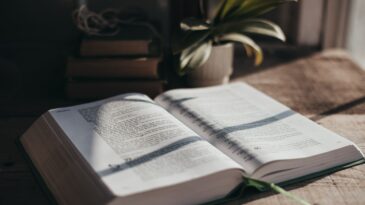
The manual to life, a guidebook, a moral compass, a set of rules, our faith history… the Bible has been called all sorts of things.
 As I was sitting in church on Sunday listening to my husband, Brandon, preach his sermon, I was drawn to think of the Bible a bit differently than I have in the past. Really, I think it just gave me a framework to understand and explain what I have always viewed the Bible to be.
Brandon shared the story of God calling Jeremiah. He shared a bit about the traditional structure of a “call narrative” that is found in the Bible. A call narrative is the way that God addresses an individual and charges them with a task in the world. It is often a back-and-forth between God and a person and contains four parts:
- Divine initiative. God acts first. There is a problem and God identifies someone to act. God confronts that person and reminds the individual of his or her identity and who God is.
- Commission. God sets the task ahead and tells the called one that he or she is the person for the job.
- Human objection. The person comes up with a good excuse (or excuses) as to why God is wrong and why he or she is not qualified for what God asks.
- God’s reassurance. God gently reminds the one who is called of who God is and what God is capable of doing. God is able to overcome any person’s shortcomings. God is present.
I believe the Bible is meant to be a part of our personal call narratives.
The Holy Spirit is acting in each of our lives and urging us to believe. God is the great initiator. For many, as we begin to inquire more deeply due to this inner urging, we turn to the Bible. Within its pages we learn who God is: our creator, our redeemer, our sustainer. We also learn who we are: beloved creations of God, who God seeks out and loves as we are.
As we explore the stories held within the pages of the Bible, the Spirit’s urgings continue. We begin to see how the words on the page are not just stories told of others, but they are our stories. We read and the Spirit speaks. God reveals to us our own calling, our own commissioning. God sets the stage for what the world is capable of – what God’s Kingdom looks like – and shows us how out of whack it is presently.
We aren’t supposed to read Scripture and feel justified in how we live our lives. We aren’t supposed to hear the story of God and believe that the status quo is acceptable. We are supposed to buy into the vision and, even more than that, we are supposed to believe that God’s vision will become reality. But that demands action – our action.
But then our humanness sets in: our self-doubt, our lack of trust in God’s ability. We come up with great excuses. Maybe like Jeremiah we say we are too young. Or, like Sarah, we say we are too old. Perhaps, like Moses, we say we aren’t eloquent enough. Or, like Jonah, we just don’t want to. But that is why the Scriptures keep retelling the stories of others just like us and how their huge flaws were not so huge, how their great excuses seem so insignificant once God was through with them. God uses these stories to reassure us, to show us that if God can do that with them (such as freeing an entire people from slavery through the words of a stuttering outcast), then God is also capable of using you and me with all of our flaws and brokenness to change the world.
Perhaps the most convincing proof to me that the Bible is intended to be a part of our own call dialogue with God is how often within Scripture we hear God say “I am with you” or “I am here.” Over and over, when life seems scary or uncertain those words are shared. When a person doesn’t feel up to the task ahead, God reminds that God is present and will be the guide. Those words are directed to us today. When we feel overwhelmed by what God asks of us, when we present our excuses, God rebuts with assurance of God’s insistence to be our God through it all. That’s the message of the incarnation isn’t it? God chose to come and live among, to be with us, to show us just what God had in mind and how we can come closer to living into that vision. The cross and empty tomb hit it home as well. God is bigger than our greatest fears. God is bigger then our biggest mistakes/ God’s love covers all of it. In the end, God is still with us.
So what is God placing on your heart? What are you being called?
We each have our own callings. We hear them daily as God urges us to reach out to an old friend or help the woman next door shovel her drive. Sometimes they are simple, sometimes they are grand, but almost every time they are met with similar excuses as to why we shouldn’t act: we don’t have time, we don’t have the skills, we just can’t do it. Yet God will continue to use the Bible to instill in us the assurance and the empowerment that we are indeed called to action, and with God we are more than capable.
My hope for you is that you immerse yourself in the stories of the Bible. I hope that as you do, you are captivated by God’s vision for the world – so captivated that you ache to see it come into being. I hope that you hear God’s whisper in your heart for how you are called to be a part of the work of the Kingdom of God. I hope you throw your best excuses at God, but then I hope you listen and believe as God shows you that those excuses are beside the point, that God is capable of using you. I hope you act.
 KRISTIN WILLETT co-pastors First Presbyterian Church with her husband in Miles City, Montana. She has three young boys who inspire her and challenge her constantly. Blogging is one of her passions and you can read more at simplicityandspirituality.com.