by Sarah Griffith Lund
The tears were ancient, welling up from generations of silence. As Jack, an octogenarian with a smart red plaid button-down shirt, stood in the back of the worn sanctuary of the church he loved, he nodded as he shook my hand and said, “Yes, it’s there in my own family and we don’t talk about it.” That Saturday, I was serving on a panel that Jack’s pastor had organized to discuss mental health. Church members and those outside of the church community, people from other congregations and even people from out of town came to break the silence about mental illness, family and church. Local school educators came, farmers came, bankers came, young people came, social workers came, pastors came, mental health advocates came and retirees like Jack came. Later that afternoon we ate lemon bars together in the church basement.
On the panel I shared part of my story about mental illness, family and church. It’s a God-story that I’ve been called to tell. While it’s my family’s deeply intimate and personal story of severe mental illness, what I’m learning is that it is also the church’s story. Even though the church is one of the last places in society where we talk openly about mental illness, as the church we are impacted by it tremendously.
Pastors are at risk for experiencing high levels of stress, anxiety and depression. According to one study by the United Methodist Church, half of the pastors surveyed confessed that ministry stressed them out, and a quarter of them reported symptoms of depression. As congregations continue to experience significant strains on their budgets and challenges to their very survival, stress among pastors is likely to increase. Ministry can be isolating and lonely, which exacerbates feelings of despair. Compassion fatigue is another occupational hazard, which can also put pastors at risk for developing mood disorders if not addressed and remedied.
Pastors are also on the front lines, often the first person to come into contact with a parishioner with a mental health crisis. According to Health Services Research, pastors are contacted more often than psychiatrists or general medical doctors by people with mental illness. This research concludes that pastors, whether we want to or not, play a crucial role in mental healthcare treatment. Yet how many pastors are actually trained to recognize mental illness or provide appropriate therapy? There a few seminaries, such as Christian Theological Seminary, that offer dual-degree programs for people seeking training for ministry and mental health care.
In the church’s efforts to be holy, we have sacrificed what it means to be whole. At times the idealized spiritual life has masked a hurting, broken spirit. For too long it was considered unholy to have a mental illness or a family member with a mental illness. Heaven forbid you are a pastor with a mental illness. So, like me, many Christians have kept mental illness hidden, choosing silence over shame and stigma.
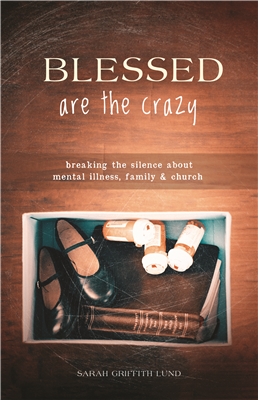
 Anna Carter Florence, professor of preaching at Columbia Theological Seminary says in her book “Preaching as Testimony” that women in particular have been socialized in the church to silence our stories. In a Young Clergy Women’s conference she told a crypt full of us (yes, that’s where we gathered at the National Cathedral), that the church needs to hear the God-truth that we are uniquely designed to share. We can most authentically do this by telling our stories, our testimonies. I was converted and called at the same time. Days before the conference, I officiated my father’s funeral. My father died from untreated, lifelong mental illness. The pain and truth that I privately carried as I struggled for decades as his daughter to love him, called out to be set free. Never before had I talked about my father’s severe mental illness. Inspired by Carter Florence’s charge in the cathedral crypt, I wrote my testimony and in 2014 Chalice Press published my first book, “Blessed are the Crazy: Breaking the Silence about Mental Illness, Family and Church.” In the book I tell the story of my father’s battle with bipolar disorder, the helpless sense of déjà vu as my brother struggles with his own mental illness and serving as a spiritual advisor for my cousin, a man with mental illness, executed for murder. Through these challenges and despair, I testify to
the ways that churches can be sacred spaces for people who have mental illness and their loved ones. The response from churches across denominations and across the country to this testimony of how God shows up in families broken apart by mental illness has been incredible. There is such a deep hunger in the church for these real, honest and hard conversations. I believe God is calling the church to be part of the social movement to end the stigma of mental illness.
Since the book’s publication, I’ve been giving my testimony, following the call of God’s Spirit to speak to pastors, lay members and mental health care providers. After sharing my story, I then have the honor of listening to the sacred stories of others. This ability to create safe and sacred spaces is one of the gifts the church has to offer a hurting world. As I write in my book, “To tell the true story is to heal.” In the church we have it in our DNA to create a communion of compassion, circling all who suffer, providing comfort with the knowledge that we are not alone. Christ shows up in the raw and vulnerable breaking forth of truth. The Spirit of God is present in the redemptive sharing and listening of our stories. The power of personal testimony is the power of the gospel. It’s why it works every time.
Here are 10 ways that congregations can be supportive of those with mental illness and their families:
1. TALK. Talk about mental illness. From the pulpit, in the pews, in the fellowship hall, in the Sunday school classroom, in the nursery, in the kitchen, in the boardroom, in the bathroom and in the parking lot. Tell your own story. When you break the silence, you help lift the stigma and shame.
2. EDUCATE. Sponsor an educational forum about mental health at the church and invite the neighborhood. Invite local mental health care providers to speak about warning signs, treatment options and recovery steps. Promote a holistic approach to recovery and help to bridge the faith community to the professional healthcare community. Outreach is powerful and relevant when it touches where people hurt most.
3. PRAY. Start a mental health ministry. It can be a small group of people who care deeply about the issue. Start by praying for God’s guidance. Pray for people who are impacted by mental illness and their families.
4. EQUIP. Get training and educate yourself. Mental Health First Aid is an excellent national, community based educational program. Learn more at mentalhealthfirstaid.org.
5. CARE. Talk to your local community leaders and elected officials about how mental health impacts the community. How are people with mental illness in your town treated during a crisis? Is there a local crisis intervention team (specially trained officers equipped to respond with care to the often complex crisis involving mental illness)?
6. RESPOND. Always respond when someone tells you he or she is struggling with a mental health challenge. It can feel humiliating and shameful for a person to have shared about a situation and to have no response. Often we don’t know what to say and are fearful of saying the wrong thing. However, the silence can be experienced as judgment or avoidance. You can start by thanking the person for being willing to share. You can also ask the person how he or she would like you to pray.
7. CALL. Know how to get help for yourself and how to refer others, whether it’s the local community counseling center, the National Suicide Prevention Lifeline 1-800-273-8255 or the crisis text line (text START to 741-741).
8. SERVE. Consider Jesus’ instruction to care for the sick and those in prison. A disproportionate amount of prisoners suffer from mental illness. How might your church be called to serve them?
9. HEAL. May is Mental Health Month. Be aware of your own mental well-being. Honoring the Sabbath is good for mental health. Take steps to manage stress and care for your whole body; the brain and the body are connected.
10. HOPE. Share the good news that there is hope of healing and recovery from mental health challenges. The Christian faith offers us powerful language to talk about the very real hardships we suffer and the possibility of new life. My favorite Scripture comes from Psalm 23, “though I walk through the valley of the shadow (of mental illness) I will fear no evil, for thou art with me.” Holding hope for others through prayer and support is a spiritual gift we can share.
 SARAH GRIFFITH LUND is an ordained minister in the United Church of Christ and Disciples of Christ (Christian Church). She is the vice president for seminary advancement at Christian Theological Seminary in Indianapolis and serves as the vice chair for the United Church of Christ Mental Health Network.
Click here to read the Outlook review of Sarah Lund’s book.