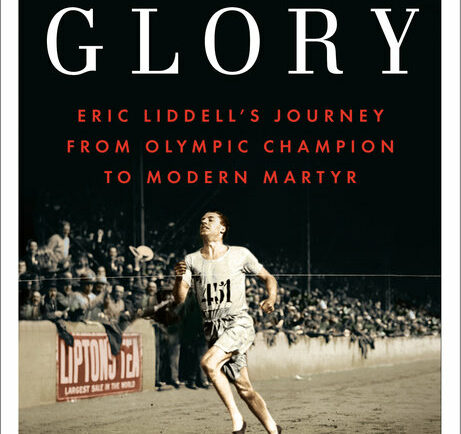
 by Duncan Hamilton
Penguin Press, New York. 400 pages
Reviewed by Neil Craigan
When it comes to understanding the life of Eric Liddell, most people are limited to the scant and somewhat inaccurate information gleaned from the movie “Chariots of Fire.” In “For the Glory,” Duncan Hamilton presents the reader with a full and thoroughly researched account of the life of one of Scotland’s greatest heroes.
This book should have broad appeal. For readers with an interest in sports, there is ample account of Liddell’s life as a runner. For those who are interested in learning more about living a life of faith, there is the story of a devoted Christian missionary living out his calling under difficult and trying circumstances. Or for those with an interest in history and war, it offers great insight into the impact of World War II on the lives of foreign nationals in a Japanese internment camp. In portraying the life of Liddell, Hamilton weaves in short biographic sketches of many of the people whose lives touched or were touched by Liddell’s. This helps create a robust framework from which the reader can better appreciate the impact others had on his life and the influence he had on them. As a result, careful and thoughtful readers are invited to reflect on their own journey and the impact others have on their lives.
Throughout the book, Hamilton emphasizes Liddell’s deep faith and conviction — a faith built solidly on his belief in the life, death and resurrection of Jesus and heavily influenced by the Sermon on the Mount. This provided Liddell the strength to stand firm in the face of great opposition to his stance on Sunday running. It also provided him with the strength and fortitude he needed to abandon the success of this world for the life of a missionary and it sustained him through the difficult life in China during WWII, ending with his time in a Japanese internment camp. Liddell’s faith was a lived faith.
Hamilton shows Liddell as a man of his word, with great personal integrity and fortitude. Nowhere is this clearer than in his commitment to China through the London Missionary Society. As war broke out between Japan and China, Hamilton hints at the London Missionary Society’s lack of knowledge or concern about what was actually going on in the region. They refused to allow Liddell to leave, and even though it was clear to him that this was the wrong decision, he never questioned it.
Hamilton’s description of life in the internment camp, for which he drew from many firsthand accounts, describes Liddell as a man who rose early for an hour of prayer and Bible study before working hard to make camp life as pleasant as possible for all the internees. Portraying Liddell not as a religious zealot, but as a man who had a deep and abiding love for Christ, Hamilton notes how “he even refused to condemn or criticize the soldiers who attempted to bully him. … For Liddell the Japanese were not to be feared or hated, but sought as sheep far from the fold.”
In the epilogue, Hamilton gives us a glimpse into the legacy of a life well lived. Such was the life of Eric Liddell.
Neil Craigan is pastor of First Presbyterian Church in White Bear Lake, Minnesota.