We live times of extreme feelings and beliefs, when we staunchly bunk ourselves into camps and stay there without wanting to reason with whomever else we don’t agree. However, to live a full, expansive, blessed life, we must wrap ourselves in an inner trust of God’s love so we can cast away all sorts of fears. Our faith can be a place of assurances, but it is also a place of ongoing challenges — a place where we are challenged and changed by the Holy Spirit!
The Reformers knew that faith is not a stale place where we don’t move or keep holding to an unmovable identity. Instead, the Christian faith is a place for us to wrestle continuously in a world that does not carry the very love and justice God wants us to live with one another. But due to our fear, we become stale and fearful. A stagnant faith is one that cannot bless anyone since it always asks to be blessed instead. This kind of faith drowns the very source of life that God gives to us to live out our faith through love and transformation.
In September, the World Council of Churches created a liturgical resource to be used during a World Week for Peace in Palestine and Israel. The theme was “Dismantling Barriers.” This resource called us to wrestle with our faith and what is going on in the world, to engage into the renewing of our minds and to bless those who are being crushed and killed and destroyed.
Let me tell you my personal story: I grew up learning that as Christian I had to maintain unavoidable support for the State of Israel. Anything that would not support Israel was against the will of God. Thus, Palestinians were always seen as evil people who fell off of the tree of Jesus Christ and needed to be erased or pushed away. Reading the material of Midnight Call, a para-ecclesial movement, I learned that Israel was the people of God that had to be protected at all costs.
Moving through life, it took a long while for me to see that the people of Israel is not the same as the State of Israel. I learned that the State of Israel is not above and beyond ethical and moral questions, and that they cannot do whatever they want in the name of God. By seeing the ways Israel is massively destroying Palestine and Palestinians, the construction of the separation barrier, the bombarding and killing of people, the destruction of schools and hospitals and the closing off of their own natural resources, I realized these actions cannot be supported if we are to hold on to the witness of Jesus Christ who demands us to love one another.
In any case I hope we will continue to engage in prayer, listening to the unending stories of horror from many Palestinians and trying to find bridges with people of conscience who are more interested in the wellbeing of people rather than the seizure and protection of land. Our challenge is to pray with the same love and fervor for both Palestinians and Israelis. Pray for equality of rights and solutions for Israel and Palestine. Loving and blessing madly all who live in Israel and Palestine.
I know that we might be of radically different minds on this subject, but I hope we can both pray together with our communities and ask God to bring peace to this region. If we bless them, our blessing can provide healing and grow into networks of support and transformation.
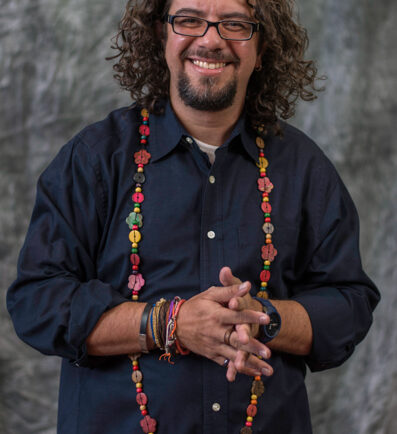
 Cláudio Carvalhaes is associate professor of worship at Union Theological Seminary in New York. He is a teaching elder in the PC(USA) and a member of the Presbytery of Southern New England.