LOUISVILLE (Outlook) – From the earliest beginnings of the World Council of Churches, at its first assembly in Amsterdam in 1948, the question of violence against women and whether women’s voices are heard in the church has been an enduring issue and a matter of deep concern.

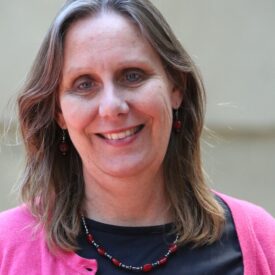
When that first assembly was in its planning stages, in the ruins after World War II and with the member churches desperately hoping for unity, “the women started asking questions,” said Fulata Lusungu Moyo, an African theologian, a native of Malawi, and the World Council of Churches’ programme executive for Women in Church and Society.
At that time, “it was very clear. They said ‘women are actually the dynamism of the church, but are invisible.’ ”
Push ahead nearly 60 years – after the Ecumenical Decade of Churches in Solidarity with Women (which ran from 1988 to 1998), and at a time when the news is groaning with reports of the sexual trafficking of women; of the kidnapping and rape of women in conflict zones around the world; of accusations against U.S. presidential candidate Donald Trump about his unwanted sexual touching of women.
The World Health Organization has stated that about one in three women experiences physical or sexual violence in her lifetime, with most of the perpetrators being intimate partners, Moyo said.
“We have to take stock,” to offer witness to the violence, Moyo said during a presentation Oct. 18 at the national offices in Louisville of the Presbyterian Church (U.S.A.). Consultations made during the ecumenical decade, in which women paid visits of solidarity to places of violence around the world, led to the Thursdays in Black campaign – an effort to end rape and violence towards women. The idea: show solidarity with women who’ve been assaulted by wearing black, and to work on behalf of justice, so women can be safe.
It’s important to both celebrate unity in diversity and “to have the courage to visit our wounds” – to acknowledge the pain that exists, Moyo said.
During the ecumenical decade, the women-to-women solidarity visits included trips to:
- Argentina, to visit the Mothers of the Disappeared (Mothers of the Plaza De Mayo), who every Thursday gathered in the plaza in Buenos Aires to protest the kidnapping of their children from 1976 to 1983 during the military dictatorship.
- The Black Sash movement in South Africa.
- The protestors against genocide in Bosnia in the 1990s.
- The Women in Black antiwar movement, which started in Israel.
They met women protesting against rape used as a tool of war. “Wherever they went, they also discovered that actually not just in conflict areas, but even in the most peaceful countries, women’s bodies were a battlefield,” Moyo said.
World Council of Churches leaders know that in part because of the stories courageous women tell.

In August, Moyo met with representatives of the Nigerian Council of Churches to launch the Thursdays in Black campaign there. They wanted someone from outside their community to talk about this, because “it’s an area of life that is not easy to talk about,” she said. “I was there to break the silence.”
To do so, she spoke of her own experience of sexual abuse when she was nine. “I was sexually violated at nine, and I couldn’t talk to anybody, not even my mother,” Moyo said. “Because in the first place at that age when you are violated, it is something you are so confused about – whether you are to blame for what happened, or whether that’s what is expected for every young girl. I was really confused.”
She was a tomboy, venturing out with her father to feed the cattle rather than staying home with her mother and sisters. She did not conform. “So I feel that if I told my mother, she would blame me on top of what I had already experienced.”
When Moyo shared her story last summer in Nigeria, “I looked at the faces of the people, and discovered it was not just my story, unfortunately. It was the story of so many women and young women. It was a story that has been tucked away neatly. … It was important to be vulnerable, so that others can find their voices if possible.”
The World Council of Churches also is looking inside, at its own record of inclusiveness.
Historically, the theologians involved with the council were “basically white men, mostly old,” Moyo said.
Inclusiveness means not just having both men and women in the room as decisions are being made, but also parity in who has influence, she said. When you talk about equality of influence, “it’s not just filling a space, like in a chair, but also influencing the minds of people.”
There also has been a push within the World Council of Churches to develop a gender justice policy that can provide tools to use when violations take place. They’re also looking at existing instruments from other groups that might be valuable, such as CEDAW – the United Nations Convention on the Elimination of all Forms of Discrimination Against Women, which the United States has so far not ratified.
“If we want to really end sexual and gender-based violence, we have to do it together, and we have to bring together our expertise and resources, Moyo said. When someone tells of being assaulted, she said, people need to listen and to offer affirmation and compassion, even if it’s uncomfortable.
“We have to listen to each other’s stories and be able to accompany each other in the best way we can. Sometimes we have to have the courage to say ‘I’m sorry’ to each other,” she said. “Let’s be there for each other. Let’s walk together.”
As Moyo ended her remarks, one woman told her: “I’m sorry,” for the sexual violence that Moyo had endured.

In response to questions from the audience, she also spoke about theological work that’s underway to address sexual and gender-based violence.
Some of it involves contextual Bible study, Moyo said – consideration of passages in Scripture that describe sexual violence, such as the rape of Tamar in chapter 13 of 2 Samuel and the rape and killing of the Levite’s concubine in Judges 19.
“Through the reading of such texts, which are very difficult, there has emerged some kind of theological discourse around sexual and gender-based violence,” she said. She spent the spring of 2016 as a research associate at Harvard Divinity School, working on developing an ethic of care for accompaniment.
Some components of that ethic of care include
- How to read sacred texts, “so the stories of the abused embody the biblical narrative of reparation and healing.”
- How to prepare a liturgy for healing. If someone has been sexually violated, a survival technique can be to detach from the body, Moyo said. Some will respond in pain, then, to a classic Eucharistic liturgy, which uses the words “the body of Christ.” An alternative that some use with abuse victims is the 19th chapter of 1 Kings, when the angel awakens Elijah and offers him bread for the journey ahead.
- How to create a safe space, so the stories survivors of abuse tell become narratives for healing.
- How to create a community of healers to walk with those who’ve been victims of rape, violence or abuse.

Moyo passed out Thursdays in Black lapel buttons to her audience – apologizing that all the English ones were gone, so the ones she had left were in Swahili. Robina Winbush, the PC(USA)’s director of ecumenical relations and an associated stated clerk, asked what Presbyterians can do to help the Thursdays in Black movement – beyond translating the buttons, wearing black on Thursdays and posting pictures and explanations on social media.
Moyo responded by praising the support of Presbyterian Women for the Fellowship of the Least Coin, an ecumenical movement of prayer for peace, justice and reconciliation.
Tell the stories, Moyo said. Find the stories of women who have made a difference around the world, who have done the hard work, and tell those stories to others, over and over.
_________________
Here is a link to an extended interview with Moyo, conducted in May 2016 by the Berkley Center for Religion, Peace and World Affairs at Georgetown University, which explains more of her personal history and her ideas regarding an ethic of care.