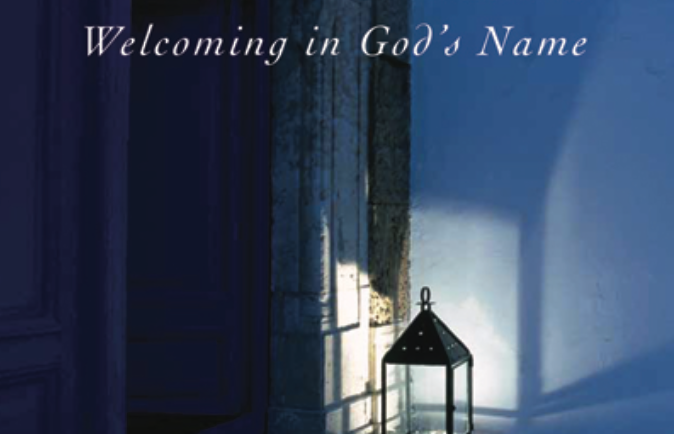
 by Mona Siddiqui Yale
University Press, New Haven, Conn. 288 pages
Reviewed by Lawton Posey
Mona Siddiqui’s new book, which is complex in its thought and construction, is more than an academic exploration of the concept of hospitality, but offers people who are open to inclusion of others such an approach. It is a spiritual work, filled of statements that surely can enrich the lives of religious believers who hope to be open to strangers of whatever kind. While Siddiqui does not dislike any attempts to be hospitable, her Islamic understandings move away from mere welcoming to something deeper, which may involve feeding the stranger or visitor.
At the center of her vision is the great story in Genesis 18:1-10 in which Abraham, in the heat of the day, is visited by three men. Sensing their need, he tells his wife Sarah to make cakes of meal for the “angels” and also ordered that a calf be slaughtered for the benefit of these hungry strangers. These tasks are completed and hunger is assuaged and thirst lessened. This story in the wisdom of Islam, Christianity and Judaism can communicate to a wide range of listeners who may mistakenly assume that a handshake at the door of a place of worship replaces the reluctance of worshippers of God to include, even to feed, those who come from outside.
Speaking personally, I have found that inclusion in a religious context often means learning the rules and following them. People may enter a new environment, hoping to “convert” those who are “regular worshippers.” I remember a couple who started attending the congregation I served for 20 years. They had been members of a congregation with Pentecostal leanings and expressed their wish that our staid, liturgically oriented Presbyterian worship should become more like their former Assembly of God experience. I asked them if they would like to be more Pentecostal in our manner of worship. Their answer was a hesitant “yes,” but they wished to let the Pentecostal activity remain “up front” in the chancel area.
A particular Christian reference is found in Siddiqui’s the description of the institution of the Lord’s Supper. It reminds us that at the heart of Christian liturgy is the Eucharist (Matthew 26:26-29). Here, I note in some liturgies Jesus offers his blood as a sacrificial offering for “all,” but in recent years the sacrifice is offered for “many.” It seems to this reviewer that there are still walls around the Table of the Lord. Hospitality is offered to those who are in the “in group” or in union with a particular religious authority. Is this not similar to the Roman understanding of a “closed communion”?
Even with a liturgy open to all, there are still restrictions to hospitality. Perhaps her book should have been titled “Hospitality and Islam, Judaism and Christianity,” as it is a bridge volume for seekers among many expressions of faith. It is not a simple book, but entirely worthwhile. It offers no easy solutions and asks important questions.
Lawton Posey is an honorably retired pastor in the Presbytery of West Virginia.