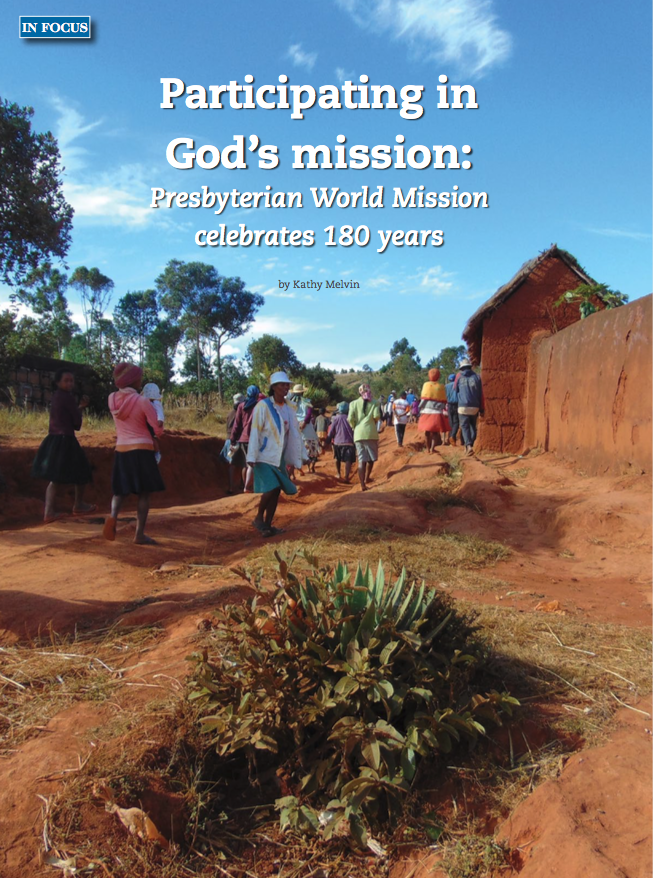
In 2017, Presbyterian World Mission celebrates 180 years of international mission service. Although the desire to serve has never changed, the approach from the colonial model of mission has shifted gradually to a model of partnership based on invitation, mutual respect and interdependence. In that experience of both discovering and sharing, Presbyterians have learned to participate more fully in God’s mission.
Mission is transformative. By encountering Jesus through, with and in mission, we turn to a new life in Christ and a new relationship with our neighbors around the globe. We approach mission through a fundamental belief that God invites us into a partnership with others for the transformation of the world and of ourselves.
A brief history of Presbyterian mission
Historically, mission in the 19th and 20th centuries was based on the desire to fulfill the Great Commission issued by Jesus before his ascension: “Go therefore, and make disciples of all nations, baptizing them in the name of the Father, the Son and the Holy Spirit” (Matthew 28:19). However, early missionaries were rarely just evangelists. They were generally engaged in holistic mission, healing the soul and the body, building schools and hospitals, translating the Bible and seeking social justice.
The 1837 General Assembly of the Presbyterian Church in the U.S.A. launched the first national Presbyterian foreign mission board (the origin of today’s Presbyterian World Mission) as a result of an overture from the Synod of Pittsburgh. They proposed that the national church take over the work of the Western Foreign Missionary Society, the synod’s missionary sending organization.
In 1854 Presbyterian mission began in Egypt, with the arrival of Thomas McCague and James Barnett – where a strong partnership continues to thrive 180 years later. Their initial focus was on evangelism, but they also saw the need for quality education and healthcare, leading to the establishment of schools for girls and boys as well as hospitals. Sharing the Bible provided a greater challenge since villages were scattered, so the missionaries purchased a boat called the Ibis. Using a boat was an efficient method of evangelism since villages were clustered around the river. They often traveled at night so during the day they could distribute Bibles and teach.
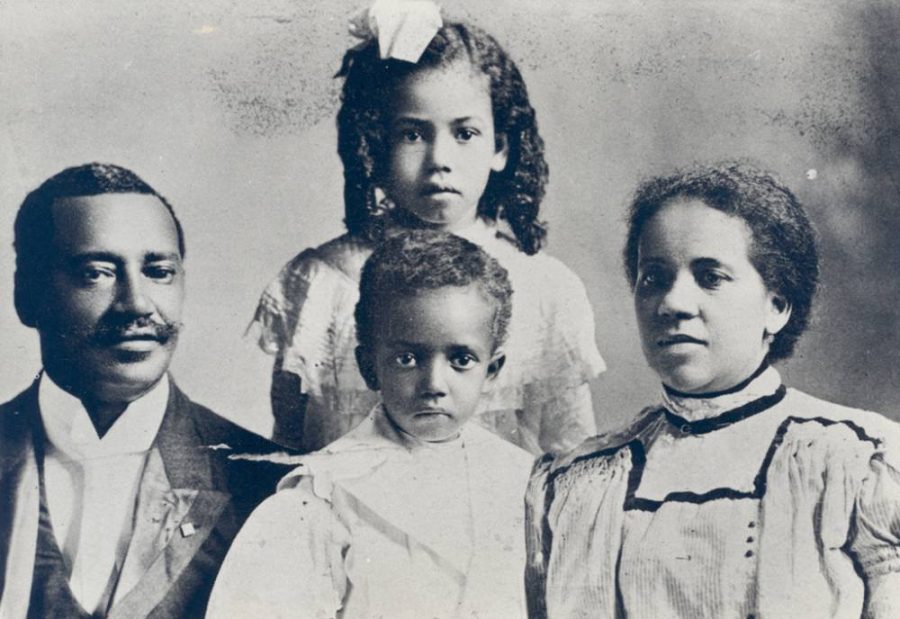
Although colonial missionaries were often criticized for their lack of regard for native cultures, well-known and revered Presbyterian missionary, William Sheppard, the first African-American to serve as a missionary in Central Africa, arrived in the Congo in 1890 and learned the culture and the language of the Kuba people. Although he had 22 bouts of Malaria in his first two years and faced daunting challenges, he became a strong advocate for social justice in Congo.
When a rubber-producing vine was discovered in the rainforests in Congo in 1890, King Leopold II of Belgium acquired a monopoly on the product through slavery and violence. Historical estimates show that as much as 20,000 tons of crude rubber a year was being produced at a 900 percent profit.
As word leaked out about King Leopold’s activities in the Congo, the American Presbyterian Congo Mission decided to take on the role of whistleblower in 1897. Sheppard was sent with the newly developed Kodak camera to take photos and document the horrors being forced on the people of the Congo. President Theodore Roosevelt invited Sheppard to the White House in 1905 to personally hear the case against Leopold. In 1906, the U.S. Senate unanimously supported a resolution by Senator Henry Cabot Lodge that the president take measures to end Leopold’s reign of terror in Congo. The Belgian legislature ended his control on November 15, 1908.
Kyung-Chik Han, a well-known Korean Presbyterian pastor, was another early mission pioneer and a tireless advocate for refugees and the poor. Born in North Korea in 1902, he founded more than 500 churches worldwide, expanding the Presbyterian Church’s mission outreach in Asia, Africa, Europe and the Americas. In 1992, he received the Templeton Prize for Progress in Religion and a check for $1 million. In less than an hour he had given the check to the pastor of the Young Nak Presbyterian Church to help rebuild churches in North Korea.
Presbyterian mission today
There are currently more than 130 mission co-workers serving in 70 countries. As in years past, mission co-workers today, despite difficult conditions (and sometimes even danger) enthusiastically take on the role of advocating for the people they serve.
Jeb Koball, a former Young Adult Volunteer, now a mission co-worker in Peru, is working in one of the most polluted places in the world, La Oroya, a mining town in the Peruvian Andes where it is estimated that 99 percent of children have blood levels that exceed acceptable limits of heavy metals from an American-owned smelter that has been polluting the city since 1922. Hunter Farrell, former mission co-worker and director of Presbyterian World Mission, spent years as an activist leader working to shut it down. Now, more than seven years later, the active emissions from the smelter are reduced, but the lead will remain in the community’s soil for centuries and there is currently no plan to clean it up.
Koball and global partners have begun a new medical study that involves testing for heavy metals. Working with a handful of like-minded lawmakers, they will use the data to create a new national law prioritizing environmental health in all parts of the country impacted by mining activity. “The welfare of all of God’s children and this common house we share must be the top priority of any human endeavor,” he said.
Cathy Chang and Juan Lopez began their mission call just last year. Chang grew up in central New Jersey. When her grandparents moved to New York from South Korea, she began to hear stories about her mother and how her family fled from communists.
As a Young Adult Volunteer in Egypt in 2003, she met Juan Lopez, a mission volunteer teaching French at New Ramses College. He told her about his family and their forced migration because of the military coup in Chile in 1973. Married several years later, they often wondered if their family’s experience might help them serve those impacted by migration and human trafficking. In 2016, they moved to the Philippines to work as Presbyterian World Mission’s regional facilitators for migration and human trafficking issues in Southeast Asia.
“Praying about our next steps, I saw that my heritage, history and faith were taking on new meaning,” Chang wrote. “After preparing our application for mission service, I learned that my uncle was ill and dying. Although his early days were coming to a close, I was confident that his legacy of ministry and mission could continue through my calling.”
Doug Tilton, regional liaison for South Africa, has been a mission co-worker there since 1992. Tilton’s interest in Southern Africa and his involvement in the anti-apartheid movement began while he was an undergraduate at Macalester College in St. Paul, Minnesota. He was a Rhodes Scholar at Brasenose College at Oxford University, where he received an M.Phil. in politics before working as legislative coordinator for the Washington Office on Africa in Washington, D.C. He facilitated the office’s advocacy work on Southern Africa issues, including its support for the Comprehensive Anti-Apartheid Act.
“At this particular historical juncture, I find myself reflecting on the inspiring work of the church in South Africa that originally drew me into mission service — the struggle for justice and the human dignity of all people, even in the face of powerful opposition,” he said. “While there was an international movement against apartheid — South Africa’s system of institutionalized white supremacy, it was the witness of the church, its willingness to stand with the oppressed and marginalized that really spoke to me. I am pleased that the PC(USA) has been willing to hear the voices of South Africa’s churches and their experiences of struggle that reverberate in the Belhar Confession, which was recently incorporated into our Book of Confessions, and I hope that the PC(USA) and our South African partners will continue to grapple with the implications of Belhar for our own societies.”
Scott and Elmarie Parker are serving in Syria-Lebanon and Iraq, countries dominated by political and religious conflict, war and violence. They work with a small but faithful Christian community trying to bring hope and healing to the Middle East.
“It’s my privilege to help facilitate the PC(USA)’s continuing ability to stand in solidarity and active partnership with our sisters and brothers through meaningful and encouraging presence and shared action,” Elmarie Parker said. “Again and again we have seen all parts of the Christian family in these countries living Christ’s way of peace and transforming love toward all those in need, praying regularly for those who are carrying out the violence, offering forgiveness to the perpetrators, and inviting dialogue and partnership with all who seek to build societies founded on values of human dignity, peace, and mutual respect. Because of this, lives are being changed at the grass-roots level and structures of education and government are being influenced. It is a privilege to stand with the Christian community here and to encourage international support of their vision, call and work.”
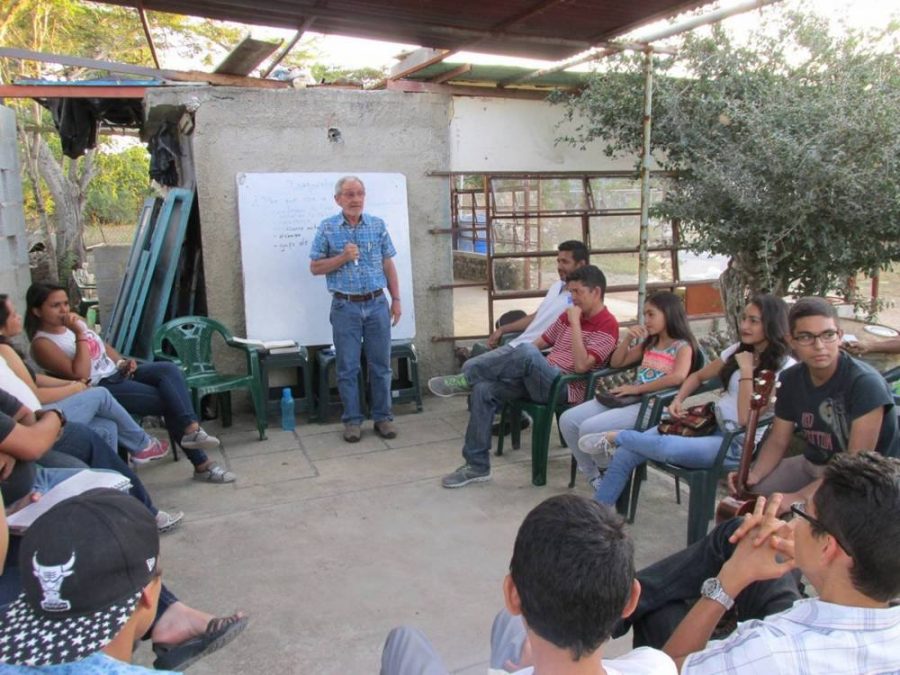
Dennis Smith spent 33 years of mission service in Central America, and since 2011 he has been living with his wife, Maribel, and their sons in Buenos Aires, where he serves as the regional liaison for South America. He has watched the practice of mission change and his vision of mission continues to grow.
 “We’ve learned that God calls us to work in partnership in service to God’s reign. Working this way puts us in a place of relationship and humility with sisters and brothers all over the world. We’ve learned that partnership is a discipline, sometimes messy, rarely the easiest way to get things done, but a relationship of mutual accountability that produces the most faithful results. As we have served together we have learned that mission is a two-way street. We, who have gone to nurture, have been nurtured. We, who have gone to heal, have been healed. We, who have captured the vision of Jesus, have also been challenged by the profound faith of sisters and brothers, far and near, whose lives are very different from our own.”
John McCall has been a mission co-worker in Taiwan for more than 20 years. “When I reflect on 20 years of service in Taiwan, I realize that Jesus’ way is also the way of the mission co-worker,” he said. “We also move into the neighborhood and rely on our friends and partners to help us learn, not only the language, but also the culture. Thankfully, we don’t arrive as the experts, but as learners, who depend upon the local people to teach us what life in this new place is like. This learning, for me, continues even after 20 years.”
Rachel Yates, associate director for programs in World Mission, believes that mission co-workers serve an increasingly important role as bridge builders. “Today more and more Presbyterians are involved in international mission through their congregations and presbyteries, but they don’t have someone who has been totally immersed in the society, culture and language. Our mission co-workers help U.S. Presbyterians with their international missions because they can interpret the nuances of communications and actions. They have built trust with our global partners. Knowing the lay of the land, they can also help other Presbyterians avoid pitfalls that may not be obvious.”
Yates said many believe that those who enter mission service are all teaching elders and seminary graduates, but that is not the case. “In recent appointments, we’ve hired a truck driver, a farmer, a teacher and an artist. In God’s mission, the opportunities for mission service apply to all. Our mission is both proclamation and service and focuses on the work that Jesus began, sharing the root causes of poverty, seeking reconciliation in cultures of violence.”
Presbyterian mission workers have planted churches, built hospitals and started schools on nearly every continent. In many places, the seeds sown have developed into self-sustaining churches and schools now led by local Christians. Today, more than 94 million Christians worldwide, belong to churches that were founded or co-founded by PC(USA) workers.
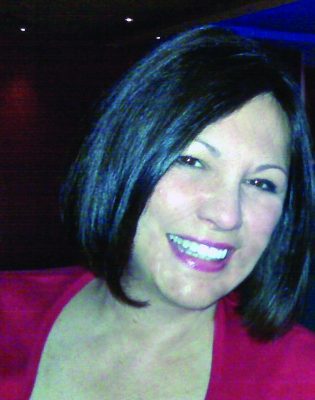 Kathy Melvin is director of Mission Communications for the Presbyterian Mission Agency and serves as the chief communications strategist for Presbyterian World Mission. She is a member of Highland Presbyterian Church in Louisville, Kentucky.