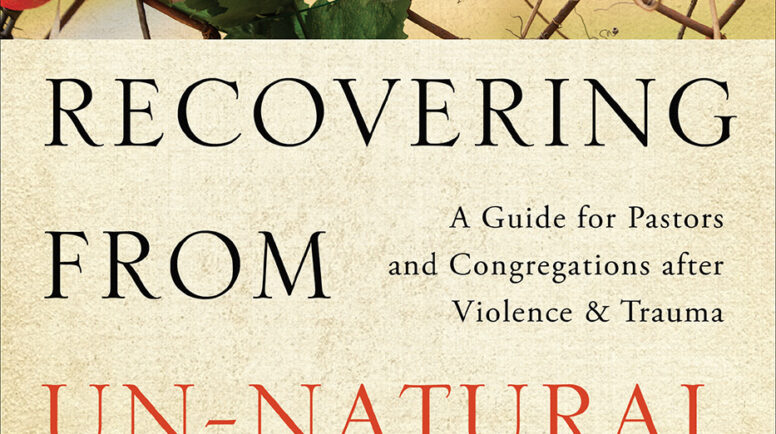
 Laurie Kraus, David Holyan and Bruce Wismer
WJK Press, Louisville, Ky. 184 pages
Reviewed by Merritt N. Schatz
“Thank God, I don’t need this book,” might be the gut-response of anyone reading this title. Blessedly, for most of us this might be a true statement. However, as this book illustrates, tragedies of this sort are far more prevalent than most of us imagine. Even without an unnatural (human-caused) disaster, this book could be required reading for all faith leaders. Although specifically designed and directed toward faith communities that have experienced human-caused disasters, the themes and relational approaches explored in this book are appropriate for many aspects of congregational and community life.
Written in a conversational style, this is a book to be read slowly, with each section digested thoughtfully. At best, it will be read prior to a disaster, when your mind is not already deeply absorbed by the immediate demands on your attention. This is a book that you will want to know, and have within reach, should a disaster (human-caused or natural) occur.
Covering four phases of communal recovery from traumatic events (devastation and heroism; disillusionment; reforming toward wisdom; and wisdom), the chapters include a rhythmic flow among stories; recommendations and rationale (with separate sections for pastors and other faith leaders); and practical examples of liturgies, community activities and communication. Several perspectives with regard to trauma recovery are addressed (personal, congregational and community), as well as matters affecting the congregation’s ability to function and its sense of mission. There are a variety of examples in each section, with constant reminders that “one size fits all” does not apply in these situations.
Two themes stand out as they are woven through these practical considerations: the role of lament, and the essential need for self-care. Both of these themes touch on areas often neglected in the faith community.
In times of disaster, civic expectations of people of faith and the faith community’s expectation of itself push people to forgive and move on. Lament is often downplayed, if not actively discouraged. Permission, indeed encouragement, to lament is a gift to a community that needs to grieve and acknowledge the magnitude of loss.
Similarly, reminders to take care of one’s self, especially in human-caused disasters, are key to the long-term recovery and health of community. Counterintuitive though this may seem to one who is called to leadership in the faith community, practicing self-care is the only way to continue to take care of others. This, as much as any other reason, is why both lay leaders and pastors need to read this book. The support that all leaders can give one another – including support which challenges a leader to step back and replenish spiritual, emotional and physical strength – is a gift of grace which reminds us why God has called us into communities of faith.
For these two themes alone, this short book can strengthen any community of faith, with or without an unnatural disaster. However, much more is offered. Should your faith community experience a violent trauma, this book will speak to you like no other.
Merritt N. Schatz is the pastor of Grove Presbyterian Church in Aberdeen, Maryland, and has served on the National Response Team of Presbyterian Disaster Assistance.