 Juan M. Floyd-Thomas, Stacey M. Floyd-Thomas and Mark G. Toulouse
Westminster John Knox Press, 225 pages
Reviewed by MaryAnn McKibben Dana
It’s a sentiment often attributed to Karl Barth: We are to proceed with the Bible in one hand and the newspaper in the other.
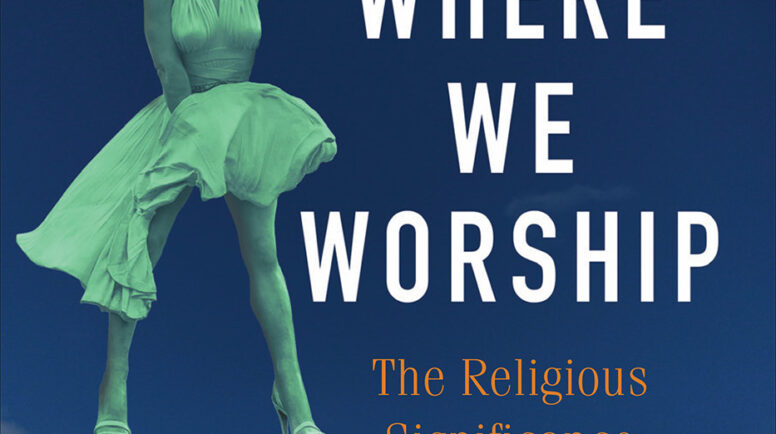
Juan M. Floyd-Thomas, Stacey M. Floyd-Thomas and Mark G. Toulouse would undoubtedly agree, so long as that newspaper included the sports section and op-ed pages, as well as fashion, lifestyle and business — with the latest issue of Wired magazine thrown in. In their new book “The Altars Where We Worship,” the authors delve into six aspects of pop culture and explore the ways in which our engagement in those arenas mimic that of religious devotion: body and sex, big business, entertainment, politics, sports, and science and technology. “Where are Americans finding meaning within their lives,” they ask, “if not in the practices and contexts provided by traditional religions?” The book is an attempt to answer this question.
The Floyd-Thomases and Toulouse take each topic in turn, examining it through a number of lenses that remain consistent throughout the book, such as mythology, doctrine, ethics and ritual. Along the way, the book provides deep dives into various pop culture icons who inhabit each area: Marilyn Monroe in a discussion about sexuality; Andrew Carnegie in the business chapter; and Jackie Robinson in the section on sports.
Those of us who live within the Reformed tradition have been steeped in the language of idolatry. Seminary professors drum it into our heads; pastors preach sermons on it from the pulpit; our history is laden with struggles to root out the idols that stand between us and an authentic encounter with God. The authors avoid this language, instead exploring the idea of “altars” as suggested in the title. “At these altars, Americans reconcile themselves to a ‘serviceable God’ who promises to meet their every desire,” they write.
Whether this serviceable God gets the job done is a question left to the reader. The authors are not interested in adjudicating these religious/pop cultural experiences in terms of whether they are true or not; rather, their goal is to raise awareness of how these realms of cultural experience aren’t merely diversions or entertainments, but deeply-rooted spheres of meaning, with their own heroes and anti-heroes, practices and norms. As I write this, my Facebook feed is filled with people gearing up for the big basketball game between Duke and the University of North Carolina. Anyone who thinks the Venn diagram between sports and religious fervor doesn’t overlap has a completely different set of friends than I do.
The book is fundamentally a work of scholarship. Paul Tillich sits side by side with Walt Disney, Rudolph Otto with the Godfather of Soul. As such, I found myself longing to see where the authors themselves encounter these altars. The book opens with the authors’ experience competing on Wheel of Fortune and finding that adventure affirmed with great amusement and engagement by their fellow academics. Because of this starting point, I expected to see more of their personal story woven throughout, and feel it would have enhanced their arguments. I suggest interested readers find some kindred spirits and read the book together, connecting it with your experiences. The resulting conversation would help put flesh on the capable analysis provided within these pages.
 MaryAnn McKibben Dana is a pastor, speaker and author of “Sabbath in the Suburbs” and the forthcoming “Improvising with God.” She lives in Washington, D.C.