
I am routinely surprised at how we Christians in the United States struggle to enjoy Scripture in comparison with how easily we enjoy music, movies or memes (especially memes). Why do we not love reading Scripture as much as many of us love reading Harry Potter? And paired with the disparity of enjoyment is the difficulty of education. Many leaders and congregants – both young and old – struggle to gain intimate knowledge of more than a few verses or stories from Scripture. In contrast, consumers come in droves to devour the newest Marvel flick. They can remember detail after detail about Steve Rogers‘ relationship with Bucky, but the same type of detailed excitement is missing from their knowledge about Paul‘s relationship with Barnabas. Many kids have memorized dozens of pop hooks without any effort, while the Psalms seem far from their education. Adults are often much more familiar with how Khaleesi runs her kingdom than how Moses related to the elders of Israel.
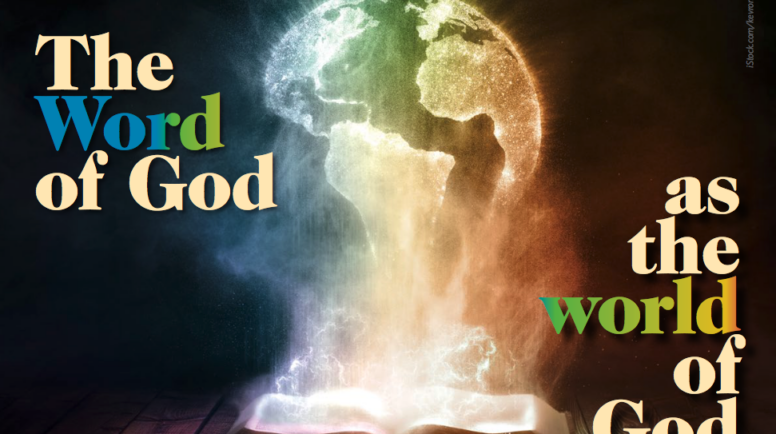
Does this disparity between the enjoyment and education of Scripture and popular media need to change? Yes – but it need not be corrected by lessening affection toward popular media. People do not need to love their choice shows, podcasts or poems less. Instead, their affection for Scripture must grow, and doing so involves a revitalization of their imagination about Scripture. Often, readers of the Bible are looking for answers, but rather they should look for a world in the Bible, the world of God.
The world of the Bible
What should one expect to find in the Bible? How we respond to this question is crucial. Often, Christians approach the Bible looking for answers to historical, moral or religious questions; but instead of offering answers, the Bible offers a world in which to live. In the same way that Harry Potter or the Marvel Universe reveals an entire world to explore and imagine, the Bible offers a world. That the Bible offers a world rather than answers is Karl Barth‘s concern in a chapter from “The Word of God and the Word of Man” titled “The Strange New World Within the Bible.“ He writes that if someone approaches the Bible looking for answers, then that reader will either misread the Bible and forcibly find what is not there or walk away from the Bible frustrated by its lack of response. The Bible primarily reveals the world of God – God‘s reality in Jesus Christ – not answers about religion, morality or history.
 For example, if one reads the opening chapters of Genesis with questions about history (How did life come about? When? How long did it take?), then one will either misread the Genesis narrative, forcing it to answer questions of modern science, or walk away from it frustrated with its “inconsistencies.“ On one hand, the misreading can look like the pressure to use the Bible to decide between an old or young earth; on the other hand, the frustration can look like a college freshman spurning Christianity because his biology professor pokes holes in the Genesis account. Instead of approaching the Bible with questions about origins, the reader who lives in the Bible as a world uses the Genesis account to make meaning from his or her experiences. The reader who lives in the world of the Bible notices how the act of naming a child recalls God‘s naming of Adam and Eve or how the painter who fills a canvas with flowers parallels the God who fills the sky with birds. Rather than answers, the world of the Bible provides meaning and structure.
The same warning goes for questions about morality and religion. If one searches the Bible for answers about the morality of abortion or same-sex marriage, one will likely misread the Bible by searching for proof texts that are not there. Or if one asks the Bible religious questions about what kind of authority deacons should exercise within the church, one will likely walk away frustrated at the Bible‘s relative silence. People answering these important questions with scriptural proofs misuse the Bible and miss its potential as an imaginative world.
If the Bible gets to answering these questions at all, it is secondary to the world that the Bible reveals. The Bible strives to reveal the world of God to the people of God first and foremost. Christians may stumble into the answers that they want, but the world is so much larger than a set of answers. To approach the Bible as a book of answers misses the rich potential that the Bible has as a world by which to live in the current world.

Read the world
So, if the reader of the Bible should not approach the Bible for answers but instead a world in which to live, how does the reader discover that world? I propose two methods: reading the Bible as a drama and reading slowly.
Reading the Bible as a drama helps us imagine the Bible as a world. The helpful analogy of a play means that Scripture sets the stage for Christians to act as the people of God. Two theologians can help us explore this point: Robert Jenson and Hans Urs von Balthasar.
The Lutheran theologian Robert Jenson describes the Bible as the first two acts in an unfinished three-act drama in his essay in “The Art of Reading Scripture.” Present readers of Scripture are living in the third act and must read the script of the first two acts found in the Old and New Testaments. Though the current readers of the Bible have great freedom in their actions, the previous events that have happened in the world of the Bible inform and determine what right action looks like. Just as Hamlet cannot walk onto the stage in Act V and talk about fresh cherry tomatoes because of the previous four acts, Christians cannot ignore the storyline that has come before them in both the Old and New Testaments.
The analogy also helps elaborate the relationship between the world of the Bible and the present world. The world of the Bible does not usurp the present world, but underlies and informs it. Christians recognize that the present events proceed from and relate to the stories of Scripture because all things culminate in Jesus Christ. Jenson extends the analogy of the drama further by saying that the playwright of the Bible has not only written the drama but entered into it as an actor. The incarnation of Jesus Christ is an act of the dramatist becoming a character in the play. Jesus Christ himself has lived within the world of the Bible and calls us to do so as well.
The second theologian, Hans Urs von Balthasar, emphasizes the ethical implications of imagining the Bible as a drama and imagining the playwright as the main actor. In “Theo-Drama,” the Swiss Catholic points to the intimate relationship between God’s entrance into the world and Christian action in the second part of his systematic theology:
God‘s advent as Lord of the world and its history can release only the most prodigious drama … there can be here no question of simply perceiving, contemplating, of simply registering what is shown; whoever is moved in faith must go out on the stage.
Christians see how Christ acts within the script of the Bible, and as members of the same story they boldly step out into the spotlight to craft Christ‘s narrative in the present. Living in the Bible as a world looks like acting in a drama, acting within the narrative arc of the story that God has been writing since the beginning of time.
The second method of seeing the world of the Bible is slow reading. Though present media are not necessarily bad, how it is quickly presented and processed has had negative implications on how Christians read Scripture. The world of the Bible is not easily unearthed, and it takes a serious amount of slow discovery. The Presbyterian scholar Kavin Rowe presents the need for the modern church to slow down when it reads Scripture in a short essay for Faith and Leadership. Reading anything well, he argues, requires patience, and this is no less true for the Bible. Practicing this slow patience runs counter to the habits of a 21st-century person. Quickness is not only valued but required in our rushed age, but the Bible is not concerned with this immediacy. The brilliant world of the Bible often appears only after diligent labor. Faithful study is required to uncover the world of the Bible — not only is the quality of the study important, but also the quality of the student. The world of the Bible is discovered by the lover of God whose soul is being transformed into Christ‘s shape. As the Christian slowly matures in the faith, he or she can see the color and detail of the world of God coming into focus. Discovering the world of the Bible requires slow and patient reading and an increasingly Christ-like reader.
 An invitation to imagine
The Bible suffers in popularity – not many enjoy or teach it. Kids dedicate way more time to their tablets than to the Bible. Adults exercise more passion in home design or sports than the stories of Scripture. In order to resuscitate the enjoyment and education of the Bible in the Christian tradition, a transformation of our imagination is needed. The Bible is way more than we have expected it to be if we have been seeking answers. Instead of offering us history, morality or religion, God invites us into an entire world in which to live, act and play. If we treat the Bible as a world, we might find that engaging its vast landscape of strange stories and personalities becomes more joyous than obligatory. Imagine a businesswoman rushing home from work to read the parable of the tenants with a glass of wine. Imagine a middle school child staying up at night with a flashlight under the covers to finish Genesis. Imagine a group of family and friends gathering on a Friday night to recount Paul‘s work in Lystra. This is all possible if the Word of God is the world of God.
Lest this article end ironically without landing in that world, Jesus shows how to live in the Bible as a world in the parable of the Good Samaritan. The lawyer comes to Jesus demanding answers; Jesus instead gives him a world. Jesus tells an imaginative story that makes God‘s world collide uncomfortably with the world of the lawyer. Presenting the Law in dramatic form, Jesus challenges the lawyer to imagine right neighbor-love. Who saves the beaten traveler? Not the priest or Levite, but the Samaritan. God‘s world always has the outcast in the middle of the drama to the dismay of the lawyer. The Samaritan saves the Jew, the righteous teaches the self-righteous, the crucified forgives the crucifier. This is God‘s world.
 Christopher Karnadi is an M.Div. student at Duke Divinity School. He likes reading, teaching and writing theology.