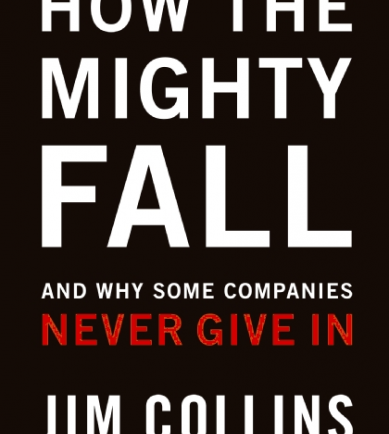
 Jim Collins
HarperCollins, 240 pages
Reviewed by Richard D. Brownlee
Given that I came into the ministry with a background in systems design and development, I have always seen a connection between processes that lead to effective organizations and those that lead to effective congregations. Those connections often inform the work I do with congregations.
Jim Collins has an almost missionary zeal as he pushes organizations to look for what they do best and to seek passionately to do it better than anyone else. He explores those practices in his book “Good to Great.” Success, as Collins defines it, comes when a company (or a congregation) has effectively carried out its mission for many years. Collins describes this as spinning a flywheel, moving it a little at a time, until it picks up momentum. Each push gives it a little more momentum, and eventually little pushes keep it going. This requires the constant effort of a disciplined core of individuals who pay attention to the impact their product or service has on the external world while continually making the adjustments necessary to improve by maintaining both internal discipline and a clear view of the external world
But, the reality is that even great companies and congregations rise and fall. “How the Mighty Fall” is Collins’ attempt to provide a “roadmap of decline” by which “institutions heading downhill might be able to apply the brakes early, and reverse course.” This “roadmap” could help many congregations begin to ask questions about their future before they run out of resources and opportunities.
He describes five stages of decline: hubris born of success; undisciplined pursuit of more; denial of risk and peril; grasping for salvation; and capitulation to irrelevance.
Too many congregations do not begin to see their peril until they are at stage four and are grasping for salvation: looking for the right charismatic pastor, a great program or a new worship service to save them. Collins writes, “The very moment when we need to take calm, deliberate action, we run the risk of doing the exact opposite and bringing about the very outcome we most fear,” which is death.
But, Collins argues that decline can be reversed, and gives examples of organizations that have succeeded. He offers no quick fix. The examples he gives made it back by returning to their core purpose, and once more doing the slow, steady work that led to success in the beginning. He calls for us to do the same.
Sounding like a preacher, he says: “The point of the struggle is not just to survive, but to build an enterprise that makes such a distinctive impact on the world it touches … that it would leave a gaping hole … if it ceased to exist. To accomplish this requires leaders who retain faith that they can find a way to prevail in pursuit of a cause larger than mere survival (and larger than themselves) while also maintaining the stoic will needed to take whatever actions must be taken, however excruciating, for the sake of that cause.”
Richard D. Brownlee serves as the consultant in new church development and congregational transformation for the Presbytery of Detroit.