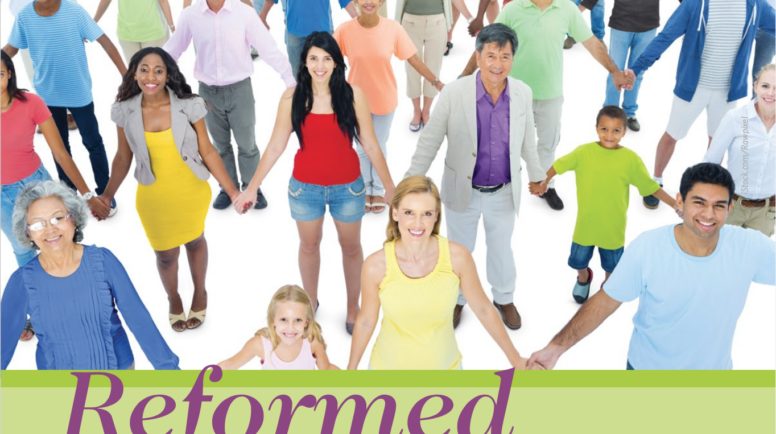

As a newly-ordained elder at Second Presbyterian Church in Indianapolis, I am truly excited to begin my journey serving Christ during a very important time for both our congregation and presbytery. Second Church is blessed with the gifts of a large, well-established and affluent congregation. Yet we too face challenges not unfamiliar to many congregations: building membership and financial stability; cultivating a sustained, meaningful focus on outreach and mission; and creating an inclusive culture, all while keeping a watchful eye on critical long-term strategic initiatives.
Over the last four months, in preparation for our terms as church officers, our incoming class of 10 elders and 15 deacons was given the gift of extensive training focused primarily on our Presbyterian Church (U.S.A.) Book of Confessions and Book of Order, in addition to – of course – the Bible. At the outset of our training, this curriculum sounded more like some sort of Reformed Presbyterian punishment, but it soon became clear that having an understanding of our roots, marks and traditions was critical to our service.
It was during this work that I learned about two elements of inclusion from the Book of Order, which read:
“A congregation shall welcome all persons who trust in God’s grace in Jesus Christ and desire to become part of the fellowship and ministry of his Church. No person shall be denied membership for any reason not related to profession of faith. The Gospel leads members to extend the fellowship of Christ to all persons. Failure to do so constitutes a rejection of Christ himself and causes a scandal to the Gospel.” (G-1.0302)
And:
“There is therefore no place in the life of the Church for discrimination against any person. The Presbyterian Church (U.S.A.) shall guarantee full participation and representation in its worship, governance, and emerging life to all persons or groups within its membership.” (F-1.0403)
Boom! A Presbyterian inclusion and diversity mic drop!
 So, with this already established in our Book of Order, why do topics such as same-sex marriage and matters of social justice (e.g., divestment issues or the racial inequities acknowledged in the Confession of Belhar) create turbulence in our Reformed Presbyterian culture? Could it be that we are all human, complete with our bumps and warts of bias and stereotype that have accumulated in our personal backpacks over our lifetimes of socialization?
In light of these decades-long dust-ups, perhaps considering two questions might help us chart a path to a more inclusive and diverse denomination:
- What is the benefit of creating and sustaining an inclusive and diverse culture?
- What can each of us do today to be more consciously inclusive?
What’s the benefit?
Two elements that support the notion of conscious inclusion are membership stability and interfaith appreciation. These two behaviors form the foundation of our community in Christ, stimulate our spiritual journeys, and fulfill our mission to bring others to Christ in a loving, supportive and safe environment where members can bring their whole selves to the pew.
Let’s first look at membership as a critical long-term element of our value proposition. Since 2013, the Presbyterian Church (U.S.A.) has lost 277,000 of its membership (15 percent) nationally. Over this same period, the number of Presbyterian churches has declined by 6 percent, with only three presbyteries reporting growth in 2016 versus 2015. Take a moment to let that soak in. Additionally, recent studies from prominent research partners indicate that approximately only 20 percent of Americans from any denomination attend church regularly (with “regular” attendance defined as three out of eight Sundays).
Could a more inclusive culture in the PC(USA) have an impact on membership growth nationally and in an individual congregation? To address this important question, let’s peek at a snapshot of Second Presbyterian Church in 2017.
Our 178-year-old congregation, with 3,500 members, is in the process of calling a new senior pastor. In preparation for that person’s arrival in 2018, our session commissioned a strategic “listening project,” a thorough congregation-wide survey to help us identify short-term and long-term opportunities and gaps.
While the project is still in its initial stages, several congregational strengths were identified, as well as gaps that directly impact the culture at Second Church. Three of our identified inclusion gaps are:
- An inability to consistently fill volunteer and mission project needs;
- The lack of a support network to shepherd incoming new members;
- A feeling of a cliquish, unwelcoming culture where new members do not feel included and struggle to “fit in.”
Wait. What? You mean to say that you cannot fill volunteer roles in a congregation of 3,500 members? And new arrivals describe the culture as a cliquish and unwelcoming? As these findings were revealed, a number of members enthusiastically stepped forward and volunteered to address these observations. Even a stable, long-standing congregation has work to do to make our culture more inclusive.
 On a broader scale, the value of our commitment to interfaith appreciation creates endless opportunities for personal relationship building, cultural understanding and spiritual discernment. Why might it also be important for us to reflect on the obligation Christians have to display meaningful awareness towards others who do not self-identify with any particular faith?
Individuals who don’t associate with any faith group, regardless of their spirituality (let’s call them free agents), typically get along with others because faith is not a limiting factor for them. When these free agents see members of religious groups not interacting effectively with one another, they may ask: “Isn’t this exactly the group that should be getting along with others? Isn’t that the call of faith for this group?”
Imagine the possibilities if each of us demonstrated the consciously inclusive behaviors that Jesus exhibited towards the marginalized, regardless of race, gender, sexual orientation, or socio-economic background. His behavior of ministering to the sick and the poor, to prostitutes, to those closest to him and strangers alike provides leadership for the behavior we need to model in today’s diverse world. Check out Proverbs and Matthew’s Gospel for both Old and New Testament reminders of our commitment to love our neighbors.
What can each person do?
So what can each of us do to demonstrate more consciously inclusive behaviors?
Honestly, most of us don’t wake up every morning and make out a list of those we plan to exclude through the day. We do, however, unintentionally exclude others based in part on the positive or negative biases and stereotypes that we carry in our respective backpacks. Unless we consciously choose to be inclusive, we could be unintentionally excluding others.
Each of us can make a difference in our daily walk. Consider the following personal behaviors to be more consciously inclusive:
Volunteer for an activity that makes you comfortably uncomfortable and creates an impact on others. Perhaps it could be in a homeless shelter, at a food pantry or by being still and listening to a friend or colleague in an assisted living home. If you are comfortably uncomfortable, you know that you are doing the work.
Sit someplace different in your sanctuary each Sunday for the next eight weeks. Each week identify at least two individuals that you don’t know, and introduce yourself. Invite them out for coffee or lunch after the service.
Demonstrate active listening that shows empathy towards others who may be different than you.
Become more self-aware of the biases and assumptions that you possess, and do not let them interfere with your personal or business interactions. To help with this, identify a colleague who knows you well and enlist them as your “accountability buddy.” Invite feedback from that person to call you out when you demonstrate behaviors that exclude others.
When you see someone standing alone while you are in a group, invite them to join you. The intentional act of invitation sends a powerful signal of inclusion. As my grandmother used to say, “You always have a better time when you have an invitation.”
If you are faced with an issue or challenge, ask three people who are different than you (generationally, culturally or in other ways) for input as you make your decision.
Let me leave you with an example of how exhibiting consciously inclusive behaviors can have both a business and personal impact.
Following a recent inclusion training workshop, one of my sales representative colleagues residing in Iowa realized that for many years she had virtually ignored a large segment of the office staff and physicians in her territory who immigrated to the United States from India. The self-awareness stimulated by her training provided a strong business and personal incentive for her to embark on an effort to exhibit more consciously inclusive behaviors with these customers.
For the next six months she worked diligently to learn about the stories, culinary preferences and religious beliefs and practices of each member of the office staff. These stories and practices were, as you might imagine, quite different from her upbringing in rural Iowa. For example, as her learning evolved, instead of offering a typical sandwich or barbeque for an office lunch, her insights inspired her to provide traditional Indian meals and desserts from local Indian restaurants. She also began to dedicate more of her precious “sales” moments in fellowship over meals with the staff.
This fellowship time allowed her efforts to originate from the heart instead of the head, and she soon found herself invited into the personal journeys of the staff members, including physicians who were prominent in the local medical community.
One day, one of her physician customers invited her to the dedication ceremony for a new temple that had been built in the community. She was humbled by the invitation and readily agreed to attend as his guest. When she arrived at the ceremony, she observed that she was the only person in attendance who was not from the Indian community and not a member of their religious tradition. She also noticed that, because of her months of fellowship with the Indian community, she knew almost everyone at the dedication ceremony.
Her efforts to exhibit intentionally inclusive behavior was being reciprocated by her customers, who had now become her business partners and friends. Not surprisingly, the sales in her territory from these customers increased dramatically. And more importantly, the space in her heart that was occupied by these new relationships changed her life forever.
Simple acts of inclusion and kindness can go a long way and open the door for us to follow Jesus’ encouragement to love your neighbor as yourself. Let’s get started!
 John Harkey is a ruling elder at Second Presbyterian Church in Indianapolis. He worked for more than 33 years with Eli Lilly and Company where he served in a variety of leadership positions. Most recently, he was executive vice president for corporate relationships with Inclusity LLC, where he helped organizations develop and implement inclusion and diversity strategies.