 Rowan Williams
Westminster John Knox Press, 128 pages
Reviewed by Juli Wilson-Black
A story is told that during the funeral procession of Abraham Lincoln, a formerly enslaved woman held up her granddaughter to see the casket go by, saying, “That’s Mr. Lincoln. He died for you.”
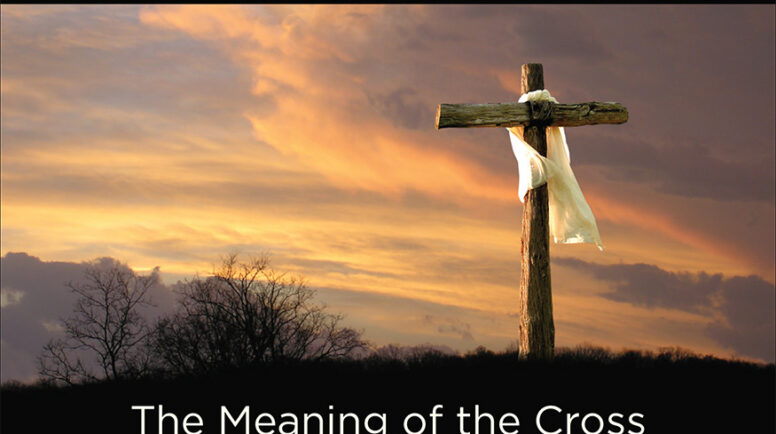
How, and why, did Christ “die for us”? How, and why, was he raised for us? These are the questions Rowan Williams, former Archbishop of Canterbury, sets out to answer in “The Sign and the Sacrifice.” This short book, featuring discussion questions at the end of each chapter, lays out the classic views of atonement, but it doesn’t stop with the cross. Williams emphasizes the seamlessness of Jesus’ life, death and resurrection, and shows how our salvation comes through all three.
Williams begins by reminding us of what a jarring symbol of faith the cross was in the world the first believers inhabited: “The earliest picture we have of the crucifixion is scratched on a wall in Rome; it may be as old as the second century. It is a rather shocking image: a man with a donkey’s head strapped and nailed to a cross, and next to the cross a very badly drawn little figure wearing the short tunic of a slave, and scribbled above it, ‘Alexamenos worshipping his god.’” It is thought that a fellow slave drew it in jest.
Once we appreciate the strangeness of the cross, we are ready to begin to see it with fresh eyes. Williams explores first the theological thought of Abelard, for whom the cross was a sign or example of God’s great love for us (as in the Lincoln analogy). He delves into the many New Testament references to Christ as sacrifice, which we affirm at every Lord’s Supper when we lift up “the cup of the new covenant, sealed in my blood.” He then turns to Christ the Victor (of whom Gustav Aulen was a chief proponent in the last century), whose cross becomes a means of triumph over evil. On Easter Saturday (even before his resurrection), Jesus descends to hell in a “victory procession” to bring out the hostages he has come to rescue.
After considering the cross, Williams turns to the resurrection, then and now. The resurrection means that “the new age has been inaugurated, the new world has begun.” Williams makes a compelling case for the historicity of the resurrection: “It’s very hard to see how that new age faith — faith in and because of the resurrection — could come into being without an event that people could point to: an event, not just a transaction in people’s minds.”
The epilogue is a meditation on the Eastern Orthodox icon of the resurrection, which depicts Christ descending to the dead, taking Adam and Eve by the hand and freed prisoners rising up from the gates of hell. It offers excellent inspiration for an Easter Sunday sermon for pastors who are looking for a fresh word to bring (thus it comes as no surprise to learn that it was first delivered as a sermon). Though the other five chapters, first delivered as lectures, sometimes retain their academic feel, they offer a rich depth of content to draw from for personal reflection, or for a series of classes or sermons on Christ’s saving life, death and resurrection.
Juli Wilson-Black is pastor of Fairlington Presbyterian Church in Alexandria, Virginia.