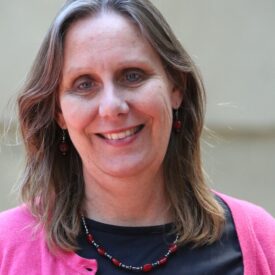
BALTIMORE – Be suspicious of praise.
Jonathan L. Walton, a professor of Christian morals and the Pusey Minister of the Memorial Church at Harvard University, gave a keynote address on the final day Feb. 28 of the NEXT Church national gathering in Baltimore. Walton used that time to caution those in ministry to be wary about wanting or expecting praise, and to recognize that standing with those who are the most vulnerable – and taking on the systems that make them vulnerable – will inevitably give the critics voice and fuel.
Look at Jesus.
 For many, Jesus’ incarnation is befuddling – the concept that he was both human and divine. Most ordinary Americans view Jesus “as some sort of superman,” Walton said. “He slips into the phone booth of the tomb, changes into his Easter suit and leaps into heaven in a single bound.”
The account in the 4th chapter of Luke’s Gospel of Jesus launching his ministry includes in 15 short verses: the acclaim he received when he first spoke in the synagogue in Nazareth (“All spoke well of him and were amazed at the gracious words that came from his mouth”), and the outrage when he described how the outcast widows and lepers were treated in Elijah’s time (“When they heard this, all in the synagogue were filled with rage”).
The verses before that describe the devil tempting Jesus for 40 days and 40 nights in the desert – the theme of this conference is “The Desert in Bloom: Living, Dying and Rising in a Wilderness Church.” Walton suggested, however, that Jesus’ real temptation began when he left the desert and began his public ministry “back in his neighborhood when he was surrounded by the intoxicating praise of his own people,” whose judgments he’d also have to endure.
Some become ministers because “we saw the honor and respect we thought the profession demanded,” Walton said. They saw the allure of earning a good salary, winning the respect of politicians and business leaders, having a nice home and “well-funded summer travel.”
 Plus, he said, it’s easier to get into seminary than medical or law school.
And some pastors “remain in ecclesiastical la la land,” preaching comforting sermons, earning wall plaques, and “all manner of people say nice things about us, because we are not about controversy, we are about bringing people together in the name of Christ,” Walton said.
But the affirmation of the crowd is not the real measure of worth, he said – God uses the litmus tests of justice and love, so Christians are called to “care for the least of these and cast out unjust systems.”
For those who speak out, “you find out there is an underside when you take leadership and ministry seriously,” Walton said. People “treat you like a rock star preaching about injustice somewhere else over there,” but criticize when you preach about injustice close to home. He warned ministers “not to get high on the contact smoke of pastoral praise.”
Walton said: “My friends, if we are going to be a next church and turn the page on a milquetoast, corrupted, cowardly church, leave here suspicious of praise.”
During a question-and-answer session, Walton said he operates within a moral framework of standing with those who are most vulnerable in a particular situation – which sometimes has earned him criticism.
“I do think religious leaders should be held to account to what we profess,” he said. If a minister lets behavior from influential people slide “because they fund our organ and they pay for my summer vacation, then people have a right to hold us to account for that.”
It’s also fair to criticize when “my charisma is being used to expand my brand. … We’re seeing too man charismatic leaders with all of their authority killing congregations.”
Walton said he tries to guide the students he works with to think not just of a career path, but of the quality of their lives.

Many people starting off knowing “what you wanted to do in life. The better question is ‘Who do you want to become?’”
When life sends the unexpected, what then?
“Who do you want to be? … How do you want to be remembered?”
Walton also spoke of life’s inevitable struggles – for him, with depression, with the stresses of trying to finish his dissertation and earn tenure at a top university; of his father’s illness with Parkinson’s disease and recent death; with the responsibilities of being part of a “sandwich generation” caring for parents and children at the same time.
He’s learned to get treatment and to trust in God’s presence in the shadows.
“Life is short,” Walton said. “So be quick to love. Make haste to be kind.”