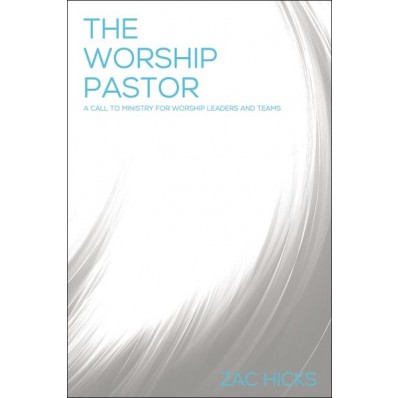
 Zac M. Hicks
Zondervan, 224 pages
Reviewed by Aaron Fulp-Eickstaedt
Zac Hicks, the canon for worship and liturgy at Cathedral Church of the Advent in Birmingham, Alabama, has served as a worship leader in a variety of contexts over his years in ministry. He writes out of that experience. The book grows out of his desire to help worship leaders of all stripes — ordained pastors, worship teams and volunteers from a variety of denominational and worship traditions — to conceive of the role of the worship leader in a deeper, more theological way.
The first thing he affirms is that every regular worship leader, ordained or not, serves a pastoral function. Worship leaders help shape people’s faith by training them to relate to God. They are looked up to as examples and as leaders. Worshippers do invest pastoral authority in the worship leader.
Hicks then defines the worship pastor using 17 different frames, which include church lover, corporate mystic, prayer leader, caregiver and emotional shepherd. Through each of these frames, Hicks communicates something important about the role of those who design and lead worship.
In Hicks’ mind, worship pastors must — after loving God, first of all — love the church and the congregation they serve. They are also charged with helping people become attuned to God’s mystical presence in worship. So worship pastors should develop a philosophy of worship — Hicks provides some good questions to answer as they do so — and understand that worship should help shape and teach followers of Jesus. Worship pastors craft and lead words addressed to God on behalf of the people, try to assure a balanced diet of healthy theology and are to see the words and work of worship in light of spiritual warfare (here, I was a little uncomfortable with some of Hicks’ language). He gives seven sketches of prophetic worship pastoring that encourage pastoral sensitivity while not neglecting the call to inspire justice work. Worship pastors must, like those in the mission field, pay attention to the cultural context that they serve. They must engage people’s imagination, provide solace and care and lead people through necessary grief. They also design liturgy, preserve tradition and lead people on a tour through the worship experience. Finally, Hicks turns to the truth that we all have our failures and that failure is the starting place for worship and ministry.
How fitting to close a book which gives so many frames for understanding the worship leader by talking about failure. As Hicks writes, “The worship pastor described in this book is a mythological superhuman, supremely gifted in all arenas, unchangeably wise in every endeavor, inexhaustibly supplied with endless energy.” Of course. No one human person could be gifted in or focused on every area Hicks describes. But Hicks helps us think more deeply about the work.
Though I was prepared not to like the book — it seemed gimmicky at first glance — I found in each chapter plenty of good substance to ponder for those who design and lead worship. I’m thinking of having my pastoral staff and worship committee read the book over the course of the year to come. I believe it will enrich our congregation’s worship practice. I think it would do the same for yours.
Aaron Fulp-Eickstaedt is the senior pastor of Immanuel Presbyterian Church in McLean, Virginia.