
BALTIMORE – Wilderness as a place to focus on God’s activity. Church leaders (and sometimes whole congregations losing people and resources) feeling the isolation of the desert. Testing and temptation in a parched land. The starkness of an undefined terrain leading sometimes to death — and sometimes to risk-taking and creativity.
The 2018 NEXT Church national gathering had as its theme “The Desert in Bloom: Living, Dying and Rising in a Wilderness Church” — asking participants to consider, according to a description on the NEXT website, “how the church can embrace a wilderness identity in pursuit of the hope, resilience, clarity, and resurrection so often found there.”
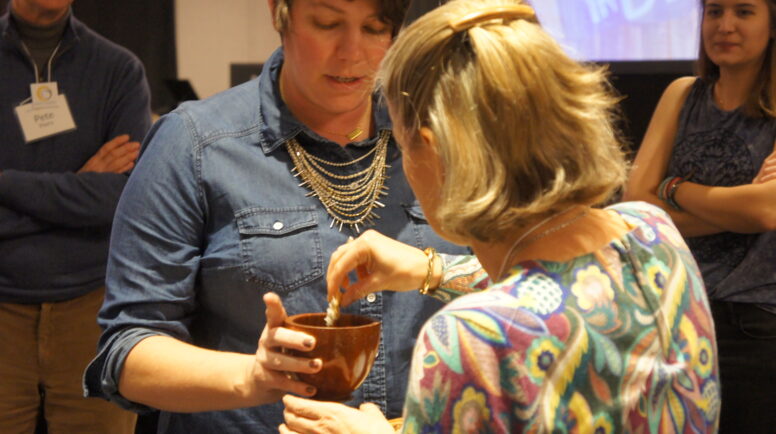
 About 675 people – about half of them ministers, about a quarter congregational leaders and another quarter made up of educators, youth leaders, non-profit leaders and seminary students – attended the 2018 NEXT Church national conference Feb. 26-28 in Baltimore. NEXT describes itself as a “relational community of Presbyterian leaders,” and this gathering provided opportunities for worship, learning and conversation about what it can mean to be a faithful, innovative church.
The ideas flowed through a workshop on preventing gun violence, a storytelling time to share personal accounts of failure, preachers who drew from the promise in Isaiah 35 that “the wilderness will rejoice and blossom,” testimonies shared from people doing the hard work of incarnational ministry in Baltimore, and through times of fellowship and networking.
About a 40 percent of those in attendance were there for the first time. When asked what he appreciated most about the gathering, Jasper Davis, worship leader at Boyds Presbyterian Church in Maryland, said, “What I have enjoyed most about being at the NEXT Church conference is being surrounded by people who not only value social justice, but are willing and wanting to bring that out into their church contexts and into the greater communities that they operate within.”
Here are some of the pieces that made up this year’s conference.
Worship: The desert in bloom
“The wilderness and the dry land shall be glad … . And it shall be called the Holy Way.” All preachers drew from Isaiah 35 as they preached stories of encountering God in dry, troublesome spaces and finding the new life promised by the resurrection.

Living. In Isaiah, the land of desolation – a land that looks barren – begins to speak and becomes a prophetic voice, Billy Honor, pastor of Pulse Church in Atlanta, reminded those gathered. “The prophet speaks words of hope.”

Dying. A time of mourning, worship and testimony invited worshippers to “embrace death in the knowledge that in Scripture God did not remove death, but the sting of death, that something new might be born.” Erin Counihan, pastor of Oak Hill Presbyterian Church in St. Louis, spoke having to put to death the “nice white polite church lady in me” when “I got to know this radical Jesus guy” by linking arms with the young people marching against racial injustice on the streets of St. Louis.
Rising. Jennifer Barchi, pastor of Dickey Memorial Presbyterian Church in Baltimore, led worshippers in responding “Thanks be to God!” to the statement “The church is dying.” She admitted that such a response seemed antithetical to the gospel, but she had learned that perhaps such reframing could bring reform. She challenged worshippers to consider “death as the transformative pivot that brought something new.” Because of Christ’s resurrection, “we approach dying with hope,” she said. “The promise of the resurrection frees us to reframe death in the wilderness” and dying to new life.
Living again. To be God’s people rising, get on the holy way, admonished Kathryn Johnston, pastor of Mechanicsburg Presbyterian Church in Pennsylvania, during closing worship. “We need to move to unfamiliar places, that’s the holy way. … We need to listen to the kids from Ferguson like we listen to the kids from Parkland … that’s the holy way. … We need to listen to each other … that’s the holy way … because no matter who you are looking at, they are the redeemed and they shall walk there, too.”

Workshops: Growing in knowledge of faith and practice
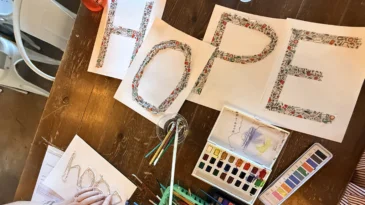
Workshops offered these Presbyterians the chance to explore art and the creative process; media and microaggressions; leadership for church members; and the spiritual discipline of prayer for youth.

A workshop on preventing gun violence led by Margery Rossi of Presbyterian Peace Fellowship explored fears that prevent Presbyterians from engaging in this issue, and ways to address those fears theologically. The workshop shared resources including a congregational tool kit and the movie “Trigger” (with an accompanying study guide developed by Presbyterian Disaster Assistance).
Do you have a “back to Egypt committee?” asked Victoria White, director of grants at Leadership Education at Duke Divinity School, referring to groups in churches who believe everything was better at a previous time. In a workshop called “Beautiful constraints and propelling questions,” White used the book “A Beautiful Constraint” to guide participants in identifying hopes and constraints encountered in ministry and formulating propelling questions to guide discussions and solutions to realistically overcome the restrictions.
 The co-moderators of the 2016 General Assembly, Denise Anderson and Jan Edmiston, called on Presbyterians to take some risks and to join with others working to knock down structures supporting racism and poverty. They encouraged involvement in the Poor People’s Campaign: A National Call for Moral Revival, and have asked Presbyterians to read Liz Theoharis’ book “Always With Us? What Jesus Really Said About the Poor.”
Resources: “Cultivated Ministry”
God’s presence is revealed in the “stories of individual people” and when those stories connect to the impact of a ministry, that has significance, said Frank Spencer, president of the Board of Pensions.
To help collect and connect those stories and evaluate how ministries are contributing to God’s mission in the world, NEXT Church has created “Cultivated Ministry: Bearing Fruit through Theology, Accountability, Learning and Storytelling.” This “field guide” has been designed to help leaders identify “learning questions” to “drive you to what we need to find out, what we need to measure,” Spencer said. Counting how many people came to an event “may be one of the things that you measure, but it won’t be the only thing.”
Testimonies: Sacred stories in the desert
NEXT has begun offering community organizing training for church leaders — with the next session scheduled for Oct. 22-26 in Baltimore.

To give a sense of ministry work and community organizing in a particular context, NEXT offered a series of testimonials from people who work in Baltimore — giving ideas on how people of faith can become part of movements to improve public schools, give young people a sense of hope in the future, create jobs and provide support for people living with HIV infection.
Sheri Parks, an associate dean and associate professor at the University of Maryland, and Betsy Nix, an associate professor at the University of Baltimore and member of Brown Memorial Park Avenue Presbyterian Church, spoke of police corruption, structural racism, violence and community organizing.
 “Baltimore is hell. This is hell. This is where hell is,” one high school student said in a video Parks and Nix showed as part of their shared testimony. The teenager said he wants to become a criminal defense lawyer, but knows too well the obstacles he faces. He could be shot on his own street — it happens all the time. He has family members in jail. “I want to leave here,” the young man says — as another man pleads with him: “We need you here.”
 Parks told the NEXT crowd that “we have not left that young man” — he’s part of ongoing mentoring efforts. And those offering testimonies told of ways community activists and faith communities are joining resources to help. Among them:
- Thread: linking underperforming high school students (in the bottom quarter of their freshman class) with a family of university- and community-based volunteers. So far, more than 300 high school students have participated, and 87 percent of those who’ve been part of Thread for six years have graduated from high school. Congregations could use that same model, Nix said, to surround and support elders; people anticipating or experiencing grief; or families of Alzheimer’s patients.
- HopeSprings: a program started by Central Presbyterian and Grace Fellowship Church, which trains and engages the faith community to serve people living with HIV.
- Turnaround Tuesday: the jobs movement of Build Baltimore, an interfaith and multiracial community power organization. Melvin Wilson, Turnaround Tuesday’s co-director, said that when organizers went out in the neighborhoods and asked people what would end the violence in Baltimore, “we constantly heard jobs. Jobs. Jobs.” People wanted to earn a living wage.
Navigating the terrain of small churches
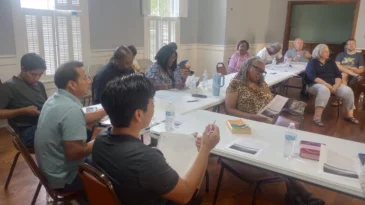
A series of small conversation groups were offered through the conference to foster discussions among participants from particular contexts, including youth leaders, seminarians, those searching for a call and those serving outside of congregations. One conversation group was for Presbyterians from small congregations — and in the Presbyterian Church (U.S.A.), the majority of churches have fewer than 100 members (although most Presbyterians attend large churches).

The participants shared stories of hope and innovation — but also of reality. Anderson, the co-moderator of GA, said her church – Unity Presbyterian Church in Temple Hills, Maryland – has about 25 in attendance each week and is dissolving its charter at the end of this year. “This is a holy and tender time for the congregation,” Anderson said. “We are trusting God with what’s next, as difficult as that is.”
Mary Harris Todd, pastor of Morton Presbyterian Church in Rocky Mount, North Carolina, said her church draws 20 to 25 people to worship on a typical Sunday. “I don’t know what the future is for us either, but there’s so much need” in the congregation and the nearby community, Todd said.
Some of the newer members “are truly poor,” so the congregation is working on issues involving financial sustainability both for the church and for people trying to support their families. “There’s a sweet, sweet spirit in that place,” Todd said. “It occurred to me the other day that some artists work on a big canvas. I work on tiny canvas —I’m a miniaturist,” and a community organizer.

The Rocky Mount area has five Presbyterian churches — “three are very small, one is medium small and one is just small,” Todd said. Each has its own community and culture, but they are looking for ways for “power to flow” among them. “In an ocean of Bible Belt religion … we’re needed there,” she said. “We’re needed in all those communities,” to provide a progressive understanding of the Christian message.
The small group discussion flowed from the practical – how can small churches band together to buy toilet paper or payroll services or hold joint Lenten Bible studies – to the need for leadership development. How to keep elders and church volunteers from burning out in a small church – or holding control too tightly?

In West Virginia, Kevin Geurink serves First Presbyterian Church of Logan, and he’s part of a cluster of three churches who collaborate. “This is coal country you’re talking about,” Geurink said. “Different world. Great folks.”
At one small church, the presbytery has given permission for a congregational leader to preach who has not yet gone to seminary, although he’s beginning an online training program. So the other pastors from the cluster meet with him every week to do lectionary study together and help him prepare his sermon. “Our presbytery has been very permission-giving,” Geurink said.
What’s next?
Jody Mask, pastor at Markham Woods in Lake Mary, Florida, said: “I want to take home with me a spirit of creativity and risk-taking that is sorely missing in the church today. Perhaps our lagging spirit as well as our lagging membership stems from an embrace of comfort.”
NEXT Church encouraged participants to continue these conversations at regional gatherings over the next year and commits to providing further resources on their website.
The 2019 NEXT Church national gathering will be held March 11-13 in Seattle.
Reporting by Jana Blazek, Jill Duffield and Leslie Scanlon; All photos by Jodi Craiglow unless otherwise noted.
Editor’s note: Videos from worship and keynotes are available on the NEXT Church website.