McALLEN, TEXAS – The caravan of thousands of Central American immigrants is coming, to be met at the border by the military. Possibly militia groups too – some are loading up their rifles and heading south.
As they look ahead, humanitarian groups working with asylum-seekers along the U.S.-Mexico border aren’t sure exactly when and where the caravan will arrive – whether the asylum-seekers will head as a group to one spot or split up and spread out. They don’t know what will happen when the immigrants arrive or what President Donald Trump will do.
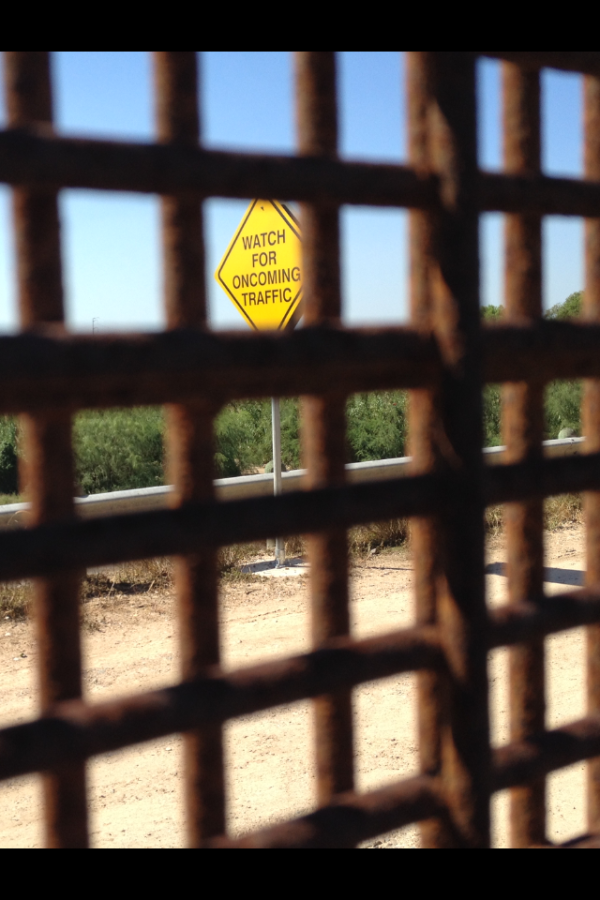
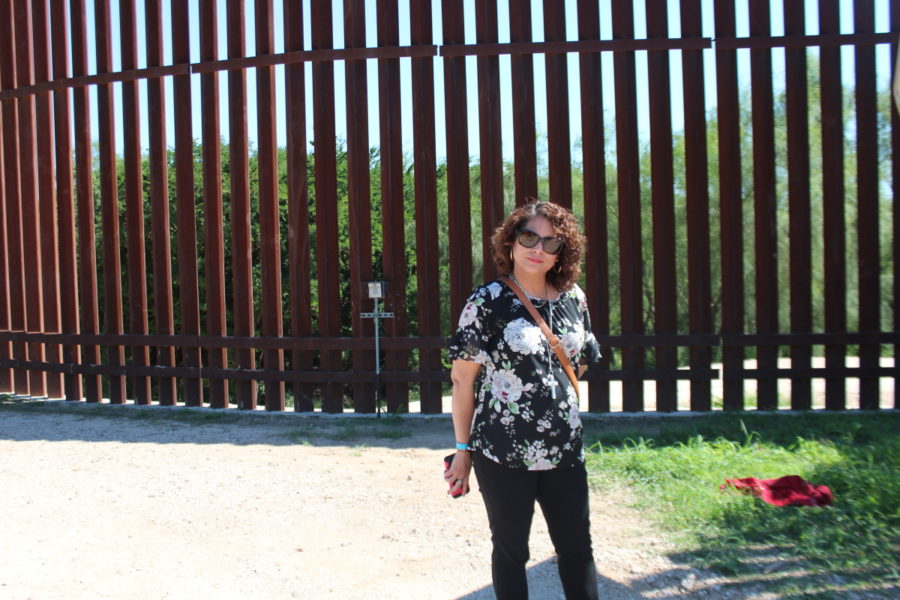
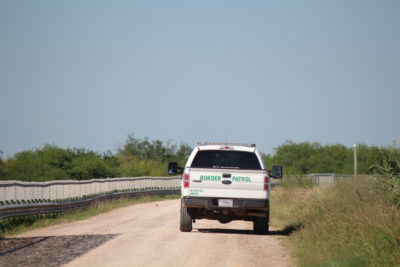
Already, people in the Rio Grande Valley see the presence of U.S. troops, who are stringing razor wire along the border fence, conducting maneuvers, circling in helicopters overhead.
There also are concerns about overwhelming the humanitarian response, with thousands of asylum-seekers approaching and volunteers already exhausted from months of trying to meet the need. Asylum-seekers, many of them families with children, arrive at the border with no food, no water, no warm clothes. Volunteers and donations are urgent needs.
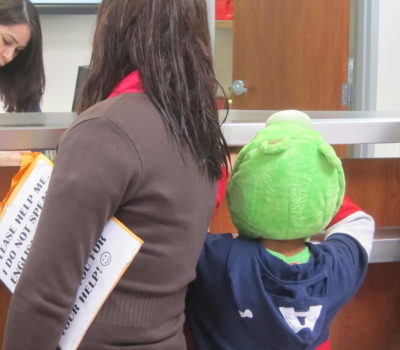
“Our system in its current state will not support the numbers they are thinking are coming,” said Lizzie Cavazos, who is part of the Angry Tias and Abuelas of the River Grand Valley network, and one of the key volunteers helping asylum-seekers at the McAllen bus station.
“I can only say what I’m seeing,” Cavazos said. “I’m seeing militarization of my border. I’m seeing troops being brought in. I’m seeing preparations being made for huge amounts of people. … It’s going to be overwhelming to the support systems that are in place, the advocacy groups that are in place in the community.”
Presbyterians also are trying to plan for what comes next.

A group of Presbyterian Church (U.S.A.) leaders, including José Luis Casal, director of World Mission, representatives from Presbyterian Disaster Assistance, and Teresa Waggner and Amanda Craft of the Office of Immigration Issues, went to the border near El Paso in early November to discuss border outreach – visiting an Immigration and Customs Enforcement detention center in El Paso, meeting with local partners in the work and crossing the border to meet with leaders of Pasos de Fe, a bi-national ministry in Ciudad Juarez, Mexico.
When the caravan arrives, Presbyterians hope to participate in a prayer vigil or public witness at one or more border bridges to welcome the immigrants.
And the Immigration Task Force of Mission Presbytery in south Texas is meeting regularly – trying to coordinate Presbyterian involvement with other efforts at the grass roots.
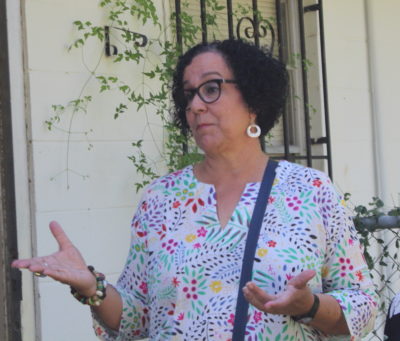
At the Humanitarian Respite Center in McAllen, “Sister Norma (Pimentel) does great work, and she is exhausted,” said Caly Fernández, a ruling elder from Austin and chair of Mission Presbytery’s Immigration Task Force.
“We need more transitional housing – that’s what I’ve been praying about,” Fernándezsaid. “I’ve been talking about this for two years and trying to get more Presbyterians involved,” but some are reluctant.
Fernández said she met with a group of pastors, some of whom essentially said, “I love your ideas, Caly, but we don’t want to get involved’ … A lot of it is fear” – including fear of retaliation for getting involved with immigration issues in a polarized political environment.
But for Presbyterians in south Texas, “we’re right here at the front lines.”
Evolving response
At the local level, the response is constantly evolving, as the needs shift.
For example, the Angry Tias and Abuelas of Rio Grande Valley is pairing with a group called Grannies Respond to create what’s being called the Overground Railroad, where volunteers in cities such as Louisville and New Orleans meet the Greyhound buses at transfer points, providing a welcoming presence and handing out snack bags, diapers, tissues and toothpaste, toys for the children. Often the asylum seekers sit at the back of the bus and are the last to get off – emerging shyly when the volunteers hold up a sign in Spanish welcoming them
All are in the United States legally, having initiated the process of applying for asylum, and most are on their way to stay temporarily with friends or family – sometimes riding the buses for days across the country.
A group of volunteers from California, who come from tech backgrounds, are looking for ways to make it easier and more efficient to do what’s being done on the fly now – for example, trying to design an app to figure out where volunteers are needed, and getting them scheduled. They’ve also got experience with fundraising and seeking corporate donations.
“We didn’t have the time to sit back and look at the systemic issues,” Cavazos said. “They started to look at the system as a whole,” with this focus: “Work smarter, not harder.”
Changing system
There also is concern that immigration officials may change the current system, in which asylum-seekers generally are detained and then released at the Greyhound bus stations in places like Brownsville and McAllen and San Antonio, where volunteers try to help the immigrants, most of whom don’t speak English, navigate an unfamiliar transportation system and get the food, water and shelter they need.
There have been indications, however, that things may be shifting.
On at least two days in late October, immigration officials released much larger numbers of asylum-seekers from detention than usual with no warning – both in McAllen and San Antonio.
There also have been reports that Immigration and Customs Enforcement may release asylum-seekers onto the streets, not taking them to bus stations or airports, where humanitarian volunteers are in place to help.
Courts and ports
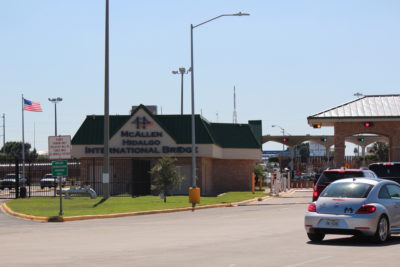
This is a new initiative from Texas Impact, a statewide religious network, working in partnership with the American Civil Liberties Union. The idea: take small groups of faith leaders to the border, where they observe the proceedings in federal court for immigrants charged with misdemeanors for illegal entry, and go to the border bridges in Brownsville or McAllen, where asylum-seekers wait for permission from immigration officials to enter the country. (See this Outlook story on a day spent in immigration court in Brownsville, Texas).
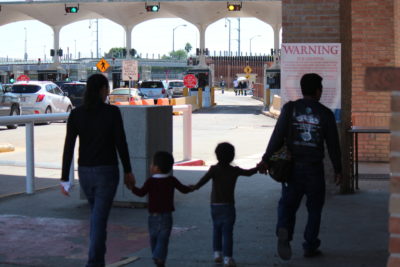
At the bridges, “we cross over, talk to some of the people who are waiting there in line, hand out water bottles, granola bars … and hear their stories about what they’ve gone through to get to his place,” said Erica Nelson, who’s coordinator of the Courts and Ports program and a graduate of Austin Presbyterian Theological Seminary. Courts and Ports took its first group to the border in September.
“The mere presence of people of faith in the courtroom … it makes a difference,” said
Ezequiel Herrera, an Austin seminary student who helped develop the Courts and Ports program as a pastoral fellow with Texas Impact last summer. “Judges are more careful. They put forth their best behavior.”
It may make a difference to the immigrants as well to know that people are paying attention, said Herrera, whose father was a rural physician in the Dominican Republic, caring for Haitian migrant workers. “Seeing the face of the other, the Imago Dei (image of God) in the next human being, my neighbor – that is what motivates me.”
Family separation. While a federal court ruling last summer was supposed to lead to the reunification of children separated from their parents at the border, those working on behalf of the immigrants are trying to monitor to what extent that’s actually happening.
 Efrén C. Olivares is a lawyer and the Racial and Economic Justice program director of the Texas Civil Rights Project. Speaking to college students at the University of Texas Rio Grande Valley, Olivares described meeting for the first time last summer a 33-year-old Guatemalan mother who’d been separated from her son.
“All of a sudden I hear someone sobbing,” Olivares said. After the woman’s husband was murdered in February, she fled with her son. After a long journey, “they made it to the U.S., to the promised land, so to speak. Now she does not know where her son is.”
Some parents who were separated have been deported, and some of their children remain in the U.S. “It’s been very hard to find them,” Oliveres said. “There was something fundamentally and viscerally wrong for taking children from their parents and not to have to be accountable to anyone for that. …It’s going to have repercussions for years” for those families.
Deportation
Another reality is that even if immigration let asylum seekers into the United States, even if they are released from detention and make their way through days of travel to friends or family or a sponsor across the country, there’s no guarantee that a judge will actually grant them asylum. Even if they claim they are fleeing violence or retaliation from gangs, as many do, they can still be deported and sent home.
The deportation rate of asylum seekers varies by region – with the rates of petitions granted varying significantly from judge to judge, analyses have found. The rates of passing a credible fear review – one step in the asylum process – varied from 1 percent in Lumpkin, Georgia, and 2 percent in Atlanta, to 60 percent in Arlington, Virginia, according to a review of immigration court decisions from October 2015 to June 2018 conducted by the Transactional Records Access Clearinghouse, a research center at Syracuse University.
“It’s kind of the luck of the draw where you end up,” Olivares said. Another big factor: whether the asylum-seeker has legal representation.
That review also found the results of credible fear reviews have been shifting – with only 14.7 percent of Immigration Court determinations finding that asylum seekers had a “credible fear” in June 2018, compared to roughly twice that in the last six months of 2017. “This recent change has major implications,” the report states, as “individuals who don’t pass these reviews are usually quickly deported back to their home countries.”
Luís Guerrero, a volunteer at the McAllen bus station, said asylum-seekers tell him: “We don’t know if they’re going to send us back. We don’t know what the judge will say to us. But we’re going to do our best to stay here.”
The caravan. As the caravan approaches, concern grows about what will happen next
“Oh God, I’m really afraid,” Fernández said.“I feel this heavy, heavy weight that it’s going to be bad. Having the military presence there with guns is what scares me. … We have these white militia groups coming down – that scares me.”
She hopes people recognize the asylum-seekers are men and women fleeing violence and corruption in their homelands.
“I hope it softens people’s hearts and they’re moved to do something,” Fernández said. “I’ve been fasting and praying. … This is a moment in history. I don’t want it to end badly.”
When Cavazos began volunteering at the McAllen bus station last summer, she had no idea the work would be just as intense six months later. “I always thought our group had an expiration date,” Cavazis said. “I did. Honestly, I thought this was something I would start, and there would be a beginning and an end. Today, I don’t know.”
When the caravan arrives, “we’re going to be here too,” Fernández said. “Ay, Dios mio. The way of the world.”