 F. Morgan Roberts
Cascade Books, 108 pages.
Reviewed by Thomas G. Long
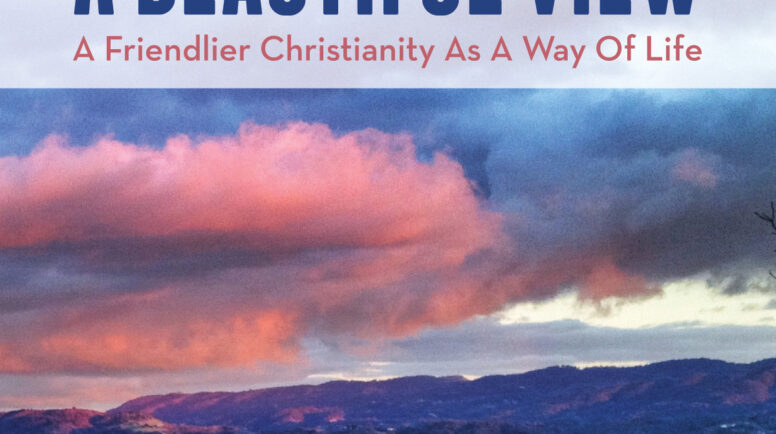
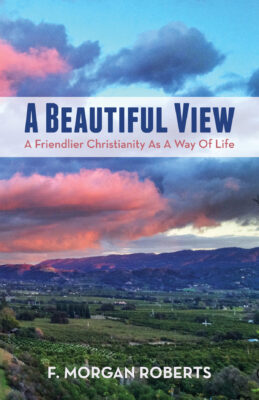
Near the end of this lovely and engaging book, Morgan Roberts reveals that one of his “hobbies” has been studying the life and work of C.S. Lewis. It comes as no surprise, because “A Beautiful View” has much in common with “Mere Christianity” by Lewis. Both books successfully seek to describe the Christian faith conversationally, compellingly, generously and free from the abstractions of specialized theological language. “Mere Christianity” has been useful over the decades for both personal reflection and group study, and Roberts’ book will undoubtedly be similarly valued. To that end, Roberts even includes a helpful final section on “ideas for group study, personal reflection and additional reading.”
Two primary impulses are at work in “A Beautiful View.” First, Roberts desires to provide an accessible primer for readers who want to learn the basic convictions of the Christian faith. He manages to touch most of the essential theological bases – creation, salvation, Trinity, the cross, resurrection – but these topics emerge less as tight systematic categories and more as responses to questions about the faith on the minds of readers, such as “What is all this about evangelism and being ‘born again’?” Roberts prose is clear and appealing, and he richly employs his preaching gift for the apt story and the arresting analogy. In his imaginative rendering, the Trinity becomes “the great dinner dance,” and, alluding to Gary Cooper in the Western film “High Noon,” he describes Calvary “as the great ‘high noon’ moment of history … [when] all the power hatred and cruelty of the world … finally confronts God’s love in Jesus of Nazareth.”
Roberts’ second impulse is to present a friendlier, more joyful and gracious version of Christianity as a counter to the angry, exclusionary and judgmental versions that exist either in people’s imaginations or, even more sadly, in actual practice. Roberts remembers a humorless and authoritarian pastor he encountered in his youth whose “ministry could have been likened to a travel agency that specialized in guilt trips.” By contrast, Roberts is fond of citing the “Mr. Rogers’ theology,” that “God likes you just the way you are.” Running like a ribbon through this book is Roberts’ strong and hopeful affirmation: “In the end, love wins!”
I can well imagine using this book as the centerpiece for an engrossing adult study. The conversational style of the book invites response, and the fact that Roberts knows well the real theological questions that people bring to the table is guaranteed to generate a lively and significant conversation. I can also imagine preachers using this book as the basis for a sermon series on “Christianity 101,” even borrowing some of Roberts’ vivid stories.
I heartily recommend “A Beautiful View,” and my only real complaint is that I finished the book desiring even more. The author’s elegant defense of the beauty and joyfulness of the gospel against rigid, narrow and mean-spirited disfigurements of Christianity is much needed and deserves our applause. Now, I would love to see him bring his wisdom and discernment to address the other side of the ledger, namely to those places where notions of divine mercy thin out into images of a God who is merely “nice,” where the church eagerly embraces the assurance of pardon but skips over the prayer of confession.
 Thomas G. Long is the Bandy Professor Emeritus of Preaching at Candler School of Theology in Atlanta.