Guest commentary by Raymond Anderson
In mid-June (June 15-19, 2019) church leaders and scholars from several countries met at Princeton Theological Seminary to examine Karl Barth’s Christ-founded teachings about how our lives end and what we may hope for in an afterlife. The title of this, one of several annual Barth conferences, was “The Finality of the Gospel: Karl Barth and the Tasks of Eschatology.” The technical term eschatologymeans “last things.” But that can be quite misleading, since Christians may rely on a whole array of further hopes regarding our being together out beyond our earthly life span, and many believe that God’s eternity is not a sterile timelessness, but may embrace a vast wealth of re-created time and place.
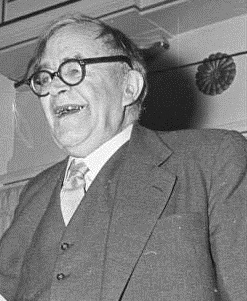
Karl Barth was one of the most influential and Bible-attuned Reformed theologians of the last generation. But it becomes shockingly apparent that what research like his discovers through close analysis of Scripture is that the future vision Jesus inspired may have been a far cry from many of the popular notions we’ve grown up with. And it actually promises a great deal more.
I should explain: I was at this conference, not because I have been particularly a scholar of Barth during my more than 50 years of teaching Christian thought and ethics at Presbyterian-related Wilson College. But as it happens, I had the good fortune to be one of Karl Barth’s last American doctoral students in Switzerland, and he was the advisor for my book on John Calvin. So my role in part was to bring some rare memories of the gracious man himself.
Upon graduation from San Francisco Theological Seminary, I received scholarships to do doctoral study in Europe. So after a year’s post-grad tussle with theological discussion at a German university, I established residency as Barth’s doctoral candidate in Basel, Switzerland, and began my Calvin study under his guidance. After several semesters, I took a job as fraternal worker in Calvin’s own city, Geneva. While there I attended the French-speaking University of Geneva and commuted regularly across Switzerland for meetings with Barth. Then I returned home for a year as pastor to students at the University of California Los Angeles while working on my dissertation. When I returned to finish my doctorate in Basel, my command of German had badly withered. Yet Barth invited me to take part in his kleine Kreise, or inner circle, composed of a handful of his doctoral candidates and theological friends whom he invited regularly into his living room to discuss the ideas with which he was most intellectually involved.
These were the days when there was a hue and cry and speculation abroad about whether the renowned Karl Barth was ever going to complete his more than 14-volume “Church Dogmatics”with the crowning section he’d long promised on eschatology. Indeed, he had us reviewing together the eschatologies of Jürgen Moltmann, Carl Heim and other theologians.Barth showed special interest in Moltmann’s recent “Theology of Hope,” worrying only that Moltmann had become a bit reductionistic in his monologic concentration on hope (something Moltmann himself amended later on). I remember Barth telling us that it’s nice, as an oldtheologian, to be able to sit back, puff your pipe and see where theology is going, without feeling obliged to answer it all.

But, as it turned out, such comfortable resignation was not what was causing him to hang back from completing his 20-year effort on “Church Dogmatics.”It began to strike me with ever-greater clarity that although Barth had us up to our eyeballs in eschatology, he was not at all anxious to write up the long-envisioned crowning eschatological section for “Church Dogmatics.” He didn’t even show much interest in providing a brief summary, as he had for the theme of infant baptism.I began to see that for at least four reasons, he was leaning towards leaving his monumental work as it was – unfinished.
First: Least among these was the simple readiness of an old warrior to retire and take his ease, leaving a heavy task to other, younger scholars. He really did feel a grace-based freedom to enjoy his own well-deserved retirement. But that does not really explain his reluctance.
Second:Truly dismaying for him had been the appearance on the scene of some unwelcome firebrands who, thinking themselves to be committed “Barthians,” had begun to treat “Church Dogmatics” as if it were a summa theological – a final authority (as if it had the last word on every issue and aset answerfor every question). Nothing could be further from its spirit and intent. Although he had expanded it to be far longer than Thomas Aquinas’ famed “Summa Theologica,” Barth always had intended it to invite and evoke free discussion between believers of divergent backgrounds, whose emphases and perceptions would be focusing on understanding the living Christ from widely divergent angles. Now to leave his work unfinished would underline that it made no pretensions of being the Protestant summaor a paper pope.
Third:But more than that, Barth well knew that the church was unready to be recalled to the apostolic vision of our after-life. Indeed, the question of timing was always of greater concern to him than most realize. Barth’s unfolding grasp of apostolic afterlife beliefs would give a severe jolt to many in the church. And he knew what a bombshell his refreshed biblical eschatology would become. It would upend the Greek notion of a built-in immortal soul(independent of God) and the attendant spirit-vs.-body dualism that has often invaded the church and has pushed aside the resurrection of the bodyfrom the Apostles’ Creed in favor of the mythic idol, so popular today, of a so-called human spirituality.
Once during our discussions he wheeled on me and asked: “Do you mean to say you think we’ll go on meeting new people and having new experiences in future life?” – words to that effect. I was taken aback! Having grown up in the church, I didn’t realize that the scriptural testimony could be read any other way. I had always shared the notion of a kind of jump-start afterlife return to the same interactive linear events that we’ve experienced all along. That the many-mansioned existence that Jesus promised in John 14:2, as Barth gathered from other passages in Scripture, especially from Paul, was not simply to be a renewed sequence of the same sort of comings and goings that we experience here and now, but, while preserving that past in consciousness, is to be somehow wondrously more.
Salvation of the whole brought into complete conformance with God’s grace – that meant the whole kit-and-caboodle of what we have lived day by day, all preserved and straightened out: the little girl, the lover, mother and the mature woman with grandchildren, all, future-promised to us. It meant somehow tapping into and sharing God’s full, simultaneous grasp of everything we have been together – all, somehow at an actual restored and sanctified living level. All, not just as a vivid memory trace or dream, but a bodily resurrection,somehow set in God’s own humanity: an eternal plenitude of new times after this current time for us.
In other words, Barth read our salvation to entail God’s preservation of our whole existence, perhaps in a re-framed, amended version, but as graciously embracing and preserving every moment of it from beginning to end – of the small child no less than of the mature person – with every love-bound moment living on in his divine simultaneousness, as an irreplaceable part of our delimited drama together. All this, not just stored and vivid in God’s memory, like a film on a shelf, but with our living moments actually preserved, somehow, and alive as irreplaceable parts of the corporate whole – named persons whom a loving God will not be without. (This means our individual personhood is to be upheld in his everlasting corporate humanity and made accessible to our consciousness for us to share in full awareness and joy.)
The afterlife for faith, then, is to be so full and vivid, so unlike all previous experience, that its promise of unimaginable, living joy escapes description. Its workings remain completely beyond us – a wondrous, ineffable mystery to be taken entirely on trust, as infinitely better than we could imagine. And since God’s grace has been experienced in Christ, as open to all, it may be hoped for all, without our ever claiming some abstract universalism above our Re-Creator’s freedom simply to be himself, gracious.
Again, since there is nothing in our direct experience that even begins to mirror this vision of faith, we can’t describe it more specifically. So it remains a promised wonder for us – lodged in our trust that we will always be in gracious hands, always embraced by the Christ-expressed humanity of God himself. Here we are totally dependent on him, with no immortality of our own – nothing that we could boast of apart from his unshakable love for all his creatures.
As said, Barth was quite aware of what an uproarious reaction this truly Trinitarian eschatology would evoke when fully spelled out. So realizing that at his frail age he was scarcely up to the task of defending against the hostile polemic that would explode around him, he was quite content to leave the “Church Dogmatics” without a separate eschatology, and let us grasp on our own those life-framing hopes gradually from its unfolding sweep and the Scripture that undergirds it.
Fourth: Another related concern was adding to Barth’s reluctance to write a separate eschatology. Well known is his evolving awareness that Christians’ ethicsreally should not be written up separately, as a “special ethics” (although he had done just that in his early days). For if we are to avoid a deadening abstraction or idolization of set behavior patterns, our ethics would be better dealt with as part of the unfolding discussion of each article of living faith in turn.
Now he had come to see Christians’ eschatological claims in a similar light: They should not be isolated or abstracted and set off by themselves, but are best unfolded at every juncture of faith’s story, as the inter-webbed claims of Spirit-responsive relationships unfold themselves at successive levels of theological discussion. If afterlife gifts are separated out and isolated as a separate topic, they risk becoming taken-for-granted mechanical assets, or even idolized as proud human possessions. Consideration of God’s graciously gifted corporate eschatological promise should be in view across the entire front of unfolding faith claims – from the first creation and Old Testament God-thought on through to Christ’s reconciling message and his death and resurrection as our re-creative healer and only judge, “at the right-hand of God the Father.” Barth knew that such eschatology had been in the picture at every juncture of his writing. Indeed he had made clear that there would be no Christian eschatology without the entire Old Testament perspective behind it, on the one hand, and the Messiah’s many-mansioned promise on the other (John 14:2), along with his final resounding claim that the Son of Man is to sit at God’s right hand, that the all-forgiving peaceful healer is to be our sole final judge, enacting the life-giver’s power over death itself (see Mark 14:62).
The wide sweep of conference discussion vividly underscored Barth’s conviction that the doctrine of “last things” should not be relegated to sheer timelessness or isolated as our last consideration in the discussion of our faith. For it entails a hope and promise to be in view throughout.
Personally, I can’t say that I was ever fully at ease with this reading of Pauline eschatology. But being an old man myself now, still seeing “through a glass darkly,” I trust that my curiosity may be satisfied before long, “face-to-face.” In the meantime, why should anyone be averse to a prospect different from, but infinitely better than, anything we ever could have imagined?
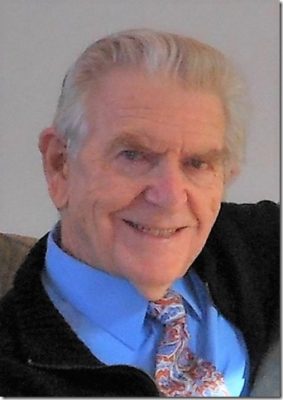 RAYMOND KEMP ANDERSON is emeritus chairman of philosophy at Wilson College in Chambersburg, Pennsylvania. As one of Karl Barth’s last doctoral candidates, he wrote “Law and Order: The Life-Structuring Dynamics of Grace and Virtue in Calvin’s Ethical Thought.” After his career as teacher and Presbyterian pastor, he has authored several books including “An American Scholar Recalls Karl Barth’s Golden Years as a Teacher (1958-1964)” and “New Testament Micro-Ethics.”