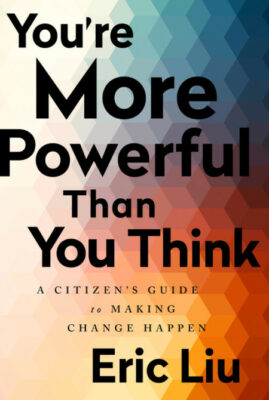
 Eric Liu
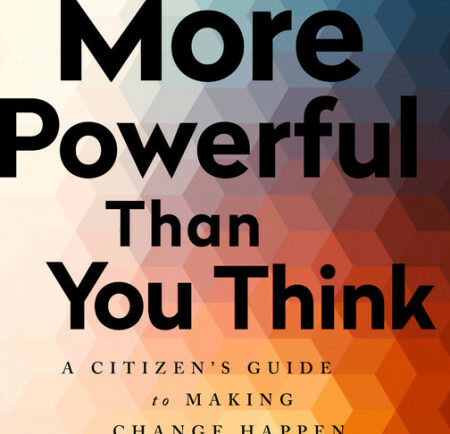
PublicAffairs Books, 256 pages
Reviewed by Allen Timm
Community organizer and activist Eric Liu believes that individuals have the power to influence their community. When people find others to join them, they have even more power. Congregations have both people and resources that can be employed to bring change to their community. What kind of change? That is the question every congregation needs to ask.
What breaks the heart of God in our community? Where is God at work in our community that we can join? Who else hears this call who can join us?
Liu describes how to change the narrative. He says that too often people blame others for the problems that exist. Rather than talk about “them,” Liu suggests we talk about “us.” We have to change what needs to be changed. We can rewrite the narrative and bring people together to create change. How do we do that? We claim the legitimacy of the change we are calling to make. Liu calls this rewriting the rules of who has the authority to decide, what gets decided and how decisions are reached.
The key ingredient of change is to rewrite the narrative. We have to describe alternatives. We who have high ethical standards and clear moral values can write a new description of how life can be lived. As the body of Christ, we want all to be included in a quality of life that frees us to worship God. We want all to have nutritious food and an avenue to use our gifts to serve humanity, whether vocationally or through volunteer work.
Once alternatives are described, we need to provide examples of the vision that we have for our community. We need to share stories of people who are lost and people who have found their way. Create heroes, says Liu. Make your vision a fable of what life can be like for all involved. Give examples of real people, not just wishes.
Then Liu says we must change the equation: “Act exponentially.” When we think and act in networks, we can engage more people and multiply the resources to get something done. When we engage others, they also win. When we share power, the community wins. The church wins. Liu suggests we act powerfully, carrying in our countenance the authority that we have to bring change.
The definition of power that Liu presents is this: “The capacity to ensure others do as you want them to do.” What does this have to do with the church? As we pray, worship and listen to the cries of the poor, we hear what breaks God’s heart. As the Presbyterian Great Ends of the Church state, we serve as the exhibition of the kingdom of heaven to the world. We have our buildings where neighbors can meet. We have people who know others. We have money. We have our name and reputation.
Liu calls us up short if we only point fingers or carry signs. He invites us to identify what breaks the heart of God, find others who hear the same call and together find ways to engage our community to create change. We have more power than we think because the Holy Spirit guides us, and when we listen to that voice and mobilize people, God leads us to bring change.
Allen Timm is executive presbyter of Detroit Presbytery.