 Jemar Tisby
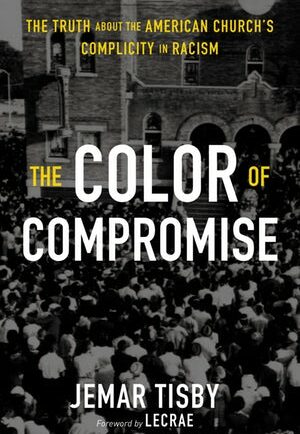
Zondervan, 256 pages
Reviewed by Robert Melone Jr.
It is humbling to be a Christian pastor these days, for in addition to pastoring a faith community, ministers are also providing sustaining leadership to a religious institution. And that institution has a very marred and checkered past — a past filled both with healing and with hypocrisy, compassion and complacency, peacemaking and prejudice.
In his new book, “The Color of Compromise,” pastor and prophet Jemar Tisby tackles the lesser-known and often hidden side of the American church, providing his readers with a broad overview of the hypocrisy, complacency and prejudice that both stains and heretically denies the gospel we have sought to proclaim. American Christianity’s tragic complicity with centuries of racism is powerfully exposed — beginning in colonial times and during the turbulent years of the American Revolution, through the era of the Antebellum South and the Civil War, right on up to the days of Jim Crow and the civil rights movement, culminating with the Black Lives Matter movement and the eventual election of Donald Trump.
Through the poignant telling of stories from various epochs in American life, Tisby takes us on a powerfully insightful journey into the church’s stunning silence in the face of America’s original sin. Readers are reintroduced to well-known white church leaders who failed to hold the church appropriately accountable for their oppression of people of color, and lesser-known black church leaders who managed to keep hope alive in the face of ongoing injustice.
Tisby closes his work with a final chapter on the urgency of taking immediate action. The church is encouraged to address its sin not just through repentance, but through a variety of proactive ministries: reparations, advocating for the taking down confederate monuments and participating in modern-day civil rights movements. Most importantly, we are challenged to do what we have failed to do for so long: more forcefully denounce the racism that continues to haunt our nation. He reminds us that faith without works is indeed dead, and the American church still has much work to do!
The “Color of Compromise” allows 21st-century Christ-followers to once again see that while the United States was founded as a supposed Christian nation, the universal rights referenced in our Declaration of Independence have not been, and are not, universally applied. Not to women. Not to indigenous Americans. And certainly not to people of color! And yet again and again, the church fails to challenge American racism, and our compromises continue to make us painfully complicit in this sin.
Tisby states at the very beginning of the book that he loves the church, and that his desire is not to discredit the church or Christians. Rather, his goal is to build up the body by “speaking the truth in love,” even if that truth is painful. And he does both, well! The book is full of truth. And it is indeed painful. But things can change, and when they do, the American church will become a more accurate reflection of the gospel that Jesus came to proclaim.
Robert Melone Jr. is the pastor at Mount Vernon Presbyterian Church in Alexandria, Virginia.