Guest commentary by Amy Cerniglia
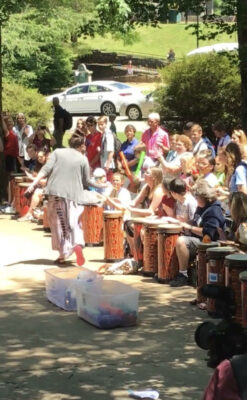
This summer at the Presbyterian Association of Musician’s Music and Worship Conference at Montreat, I enjoyed participating in the intergenerational drum classes, which required no auditions or prior experience. As a music director, it was one of many great ideas from the conference to bring home for my church. But for one boy with Down syndrome, this was his first chance to participate in leading music during worship. As he shared his story, an elderly woman agreed, tears in her eyes.
 It saddened me to hear he and others seem to lack opportunities in their home churches. Surely we can create accessible spaces for people of all ages and abilities. Many adults at my church can still recall hearing for the first time, as children, that they were not allowed to join in a school choir or other opportunity because they “could not sing” or “had no rhythm.” In reality, only a very small percentage of the population lacks the ability match pitch, colloquially known as “tone deaf.” But it does take time to learn to match pitch or keep a rhythm, and people quickly label one another in our culture of increased specialization.
As Geoff Colvin pointed out in his article for Fortune: “Talent has little or nothing to do with greatness. You can make yourself into any number of things, and you can even make yourself great.” Almost anyone can improve at anything with practice. If churches only make space for certain members on their chancels, musicians become viewed as performers on a stage and worshippers eventually learn that they are only welcome to participate as an audience.
A tightly controlled image may arguably entice members of the broader community who might not otherwise step foot inside. Still, an exclusive program can too closely resemble the superficiality of today’s world. For example, many women have told me about the negative impact of growing up in churches where all female participants were thin, able-bodied and gender-conforming. Even at churches with inclusive policies, our most marginalized members will suffer if they see that they don’t conform to the image upheld in worship services.
Our music programs must never draw hierarchies between practitioners and listeners, professionals and amateurs. This discourages any member who did not grow up with the privilege of an arts education, an increasing luxury as more and more state budgets slash funding in schools. Yet countless studies show the advantages of making music in community. One study from Oxford University looked at how people attending adult education classes grew closer over seven months and concluded that singing groups bonded most quickly. A diverse number of our members, rather than a select few, are most in need of such fellowship.
Certainly, many nonprofit organizations exist to provide opportunities for shared music-making. Some cities offer opportunities such as people experiencing homelessness and survivors of domestic violence. Participants report feelings of joy, belonging and confidence as they hone a new skill. The intergenerational drum circles in my Central Florida city feature small children and older adults playing together joyfully. These groups are wonderful, but are not intended to provide spiritual formation. Church choirs offer the most cost-effective way to create music in Christian community, where people need only bring their voice and weekly commitment. Drums or handbells may incur additional expense, but offer great options for churches that have access to such instruments.
As I saw at Montreat, an inclusive program can reach the people who are most in need of communal music’s benefits. It’s uncomfortable to experiment and learn as a solo performer, but in an ensemble setting, the more experienced musician helps to nurture the beginner. Consider Rachel Held Evans’ appreciation for reciting creeds in worship each week, where despite nagging doubts, she felt the congregation’s voices carry her own. When strong and weak voices carry one another through the high note, the awkward rhythm and the end of the phrase, our church musicians offer a similar grace.
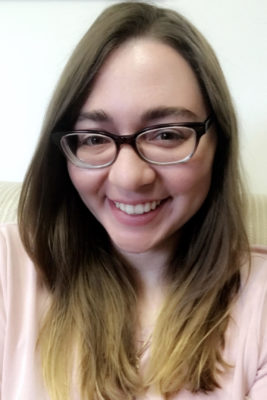 AMY CERNIGLIA is the director of music and arts at Peace Presbyterian Church in Bradenton, Florida. Her first hymn text appeared in The Hymn Society’s new collection, “Songs for the Holy Other.”