 Kate Bowler
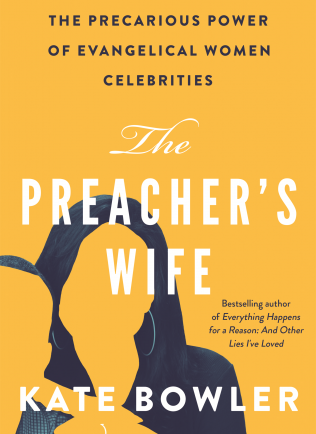
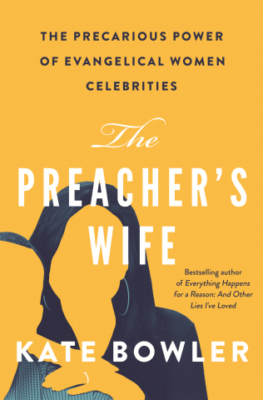
Princeton University Press, 368 pages
Reviewed by Jill Duffield
How do women in Christian traditions where official leadership roles are denied to them exercise their gifts for ministry? Kate Bowler, best known for “Everything Happens for a Reason and Other Lies I’ve Loved,” explores the fine line women in religious leadership tread both in circles where ordination is off limits and in denominations where institutional endorsement exists, but other barriers persist. Bowler examines these questions primarily through the stories of evangelical megastars past and present — women such as Tammy Faye Bakker, Beth Moore and Joyce Meyer. Through their stories, Bowler surveys the various allowable roles in which they operate and how these women navigate narrow, acceptable norms in ways that expand their influence exponentially.
The book is organized around roles of “the preacher,” “the homemaker,” “the talent,” “the counselor” and “the beauty.” And while the emphasis is on those traditions that do not offer institutional endorsement, Bowler artfully places more mainline traditions in conversation with them, noting that institutional endorsement does not necessarily come with power and can even be a hindrance to women in ministry wielding their influence. Bowler notes: “Mainline seminaries had become very rarely a pathway to popular power. The strongest voices of progressive faith did not typically have theological degrees but had learned their craft in the evangelical-dominated marketplace.” She cites the late Rachel Held-Evans and author Glennon Doyle as examples of this phenomenon.
Bowler posits that the very boundedness of the permissible roles for women in evangelical circles necessitated a creative entrepreneurial spirit that expanded their influence and amplified their voices. Female religious leaders in evangelical traditions are clear to say that they “teach” and do not “preach,” for example — but they “teach” to huge audiences of both men and women. They often operate in complementarian roles, leading women’s conferences and writing about being a Christian wife and mother. They are co-pastors with their megachurch pastor husbands. But in these allowable roles and definitions, they unabashedly market their books and conferences in ways that women in more mainline traditions do not. Subsequently, they exert more power and influence to a broader audience. Bowler put it this way: “We might say that conservative women gained considerable influence without institutional power, while liberal women gained institutional power without considerable influence.”
This book covers a lot of ground, providing a helpful appendix with timelines of women’s ordination, charts of churches with women at the helm and a breakdown of the percentage of female students and faculty in conservative seminaries. While the details are telling and the stories of particular women interesting, an observation Bowler shares in the introduction reveals the most timely and compelling subject of the book: “For women, this is an era of almost – almost feminist, almost patriarchal, almost progressive, almost regressive – and in these pages we hold the prism of their experience up to the light. The lives of public women invite us to ask again what Americans expect from women in the spotlight; and whether they will ever grow used to women’s presence in the main seats of power, in the pulpit, in the corner office, or in the White House.” This bottom-line question is well worth asking and Bowler’s book offers thoughtful insights that will help us answer it.
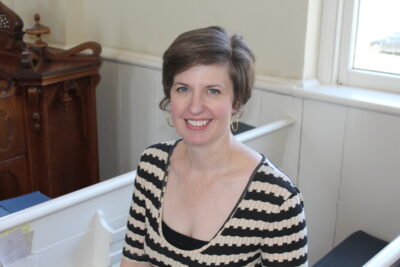 Jill Duffield is the editor of Presbyterian Outlook.