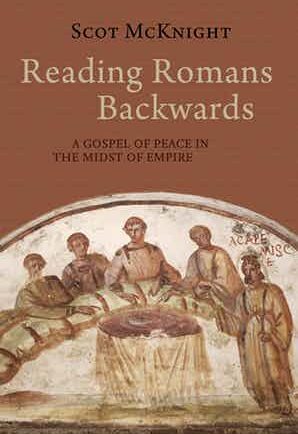
 Scot McKnight
Baylor University Press, 236 pages
Be forewarned: Anyone who reads this book will never again think of Romans in the conventional way. Scot McKnight has done a rare thing by arguing vigorously that Paul’s most famous letter is about “lived theology” rather than abstract theology. He rightly notes that Romans has influenced and shaped Western Christianity since Augustine and Calvin and Barth, all the way to the present time with contemporary scholars. McKnight is familiar with these voices, but he is determined to begin with the very specific context of Paul’s theology, namely the problem of peace between the weak and the strong. Reading Romans 12-16 as the starting point compels McKnight’s vivid pastoral theology: “Paul’s lived theology is about Peace in the empire, and it is a radical alternative to Rome’s famous Pax Romana.” The aim of this theology is primarily an alternative way of life. The early chapters of Romans set the ground for this alternative rather than the center. For McKnight the ecclesial reading is the one that makes the most sense — not only in history but especially for the present time in this country. Lived theology is what he describes as “Christoformity” and it counters all forms of privilege and power, including racism, classism and materialism. No other commentator has taken the argument of the weak and strong in chapters 14-15 as seriously as McKnight. Be not fooled by the brevity; this commentary is a tour de force that will shift both theology and practice for anyone who reads it.