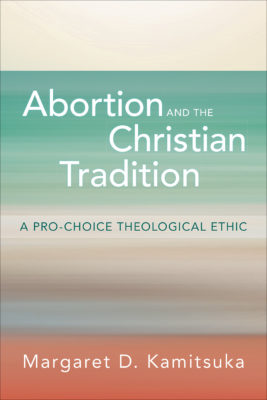
 Margaret D. Kamitsuka
Westminster John Knox Press, 250 pages
Reviewed by Angela Williams
Reproductive freedom is one of the most politicized and least addressed issues in pulpits across the United States — especially the discussion of abortion. Like many cultural hot-button topics, people in the pews might know what they disagree with that comes through the dominant religious narrative. However, we do not have many examples of a constructive, biblical and theologically-rooted approach to abortion. Margaret D. Kamitsuka offers us a deconstruction of some more toxic theologies around women’s reproductive freedom and creates a compassionate theological ethic that affirms women’s moral agency.
As Kamitsuka shows, there are abundant pro-life arguments from militant anti-abortion groups and more moderate pro-life thinkers that all place limits on women’s moral authority to make reproductive decisions for themselves. In the first half of the book, she critiques pro-life arguments from historical, biblical, doctrinal and philosophical perspectives. Each chapter includes a presentation of a variety of ways that thinkers, (mostly men) have interpreted words written in Scripture and by patristic fathers to apply to a universal priority of fetal personhood over maternal life. Kamitsuka shows a variety of claims from reputable scholars, as well as giving a realistic look at arguments coming from fringe groups that nevertheless have online followings across the country. In order to understand the landscape, we must know the full spectrum of ideas.
This book is certainly academic and could be inaccessible to a reader who does not know about Chalcedonian orthodoxy or medieval penitential manuals. In order to create a robust foundation for her pro-choice theological ethic, she lays out these pro-life arguments and deconstructs them in ways similar to how they have historically been presented. However, I found myself mentally and emotionally exhausted reading just how misogynistic, patriarchal and sexist most of the arguments are. I would recommend taking breaks, keeping a favorite snack nearby and/or having a pillow close where you can scream every so often without disturbing the neighbors.
Because Presbyterians are not of one mind when it comes to abortion, we tend not to discuss our reproductive lives at all. This is a serious disservice to being the Body of Christ. We cannot share our full faith journeys together if we cannot share our reproductive stories with each other. God is central to our reproductive lives, whether we choose to have children or not. God is especially close in times of reproductive loss due to miscarriage, infertility and abortion. Kamitsuka shows that women tend not to share their reproductive stories at church because they fear shame, stigma and judgment.
The second half of the book is dedicated to crafting constructive pro-choice proposals. The strongest piece is in the final pages, as Kamitsuka offers a Trinitarian approach to reproductive loss, wherein Mother God can accompany women during any reproductive loss because she grieved the loss of her own child in the death of the Second Person of the Trinity. Throughout the book, Kamitsuka offers a constructive, compassionate third way that fully respects the moral agency of women. I recommend this book to readers who want to dig deeply into the philosophical, doctrinal and theological discussion of women’s reproductive decisions and come out with a robust theoretical framework for affirming women and supporting our moral authority.
 Angela Williams is the outreach and faith organizer for Texas Freedom Network in Austin, Texas.