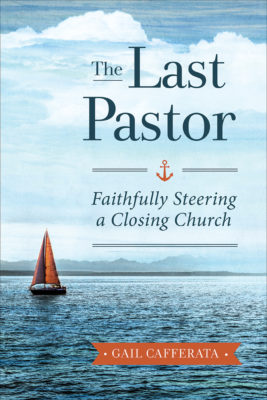
 Gail Cafferata
Westminster John Knox Press, 221 pages
Reviewed by Melodie Long
Using the analogy of sailing, Gail Cafferata navigates the waters of church closure. Based upon personal experience and an in-depth sociological study spanning a variety of denominations, this book serves as an excellent review of the complexities of the decision, the process itself and the aftermath. It is both proclamation of hope and statement of wisdom about how to be more adequately prepared for church closure.
A plethora of books and resources about church dynamics and leadership already exists. While this book addresses both issues adequately, its strength lies in its honesty about the reality of today’s church and what can be done differently. Cafferata delves through the complex emotional and spiritual web of leadership challenges. For a church to close well and faithfully, the pastor can more effectively lead with an awareness of healthy behaviors and relationships, serving as both model and guide. Through transparency, honesty and respect, trust develops that can enable the congregation to express themselves, to question, to grieve and to dare to hope. As the pastor helps the congregation understand the systemic nature of all congregations, she can assist the congregation in seeing themselves within the greater story of God and God’s people. At the end of an individual congregation’s life cycle, the pastor is vital in reflecting to the congregation the message that they have served an important part of that story.
The author bravely charts new waters in the closing chapters about lessons learned. There will be scars, and there can also be healing. While it is obvious that pastors and congregations can open themselves to God speaking through the process of closing, the journey is not one of pastor and congregation alone. Church is changing at an astonishing rate these days — an honest reality that is before us all. Judicatories and seminaries are often overlooked in the roles they could play. In the book, judicatories are called upon to be truth-tellers rather than maintainers of life-support systems; to let go of old standards of vitality, such as attendance and wealth; to embrace an evolving vision of church in this time and place; and to guide both congregation and pastor in difficult conversations with respect, honestly and compassionate love. Their role continues after the closure to assist individuals to find other congregations and to provide pastors with ongoing support. Judicatories should join the transformation a closure can bring.
In a similar way, seminaries can assist in preparing pastors more fully by formally teaching more about systems theory, congregational dynamics and differentiated leadership. In addition, they can aid in setting up a foundation for a lifetime of spiritual development and resources, of building collegial relationships and of utilizing coaches and spiritual directors. Rather than letting these become on-the-job training, seminaries can better prepare future pastors for the complexities of faithfully and knowledgeably leading a congregation in a volatile landscape.
This insightful, ambitious and compelling book is particularly relevant as we all look at an unknown future, one now complicated by a pandemic and its still unknown effects. Church is changing in ways we never envisioned. Yet we are called to be faithful and to join God’s resurrection hope. As this book proclaims, the journey of church will continue.
Melodie Long serves as transitional pastor at the First Presbyterian Church of Oshkosh, Wisconsin.