 I heard someone the other day use the phrase, “that’s so 2020.” They weren’t referencing something pleasant. 2020 has become synonymous in today’s vernacular with sorrow, loss and disappointment. It’s almost a truism at this point: 2020 sucks, the pandemic is unending and each day I hang up on a kind person who is volunteering their time for a political party.
The somewhat cynical and realist author of the not oft read book Ecclesiastes put it well: “Vanity of vanities, what does one gain for all their toil under the sun” (Ecclesiastes 1:1-2). The Hebrew word for vanity connotes ephemerality, and its synonyms might be smoke, vaper or wind. The world is vapid, says the somber poet. We are born, we live, we love, we hurt and we return to the dust. What’s the point of it all?
One response to this existential malaise that I have noticed repeatedly is what I’d call the #blessed response. It goes something like this.
“Hey, how are you holding up through all of this?”
“I’ve got nothing to complain about. I’m blessed.”
Lest I get pegged as a cynic like the poet of Ecclesiastes, I must first offer that I appreciate those who can recognize what is blessed in their life. It is commonplace for us to feel that we cannot be honest about what suffering we endure because there are always those out there suffering worse than us. But no one has the market cornered on pain. The pandemic has brought an onslaught of change, and change means loss, and loss means grief. Not one person on this earth is without loss.
Beyond shirking our real pain, the #blessed response introduces a theological conundrum to those of us on the greener side of the grass. If God has blessed me, does that mean God has punished others? Is that the way the God of Israel works? Is God a social Darwinian who elects the blessed and turns away from the forsaken? If you’re wondering if you’re blessed, Jesus gave the categories in a sermon. The poor are blessed, the grieving are blessed, the peacemakers are blessed, the meek are blessed, the persecuted are blessed. So, I might redirect our #blessed worldview and say that at this moment single mothers are blessed, schoolchildren without technology are blessed, ICU doctors are blessed, pastors doing COVID-19 funerals are blessed.
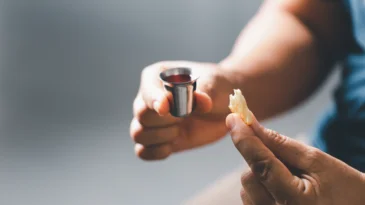
I’m not sure this stuff will preach during stewardship season, but it’s been on my mind. I wonder if it is possible that our definition of gratitude has grown narrow? I’d like to suggest that rather than the #blessed response, we #BlessGod. One of the particularities of Judaism that I have always loved is their penchant for seeing that the world in all its simplicity is beautiful and charged with holiness. Jews have blessings for everything imaginable. There’s a blessing for the toilet, a blessing for Sabbath meals, a blessing for a good walk, a good book, the birth of a child, and the death of friend. My wife and I pray one such blessing before every meal. Sometimes we don’t know what to pray for, so we say, “Blessed are you Lord our God, king of everything, for giving us the bread from the earth and the fruit from the vine.” The unifying thread that weaves together the mosaic of these Jewish prayers is that they all bless God. This way of praying and paying attention, says Jewish theologian Abraham Heschel, produces what is most important to being human: wonder. More than certitude, blessing God paves the path to wonder. You can bless God when you suffer, because suffering produces empathy for others who suffer. You can bless God when the world is sick, because the sun still sets and the birds still defiantly chirp.
The road to wonder and joy is not discovered in rapturous and revelatory moments. This road is found in the small, simple and sublime moments that make this world truly full of wonder. It is found not in recognizing the gifts, but also in seeing the face of the giver in the mundane. Don’t know how to pray these days? Bless God for your unknowing. Are you angry at the state of the world? Bless God for emotions. Are you not sure what to preach on stewardship Sunday during a pandemic and weeks before election day? Bless God for reusing sermons.
 JOSHUA MUSSER GRITTER co-pastors First Presbyterian Church in Salisbury, North Carolina, with his wife Lara. They watch movies together with their dog Red.