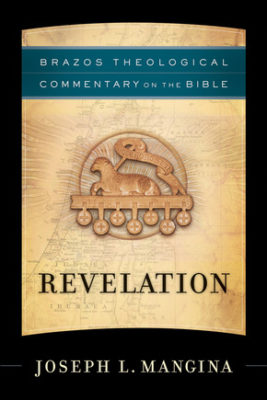
 Joseph L. Mangina
Brazos Press, 272 pages
During this global pandemic, many have used apocalypse to describe what is happening. Some have been Christian, but many using the term have no religious affiliation. Apocalypse, as understood in general culture, refers to some cataclysmic event signaling that the end of the world is at hand. More astute commentators point out “unveiling” is a more accurate rendering of apocalypse. The challenge at hand, they argue, is discerning what precisely is being unveiled and what we must do in response. Still, if ever a word were extracted from its biblical context and used for wildly different purposes with contradictory meanings, it is this one.
Though readings from Revelation rarely appear in the common lectionary, pastors do well to engage thoughtfully in the cultural conversation with their members and others who are swept up in fear or anxiety fueled by common misunderstandings of Revelation. I recommend a close reading of Joseph Mangina’s commentary, along with “Reversed Thunder” by Eugene Peterson and “Apocalypse” by Jacques Ellul. Each is an older commentary that remains a reliable theological guide, (though Ellul is characteristically an outlier). Peterson, as pastor-poet, relentlessly reminded us that language matters. Ignorance is never bliss, especially during a global pandemic and racial uprising. There is a great deal of it on display during this surreal world of 2020. Mangina says “if we are to hear this language rightly, we must grasp that for the early Christians the primary content of God’s apocalypse is none other than this Son of Man himself. A properly theological understanding of apocalypse begins when we learn to use the term with christological inflection.” This commentary is theological, and in that sense pastoral. It encourages the church to look closely at the revelation of God and the practices of following the Lamb of God slain before the foundation of the world.