 Bradley Jon Gustafson
BackRoads Publishing, 122 pages
Reviewed by Emery J. Cummins
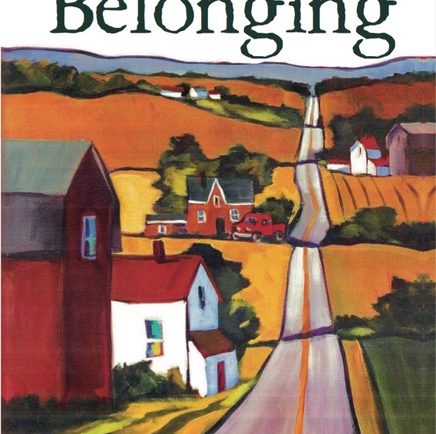
Bradley Gustafson’s Nebraska roots stand out like cornstalks along the back roads of this enchanting collection of reflections on the rich panoply of everyday life. He introduces his observations with a nostalgic eight-page narrative recounting his childhood memories of a beloved, widowed great-aunt whose husband had served in WW1 and whose only child was stillborn. This touching rumination provides a poignant prologue to the truth intimated in the title: that the back roads home are joined by the tendons and ligaments of human relationships.
Gustafson observes, “Truth be told, all of humanity is connected by the wound of being human.” His back roads are replete with 52 pithy accounts of discovering meaning through life’s inevitable vicissitudes that punctuate the tedium of daily living. These vignettes record his experiences meandering across Nebraska, Vancouver (British Columbia), Colorado, South Carolina, New Jersey, Washington and California.
The author’s focus on the monotonies of everyday life is noteworthy because we tend to become inured – if not indifferent – to the minutiae that surround us. William Blake’s “Auguries of Innocence” expresses the gist of Gustafson’s quest, namely, to “see a world in a grain of sand and a heaven in a wild flower.” It is often among the commonplace, overlooked experiences of our lives that profound meanings lie hidden in plain view.
While Gustafson’s unpretentious prose is firmly rooted in his rural Nebraskan heritage, it contains sufficient erudition to satisfy the inner scholar of most readers. He cites such diverse writers as John Donne, Emily Dickinson, Henry David Thoreau, T.S. Eliot, Walter Brueggemann and Eugene Peterson. And his occasional biblical reflections are at once deep, succinct and brood-worthy. Consider: “Jesus seems to me no doubt a man full of presence without being full of easy answers — full of joy without always being happy.”
One of the writer’s back roads wound through Princeton, where he earned his M.Div. He observes that some fellow students proudly claimed that they had “made it through Princeton without Princeton getting through them.” They left Princeton after three years without changing either their theology or their worldview. Such students epitomize the danger we all face by clinging to our old wineskins even in the presence of new wine.
“The Gift of Belonging” invites intrepid pilgrims to find meaning in the humdrum endeavors of daily living simply by opening the eyes of their hearts to everyday miracles. As sung by Sarah McLachlan (in the children’s movie “Charlotte’s Web“), “It’s not that unusual, when everything is beautiful, it’s just another ordinary miracle today.”
Gustafson’s practical wisdom is especially relevant during this unexpected season of COVID-19 as faithful Christians are constrained to discover new meanings in unexpected places — like their own backyards. Rather than going to work, many are obliged to work from home amid the commotion and chatter of children. Worship experiences are confined to Zoom and Vimeo images radiating from computer and TV screens. This small volume offers templates for extracting fresh meaning from everyday settings by reframing our perspectives.
The author is clearly gifted in discovering significance from quotidian encounters that might otherwise be dismissed as inconsequential. Each of his brief stories is charged with truths that connect us with our past, bind us to the present and point us toward a hopeful future.
Emery J. Cummins is an emeritus professor of counseling at San Diego State University and a ruling elder in the Presbytery of San Diego.