Presbyterian minister Lance Loveall knew what to expect when he heard the news: that some from his church would be elated and some would be angry, as the district attorney in Kenosha, Wisconsin, announced that his office would file no charges against the white police officer who shot Jacob Blake last August.
Loveall also knew this: part of his job in the months to come will be to help Presbyterians think beyond that decision, to consider bigger issues of systemic injustice in his community, regardless of what the legal system decided in this case.
For the past 20 years, Loveall has served as the pastor of First Presbyterian Church of Kenosha, a decidedly purple church — with both Democrats and Republicans in the pews, and where the pastor sometimes sees political disagreements between congregants catching fire on Facebook.
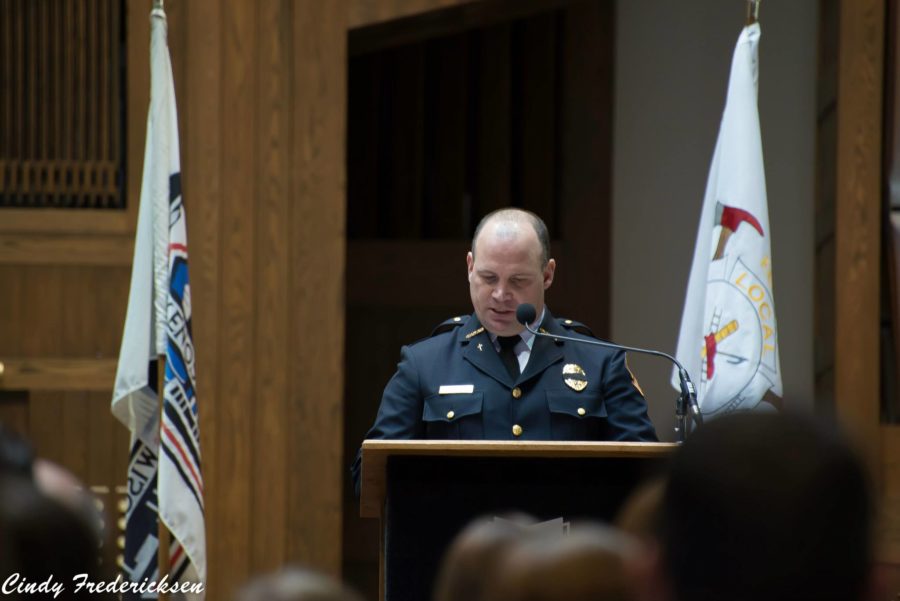
As a chaplain for the Kenosha Fire Department, Loveall was aware a decision was coming in January about whether to bring charges for the police shooting of Blake.
“We’ve been collectively holding our breath,” Loveall said. “They put up barriers, they blocked off roads, the National Guard was called in … but all the protests from what I have seen have been very peaceful,” after Kenosha County district attorney Michael Graveley announced Jan. 5 that no charges would be brought against Rusten Sheskey, the white police officer who shot Blake seven times, resulting in partial paralysis.
In the months since Blake was shot, setting off a flurry of protests last summer that shook the community, Loveall has been on a journey to challenge himself, his presbytery and his congregation to learn more about systemic racism and injustice. He and Rachel Yates, presbytery executive for the Presbytery of Milwaukee, together issued a pastoral letter following the violence in Kenosha — a letter asking for a transparent, thorough investigation of what happened; providing resources for learning, action and advocacy; and stating that “we commit to dismantling structural racism so that no one need fear for their life because of the color of their skin.”
The letter also states: “We might never have the full story, but we know it is a story filled with despair and trauma for all involved.”
For his preaching on these issues, “I have been blasted from both sides,” Loveall said. “I figure as long as I’ve got both sides mad at me, I’m probably being the minister everybody needs me to be. These are tricky waters.”
The district attorney announced Jan. 5 that his office would bring no charges against any of the police officers involved. Gravely has said that Blake had an outstanding felony warrant at the time of the incident and possessed a knife and was resisting arrest, according to the Milwaukee Journal Sentinel.
Blake has reached a plea agreement on the charges brought as a result of the Aug. 23 incident, is serving a two-year probation and has no pending charges, the Journal Sentinel reported.
Looking forward, Loveall wants his congregation to think beyond those specifics, to consider the deeper issues of policy and justice that still need work.
“This gets very confusing for white congregations,” Loveall said. “It’s easy then to write off the bigger picture — to say here was a man who had a warrant for his arrest … who threatened a police officer, who was shot, we don’t see what the problem is. It gives white congregations the ability to put our heads in the sand and say this was justified, and not ask the bigger questions of the role race plays in policing.”
Loveall wants whites from his church and his community to ask questions that go beyond the specifics of what happened on that street last August.
“What about the bigger picture of how we train officers, and how they roll into these situations in Black neighborhoods maybe with implicit bias they are not aware of?” What about de-escalation? How could this have been avoided?
What are the pressures on the community — such as disparities in job prospects, education, access to health care and affordable housing that lead to increased tension? “We want to blame somebody,” instead of saying “what can we learn from it so it doesn’t happen again?” Loveall said.
Even though the police officers weren’t charged, “we still have things we need to figure out. And nuance is not something we do well in our society right now … I’m very much for protection of police. That doesn’t mean they’re always right. I want to keep them safe. I also want them to do their jobs very well.”
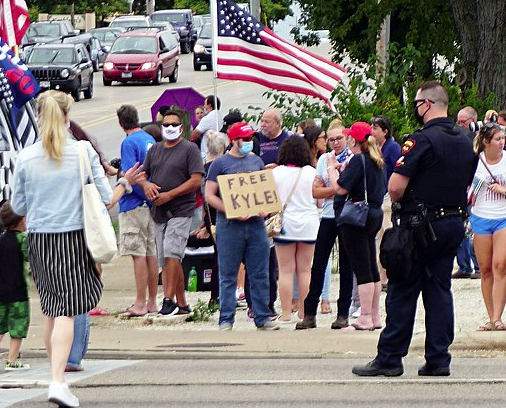
Here’s another piece of the Kenosha picture. During the protests that followed the shooting, two men were killed and a third wounded — and a young white man from Illinois, Kyle Rittenhouse, has been charged with first-degree intentional homicide, first-degree reckless homicide and attempted first-degree intentional homicide, among other charges. He is also charged with being a minor in possession of a firearm — on the night the shootings occurred, Aug. 25, Rittenhouse was 17 years old and walking the streets armed with a military-style semi-automatic weapon, part of a group of armed civilians who said they were trying to protect businesses during the protests.
The same day Gravely announced the decision not to charge the police officer, Rittenhouse pleaded not guilty at a virtual arraignment, and his attorney has said Rittenhouse acted in self defense. He’s free on $2 million bail, with donations to support him coming from conservatives from around the country, including from a Christian fundraising site.
How people perceive that case – the optics of both Blake’s shooting and what happened with Rittenhouse – has contributed to the tensions as well, Lovell said.
Rittenhouse was carrying a gun openly, but illegally — he was only 17 at the time. After Rittenhouse allegedly fired shots and hit people, he walked towards the police with his rifle held up and the police let him keep going, even though witnesses said people were yelling at the police that he was the shooter and to stop him. “I don’t blame the police, but the optics aren’t great of letting the white kid walk by with a gun after shooting three people,” Loveall said.
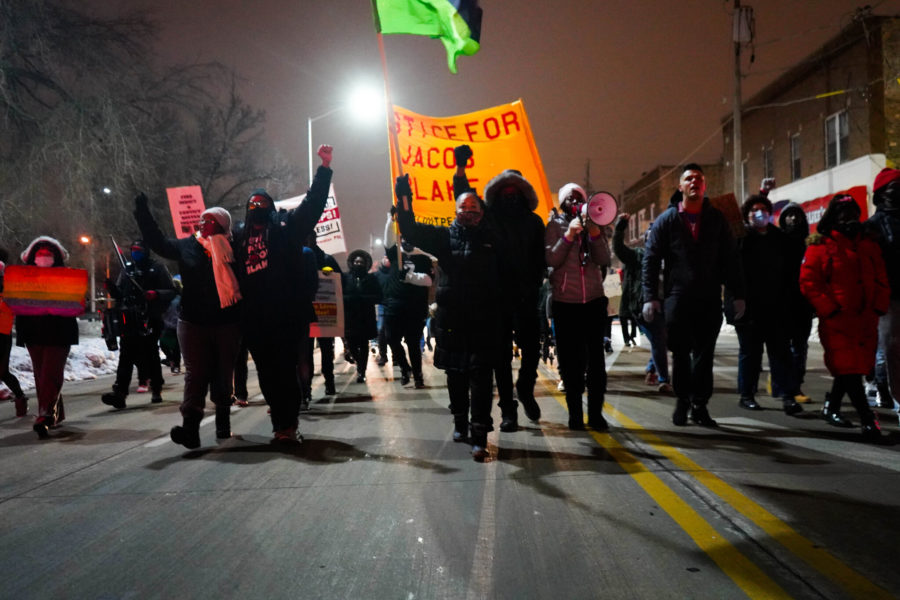
“You have a group of Black people marching down here peacefully, and people get very uptight about that,” Loveall said. “You get people openly carrying weapons, because that’s the law in Wisconsin, and gathering to support a guy who was basically a self-promoted militia man, and people don’t get as uptight about that. I can see why people would say there is a prejudice here. That we seem to allow certain things for certain groups, and not for others.”
The issue of gun ownership also is political. “Second Amendment rights are big here,” Loveall said — a cornerstone of conservative politics. Some years ago, he had a member quit the session when the church decided to put up a sign saying that guns were not permitted in the building. “This guy is very Republican, but at the same time not a gun owner himself,” Loveall said. “What he felt like we were saying is ‘conservatives are not welcome here.’ ”
Although hunting is big in the area, most of the debate in his purple church isn’t about owning guns for sports — it’s disagreement over the “conceal and carry” laws and Second Amendment rights, Loveall said.
He estimates that about half the people in his church hunt, but some of the hunters oppose conceal and carry. Some of the hunters say, “you don’t need a 30-round clip.” And some see any attempt to restrict gun ownership as an attack on conservative political views and Second Amendment rights. “It’s complicated,” Loveall said.
As a pastor of a purple church, Loveall has tried to address some of these issues from the pulpit, in a way he hopes has been political but not partisan. Last fall, he led a book study for the Synod of Lakes and Prairies on Robin DiAngelo’s book “White Fragility: Why Its So Hard for White People to Talk About Racism.”
After that, he decided to lead a discussion on the book for church members – and since then a group of parishioners (about 20 people, meeting virtually) has read and discussed “The Color of Law: A Forgotten History of How Our Government Segregated America,” by Richard Rothstein, and Isabel Wilkerson’s “Caste: The Origin of Our Discontents.” The group is currently reading “An Indigenous Peoples’ History of the United States,” by Roxanne Dunbar-Ortiz.
Loveall has told his congregation that “everybody’s welcome” in those discussions, and that “it’s important work for the church to hear the voices of people who have been long silenced — to listen to those voices.”
Since Blake’s shooting last August, Loveall has learned how much he did not know — in part, because he always assumed that issues of racial unrest were “big city problems,” and would not trouble a smaller town like his in Wisconsin.
“I’m a white kid from a very white part of Iowa,” he said. “Race issues — I would have said I was knowledgeable, but as it turns out, I didn’t know anything. I’m open, but my ignorance is shocking for what I didn’t know.”
So he’s tried to learn and to listen — and to bring others from his purple church along. Everything feels political, such as whether to wear a mask or not, or whether restaurants or bars should be open or close during the pandemic — not to mention the intense feelings about the national presidential election.
“I am a guy who hates conflict,” Loveall said.
But since the Blake shooting, he’s been more willing to be outspoken — and more at peace when congregants disagree with what he preaches or even decide to leave the church.
“I think the church needs to be political,” Loveall said. “I don’t think we can follow Jesus, who was so political, and not be political. I do try to be very careful not to be partisan. I think those are two different things.”
What he tells his congregation: “I say following Jesus is to follow Jesus. And make sure your politics aren’t aside from that, but are part of your faith. So if you were to meet him tonight, you would say, ‘This is why I did what I did — because I saw that in you.’ ”