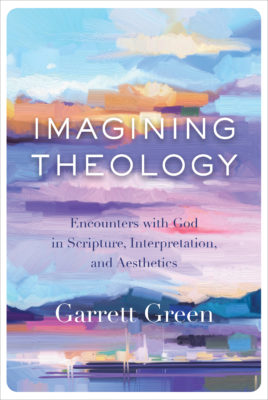
 Garrett Green
Baker Academy, 288 pages
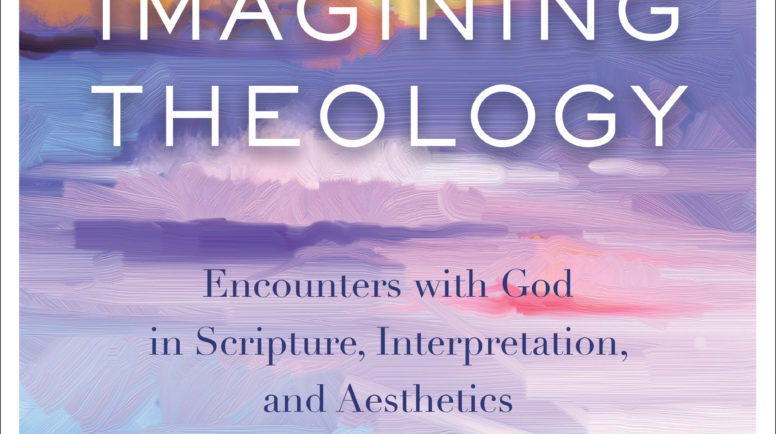
Once in while there comes a book and author that permanently change the way you see the world. For me the author is Garrett Green and the book is “Imagining God.” Only a few years into pastoral ministry, I was completely astonished after reading “Imagining God.” The work gave me a fresh way of understanding the task of theology that informed my pastoral practice. When I retired from the pastorate after 32 years, I could not part with it. So, you can imagine my delight with this new collection, “Imagining Theology.” It contains Green’s essays elucidating the themes and implications of his earlier groundbreaking work.
Green acknowledges the book that permanently changed his own thinking: Thomas Kuhn’s “The Structure of Scientific Revolutions.” There he found the key concept of imagination and, by his own admission, has “never ceased trying to wrestle it into theological shape.” Alongside imagination is Kuhn’s notion of “paradigm,” a word now commonplace even if little understood.
In this set of essays spanning over 40 years, Green shows how “Christians can employ the Bible paradigmatically” as a way of understanding life in the world in relation to God. What is critical is the argument that the imagination is central to being human. It is not a skill reserved for creative types: artists, poets, musicians and novelists. The sense of the word that Green finds so important and basic is the imagination that we all use (unavoidably) all the time. As Green recently wrote in an email reply to me: “It’s not as though we first perceive ‘literally’ and then apply our imagination; rather, we don’t perceive anything in the first place without imagination.”
One recalls John Calvin’s parable of Scripture as the lens (glasses) through which we rightly see the world. This practice of rightly seeing the world through the lens of Scripture illustrates how a paradigm (in this case Scripture) shapes how one imagines the world. Green helpfully describes how science and religion share similar ground and yet part in crucial ways. He forcefully demonstrates how Christians who counter scientific evidence with an “apologetics of evidence” fall into the same error as science. “What both sides fail to acknowledge is the necessary role of imagination: that what one sees is determined by the implicit paradigm that shapes and organizes the details into a whole.” It’s common for people to assume imagination refers to something unreal and is therefore opposed to reality. The argument of this book (and Green’s earlier one) is founded on Calvin’s notion that one cannot rightly see the world without right imagination. No one escapes this endeavor; imagining the world comes with being human. Most don’t acknowledge it any more than a fish acknowledges the water it swims in. This ongoing practice of faithful imagination shaped by the Scriptures means that Christians must “give up the quest for certainty.” What such a quest reveals is a lack of faith in the living God who always summons us to greater understanding.
The essays cover a multitude of topics displaying how a normative imagination functions in theology, Scripture interpretation, aesthetics and pastoral practice. The implication here is that Christian theology is forever a “hermeneutical theology.” Rooted and grounded in faith, the Christian is always seeking to interpret the world rightly. Perhaps what impressed me the most about Green’s continuing work is his witness as a practicing Christian in his own community where he leads a weekly Bible study with prisoners, to whom he dedicates this book. He cautions us to resist a defensive stance in a secular culture. “We have a joyful message to impart, the gospel of God’s love for his creation, a message that needs to be heard all the more in a faithless age.”
 Roy W. Howard lives in North Potomac, Maryland. He is a coach and consultant with Kairos Coaching, dean of the Academy of Artful Leadership and the book editor of the Presbyterian Outlook.