Now it’s time for Bible study — to dig a little deeper into what it looks like for churches to be Matthew 25 congregations. What does that mean for Presbyterians in their own communities?
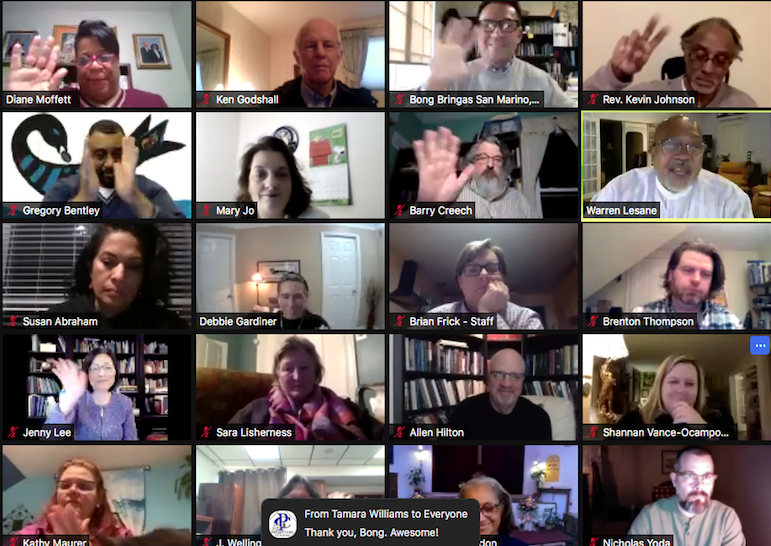
The Presbyterian Mission Agency Board explored that in a Zoom meeting January 22, with the help of consultant Allen Hilton, a former professor of New Testament at Yale Divinity School and founder of House United, a movement to bridge the gaps between Christian progressives and conservatives. The passage they were investigating: the a reading in the 25th chapter of Matthew’s Gospel involving the judgment of the nations, which says Jesus will separate the sheep from the goats according to whether they fed the hungry, cared for the sick, visited the prisoners, welcomed the stranger, cared for the least.
Here are some sound bites from that conversation:
- In churches, rather than starting by talking about what people believe, talk about belonging, said Gregory Bentley, who is co-moderator of the 2020 General Assembly along with Elona Street-Stewart. A sense of belonging changes behavior, Bentley said. “How do we create a sense of connection, of solidarity?”
- The “least of these” don’t need just to belong, but to have a voice at the table as decisions are made, said board member Kevin Johnson of Detroit. “The least have to belong to the leadership council.”
- Think about what it means to marginalized people when the church stands with them — and what it means to the church, said Michelle Hwang, a board member from Illinois. A person the church helped to empower might say, “that community helped me to get voice, to find sight” — they see a church willing to stand with the vulnerable. And often “it’s like living water about to come into our church that has been very dry and parched.”

Why are the sheep surprised in this gospel passage, after being given favor for helping? Hilton asked.
- Maybe they didn’t realize “we are always being watched, that God’s eyes are always on us,” said Warren Lesane, the board’s chair. Maybe we have a tendency to think “we will perform for some” — for those we consider worthy or worth impressing, but not for others.
- Bentley asked in the Zoom chat: “How many people have been excluded from leadership in our congregations and presbyteries because they don’t fit our profile of a Presbyterian elder/deacon i.e. not educated enough, not wealthy enough, not articulate enough? … Godly people who are barred from service by our elitism.”
-
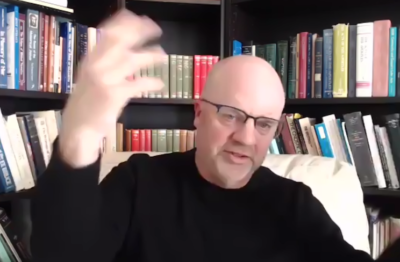
Allen Hilton Maybe the sheep were surprised because they don’t think twice about helping – it’s ingrained in them, it’s what they routinely do, said board member Brenton Thompson. “This is the way we roll,” Hilton put it. “We always help people. … It’s almost like it’s in the DNA of the Matthew 25 churches.”
- Lesane told of his parents taking him to civil rights marches when he was a child, and seeing a white store owner strike a Black man in the back of the head with a pipe wrench. “For me, Matthew 25 is about engagement, even at the risk of personal safety and security.”
- Johnson said he was once part of an intentional community in an inner city neighborhood, and neighbors – the sheep who already helped one another – were surprised then “that the choice that we made was to live among the least, the choice was made to live as simply as possible, when the door was wide open to make other choices. … They were surprised that somebody would come to live in a war zone.”
Some board members have seen the opposite too — with a Presbyterian church being located in the heart of a city, but most of its members having migrated to neighborhoods far away, and having relatively little connection to the people who live around the church.
Mary Jane Gordon, a board member from California, said in encouraging people to sign on to the Matthew 25 initiative, some from outside the central city have pushed back. “The reason this is happening is because they don’t see Jesus in those folks who don’t live near them, who are on the periphery, the urban people who are struggling,” Gordon said. “They just don’t see Jesus in those people. … You’ve got to go to work on people’s hearts.”
Hilton responded: “The goats say, ‘If we’d known it was you, Jesus, we would have shown up.’ ”
At the same time, some larger suburban churches are “very enthusiastic about mission somewhere else,” Gordon said. “We’ve made so many dresses for children in Africa, and little hats.” Churches are willing to help people far away, but “do we want to do it for people who live 30 miles away from us who can’t feed their families or don’t have anywhere to live?”
And board member Nicholas Yoda of Ohio warned against being too binary in thinking about divisions. Although he lives in Cincinnati, during the COVID-19 pandemic, he’s spent time driving country roads in Ohio. “Last time I checked the voting maps, it was an urban/rural issue,” Yoda said — referring to the political divide evidenced in the 2020 presidential election. In rural Ohio, he saw eight Trump signs for every Biden one. “And a lot of these people are equally as poor as in the urban core.”
Johnson spoke of the fragility in communities that COVID-19 has revealed, and asked: “How are we as a church saying to that fragility, ‘This is where we will not leave. We will not leave you or forsake you.’ ”
So what does this mean for the Presbyterian Mission Agency, which is concentrating this year on refining the shape and focus of its Matthew 25 vision?
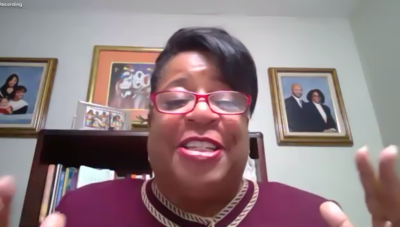
Diane Moffett, president and executive director of PMA, said in the church “we create the systems that push people to the edge” by not having as part of the conversation more people who are low-income, food-insecure and housing-challenged.
SanDawna Ashley, a board member who’s a mid council executive, said she wants an emphasis on branding — so the Presbyterian Church (U.S.A.) sends a clear message that it’s a denomination committed to equity and social justice.

“During this political season we’ve seen many sides” of American Christianity, Ashley said. “Some of it, I don’t want to be identified with.” The PC(USA) needs to work to change the narrative “of what other people believe about us.”
Judith Wellington, a board member from Arizona, said one-third of the congregations in the Presbytery of the Grand Canyon are Native American, and many of them feel a cultural and economic disconnection from the predominantly white church. “Native folks have too often been polite, not wanting to rock the boat, not wanting to ask hard questions” of the PC(USA), Wellington said. “When the structure changes, it’s usually not in our favor. Being at the table usually doesn’t matter. It hasn’t mattered in the past. The structure is going to do what the structure is going to do.”
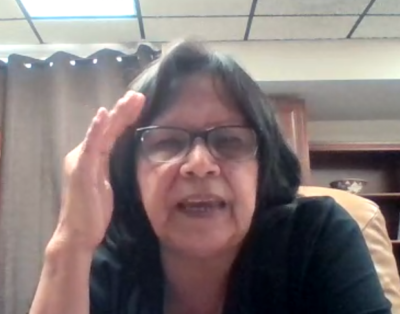
But Wellington said she appreciated that the issues are being named — that Matthew 25 provides a framework for considering the hungry, the sick, the prisoner, the stranger. “I can see us making some movements,” she said, “however incremental.”
The board also heard reports from its committees and regarding a variety of work in progress – including a report from Lesane on the work of the Coordinating Table.
Something else to watch: Kathy Maurer, who leads the board’s Resource Allocation and Stewardship Committee, said the board of the Presbyterian Foundation is expected to consider in February a proposed change to the spending formula through which the Foundation provides funds to support the mission work of PMA.
Maurer said the proposal is to reduce the spending formula over a five-year period beginning in 2023, from the current 4.25% of the average market value of endowments held at the foundation (based on a 20-quarter rolling average with an 18-month lag) to 4% by 2027.
That likely would mean less money coming to PMA, Maurer said — although the exact financial impact would depend on the market, and how well the endowment investments perform.