The Presbyterian Mission Agency is about to enter an intense new phase of its Vision Implementation Process — creating a new structural design for how the agency will live into its Matthew 25 initiative, and which the Presbyterian Mission Agency Board is expected to vote on in October.
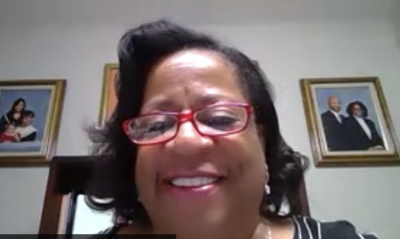
“We’re not doing renovations here,” Diane Moffett, president and executive director of the Presbyterian Mission Agency (PMA), told the Presbyterian Mission Agency Board, meeting by Zoom April 23. “We’re building a new home.”
Board member Kate Murphy, a pastor from North Carolina, said she’s lived through a few vision processes in other settings — including some that “looked good on paper” but when it was over “fundamentally the organization remained the same.”
But another one, in a local church, turned her life upside down — “everything but the gospel was changed, and it was very difficult and exposed a lot of conflict,” Murphy said. As hard as it was, and as much change as it brought, “I thank God every day” for what came from that, and she hopes “this will be that kind of transformative process” for PMA.
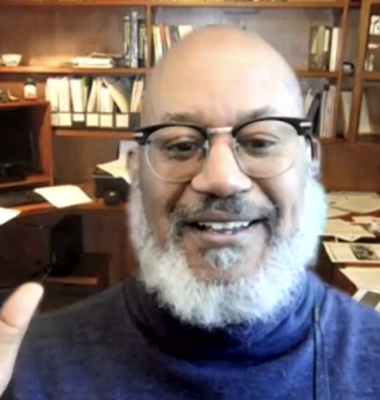
David Hooker, a consultant working with PMA and an associate professor of the practice of conflict transformation and peacebuilding at the Keough School of Global Affairs at the University of Notre Dame, said that in this project, “the thing I’m most excited about is the disruption. That’s the place God does her best work, is in the midst of chaos.”
Moffett said the Presbyterian Church (U.S.A.) is trying to do 21st century ministry – focused on addressing poverty, racism and congregational vitality – with a clunky, 20th-century construct. “I’m excited about the possibilities,” she said. “But it’s also scary.”
Here’s more of what the board talked about on the final day of its April 22-23 meeting.
Shinnecock Nation
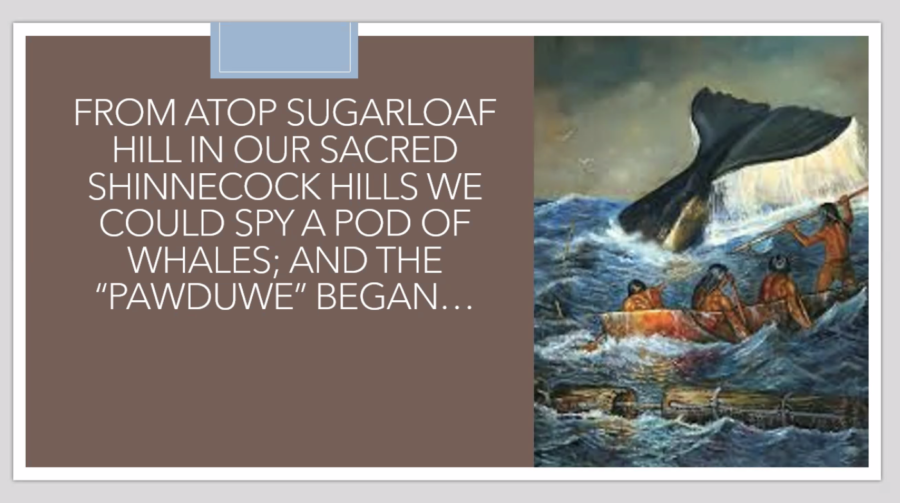
Last February, the Racial Equity Advocacy Committee (REAC) and the Native American Consulting Committee sent a letter (P.201 REAC Letter to OGA & PMA) asking Presbyterian leaders to join with them in advocating on behalf of the Shinnecock Nation, which is trying to use its remaining land in the Hamptons on eastern Long Island to generate income for a tribe struggling with poverty.
The board is being asked to help “amplify the voices” of the Shinnecock Nation, which is involved in legal disputes with the state of New York over two 61-foot electronic billboards the tribe considers to be monuments, and which stand along a highway leading to expensive homes in the Hampton communities.
The tribe also is attempting to build a casino on its land – the Shinnecock Hamptons Casino – an effort that some wealthy Hamptons homeowners oppose.
The February letter asking Presbyterian leaders to get involved cites action the 2020 General Assembly tookdirecting PMA and the Office of the General Assembly to “support the efforts of Indigenous Nations to gain local, state and federal recognition as sovereign nations” and their “full expression of their inherent legal sovereignty.” The Poor People’s Campaign: A National Call for Moral Revival has been in conversation with the Shinnecock Nation, posting this video from a 2019 visit to the reservation.
At the board meeting, representatives of the Shinnecock Nation spoke of historic injustices; the sacred nature of their land and the economic needs of their people; and their frustration at not being able to get the Presbytery of Long Island to be more involved.
Holly Haile Thompson, who board vice chair Shannan Vance-Ocampo introduced as the first Native American woman to be ordained in the PC(USA) and who serves on REAC, led the board in an opening devotion. Thompson cited the words of an elder who said “our roots go 10,000 years straight into the ground” on this land, saying her people see themselves as the caretakers of this part of creation.
She also provided a quick tour of some painful U.S. history: the Doctrine of Discovery; the removal of Native American children from their homes to boarding schools, where they were stripped of their language and taught to practice Christianity; and the centuries of whites taking away Native lands.
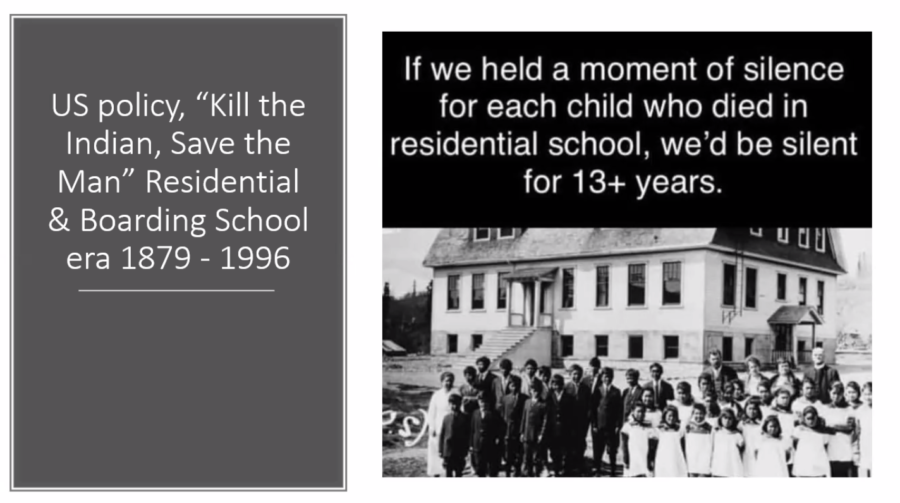
“The Doctrine of Discovery has prevented my people from being recognized as human beings, as having souls,” Thompson said. “Of having the right to occupy our land” or as being seen “as children of the Most High … as precious as children are to parents.”
Michelle Hwang, a pastor from Illinois who represents REAC on the board, said, “We want to amplify” the Shinnecock voices and to encourage the presbytery to not be “complicit with their silence,” but to work in partnership with the Shinnecock people.
“We have been kept in artificial poverty for hundreds of years,” said Tela Troge, a lawyer who is a member of the Shinnecock Nation. COVID-19 hit the reservation hard, Troge said, and “people are really struggling” economically — they need the income the advertising on the billboard monuments can generate.

The state of New York sued the Shinnecock Nation “just for expressing our sovereignty,” said Bryan Polite, the tribal chairman. “We’re not going to take this injustice.”
Board members thanked the Shinnecock representatives and some voiced their support, but no formal vote was taken. SanDawna Ashley, a board member who is transitional executive of the Synod of the Northeast, said, “You have touched my heart today,” and said she would schedule a conversation with tribal representatives soon.
“This is powerful stuff, y’all,” Warren Lesane, chair of the board, wrote in the Zoom chat. “My heart is broken for the Shinnecock Nation.”
And Ray Jones, director of Theology, Formation and Evangelism, ended the session with prayer, saying: “We know there’s no real justice without reparation.”
What’s next? “Continue to amplify their voice,” and check in with Thompson regularly, Hwang said. With the effort to build a casino, “there are a lot of politics going on.”
Police reform
Gregory Bentley, who is co-moderator of the 2020 General Assembly along with Elona Street-Stewart, said he’s sensing a growing need for the PC(USA), as part of its Matthew 25 commitment, to take on the issue of police reform.
Bentley said he’s been serving on the Huntsville Police Citizens Advisory Council in Huntsville, Alabama, where he is a pastor. At the request of the Huntsville City Council, that advisory committee conducted a review of the Huntsville police response to public protests in early June 2020 following the police killing in Minneapolis of George Floyd. On April 22, the committee submitted a 248-page report to the city council, finding that some police officers behaved unprofessionally and violated policy, including firing bean bag rounds and tear gas at protestors.
“To see it so starkly manifested was very troubling,” said Bentley, adding that policing in the United States “is rooted in the slave patrols of the South.”
He said: “I’m not in the abolitionist camp, but I am in the camp of we need a total overhaul” of American policing. It’s not a matter of a few bad apples — “something is rotten to the core,” Bentley said. “It’s becoming too frequent. … That is one of the things that we’ve got to tackle head-on,” if Presbyterians want to live into the Matthew commitments.
Walton Awards
The board voted to give two new worshipping communities the Sam and Helen R. Walton Award for 2021 (F.102 Walton Awards Recipients- April 2021). The awards are:
- $30,000 to The Open Table, a dinner church in Kansas City that also provides anti-racism training.
- $20,000 to Ormewood Church in Atlanta, which has become a gathering place for the Ormewood Park neighborhood and is exploring ways that church can be community.