 Wendy Farley
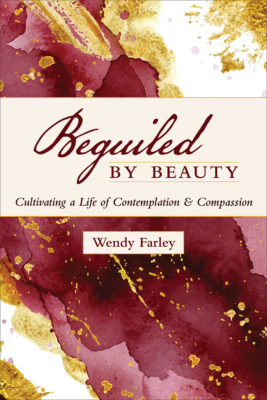
WJK Press, 212 pages
Wendy Farley is a theologian who has long sought to include the outcast, the seeker, the skeptic and the nonreligious in her theological vision. This longstanding desire is on full display in her exploration of beauty as the focal point for a contemplative life. She is equally convinced that an authentic contemplative life yields the fruit of compassion and mercy. Farley eschews traditional Christian categories of sin, judgment, forgiveness and redemption in favor of an innate human desire for the Beloved (God) that has been forgotten or blinded and must be restored by contemplative practices that constitute a way of life. She is adamant that contemplation is not an escape from the realities of human life, including suffering. Rather it is the capacity to face these from a place of deep communion with the Beloved.
“How can we keep opening our heart to the sorrow and tragedy of the world and yet remain alert to its endlessly proliferating splendors?” The book unfolds her response to this question. Along the way, we hear voices of the contemplative tradition — some long silenced or unknown (such as Margery Kemp), and others well-known (including Augustine and Julian of Norwich). She writes emphatically: “We can tell whether we are worshipping the divine Goodness or an idol of our imagination by the fruits of our worship. Love, compassion and social justice are the fruits of loving God.”
The thread that runs through her vision of the contemplative life is Pseudo-Dionysius’ description of God as “beguiled by beauty.” All of creation is the fruit of a God in love with beauty. Hence, human beings who awaken to their love of and desire for beauty will be drawn deeply into communion with God. Beauty may be known by the heart, not simply seen or felt. John Calvin said that the knowledge of self corresponds to the knowledge of God. Farley says something similar: the experience of beauty will draw us to God who is indeed beautiful.
I was reminded of C.S. Lewis, who argued that the purpose of Christianity is that believers become little Christs to one another. This happens by prayer that leads to communion with Christ. With strikingly different language and radically different theologies, Farley, Calvin and Lewis may arrive at something similar for human vocation: communion with the living Christ.
She includes excellent, helpful chapters on contemplative practices that correspond to actual human life — even life on the go or life filled with the tasks of family. This is a compelling introduction to the contemplative life and practices for all who will open themselves to the God who is beguiled by beauty. For some it will be a conversation far outside what they consider traditional Christianity. For instance, what is not included is a full discussion of the crucified Christ, the wounds of humanity and darkness that covers the vision of beauty she so eloquently describes. Yet, such conversation partners who deeply desire God, Holy Wisdom and divine Goodness can only be fruitful for clarifying one’s own path toward a life that bears the fruit of Christ in a world of suffering.