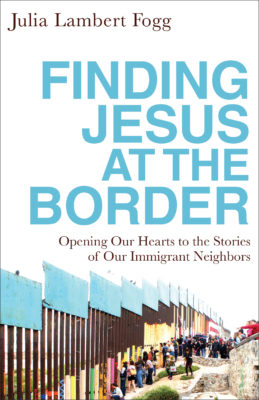
 Julia Lambert Fogg
Brazos Press, 208 pages
Reviewed by Bailey Pickens
I moved to a city near the U.S.-Mexico border three years ago. I did this because I was done with the things that kept me where I had been and wanted to move somewhere sunnier, where a significant other was waiting for me. There were no implications for me to consider besides my own preferences and no hurdles I had to clear. I simply packed a car and drove across the borders of 15 or so states until I got to where I wanted to live, and then I began living there without further ado.
In this book, Julia Lambert Fogg asks her readers to do just the opposite of that: to consider the act of leaving, going and crossing borders, and to give care and attention to those who have left, gone and crossed. The Bible is full of migration, and seven of the book’s eight chapters weave the stories of migrants and families Fogg has known with events in the lives of Jesus and Paul. As the text moves between stories now and then, Fogg’s skillful exegesis gives weight and authority to her calls for greater Christian compassion, solidarity with neighbor and advocacy for those caught in the American immigration system.
Fogg herself is highly visible in the stories she tells. She leads by example in the practices she encourages readers to follow: of recognizing our own stories and allowing ourselves to be changed by engagement with our neighbors and the stories they bring. But the near presence of Fogg’s “self” means that, for better and for worse, her chosen framework is also highly visible, and it is not without flaws. The book’s repeated reminders that seeking asylum is a legal right and not a crime, that immigration violations are civil and not criminal offenses, that detention is not punishment and that most migrants have done nothing wrong and in fact contribute materially to their communities are all true, of course, and push back against many common American objections to immigration, but they do so at the cost of ceding the rhetorical point that good behavior is what deserves compassion. The abuses of detention and the caprice of deportation proceedings horrify us here because the people caught in them are so sympathetic, when one might argue (I would) that they ought rather to horrify us because they are horrifying.
This last point is really a question of audience. The pitch of this book seems leveled at white, middle- and upper-middle-class Christians who take the Bible seriously and are conservative on immigration: readers who elevate upstanding, law-abiding people and for whom economic contribution is a touchstone value. And so, the issue of “privilege” needs careful handling. If the inherent sacredness of migrant lives and the injustice of the U.S. immigration system are new or challenging ideas, this book is a moving and thorough primer. Those for whom they are givens may find Fogg’s tack frustrating or even condescending. But her exhortation to compassion and solidarity is evergreen, sure, and worthy of full acceptance.
Bailey Pickens is pastor for faith formation at St. Mark’s Presbyterian Church in Tucson, Arizona, and the director of Presbyterian campus ministry at the University of Arizona.