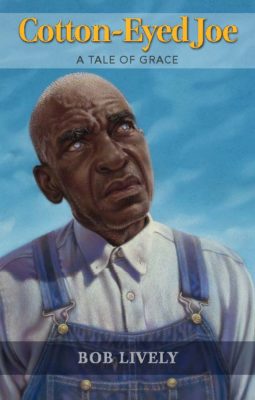
 Bob Lively
Treaty Oak Publishers, 425 pages
Reviewed by Thomas Currie
At the present time, there are 27 states that have capital punishment laws on their books. Not all of these states undertake “legal executions” for capital crimes, but many do and some more than others (such as Texas, with 570 since 1982).
Bob Lively, a retired Presbyterian minister living in Austin, has written a novel whose characters struggle against the injustice of the death penalty — and particularly the way it is disproportionally carried out against people of color. His novel concerns Joe Berg, an old, almost blind (due to cataracts that give his eyes a cotton-eyed look) African American man who is accused of killing a white man in the small east Texas town of Grapeland. He’s innocent, but is framed by evidence planted by a corrupt deputy sheriff.
The novel unfolds as the Church of God, of which Joe is a member, is led by their pastor who gathers his congregation together to pray for him and seek his release. There are two white members of this otherwise Black church, one of whom is Will Amos, a graduate of Yale University and Austin Presbyterian Theological Seminary. Will is the leading protagonist in the story. He has never served a congregation, primarily because he thinks the congregations that have issued him the occasional call – in his view comfortable, well-assimilated and even well-educated congregations – are more interested in doing what they can to avoid the claims of the gospel rather than bearing faithful witness. Embittered by the loss of his mother to cancer, Will, somewhat self-righteously, settles for being a farmer and worshipping with his wife, Ruby, at the Church of God.
Part of the novel deals with Will’s learning how to pray again, a gift that the prisoner, Cotton-Eyed Joe, gives to him.
The strengths of this novel are the author’s apparent love of the east Texas land and the people, flawed though they are. The novel also celebrates the community of faith that is represented by the church and its pastor, and the gift and work of prayer that supports and enables the quest for a more just world. Lively clearly knows a good deal also about the death penalty and how it is administered in Texas.
One hesitates to quibble about an issue as important as the one this novel raises, but its resolution, which, to be sure, has biblical warrant, veers, it seems to me, into a kind of magical realism, which leads one to wonder about all of those who have been executed who were not rescued at the last minute by angels. The subtitle of the novel is, “A Tale of Grace,” and the love and compassion shown by several characters in the novel bear witness to that reality. One is permitted to question, however, if the novel’s resolution is a bit too easy and the grace perhaps not costly enough.
Nevertheless, this would be a good novel for a Sunday school class or church reading group to take up. It will, without a doubt, provoke a fruitful conversation about an important issue facing the church.
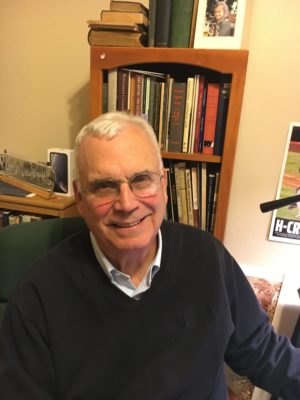 Thomas Currie is a retired Presbyterian pastor and former professor of theology at Union Presbyterian Seminary in Charlotte, North Carolina.