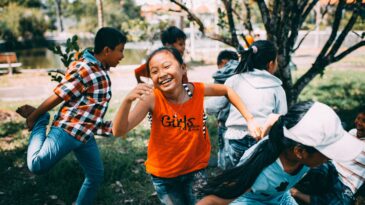
It’s almost that time again — time for a new school year to begin. The beginning of the school year is a time filled with hope and wonder. Children ponder what their teachers will be like, who will be in their classes and what they might learn this year. Parents hope for their safety, success and well-being. Despite our many prayers for the pandemic to end or at least slow down, COVID-19 lingers. Many school districts are requiring or encouraging mask wearing. Most classrooms are still set up for physical distancing. Some schools are even offering online instruction. The delta variant continues to spread and it is infecting more children than the virus’ earlier strains. More adjustments to school schedules and setups are likely around the corner. How can we support and encourage our young people as they navigate this continued uncertainty?
While their experiences are quite different, the feelings that our children are experiencing are much like those of ancient Israelites preparing for and traveling to Jerusalem for holy festivals. Their trips were long. They were filled with uncertainty and concern for safety as well as hope and a longing for a deep spiritual experience. They expressed this full range of emotions through prayer. This week’s Psalm lectionary reading – Psalm 84 – is one such prayer. In this lesson, your children will explore this pilgrimage poem-prayer and will write and offer their own prayer for the new school year.
Begin the time with your children by talking about what you have done or need to do to prepare for the new school year. What materials or supplies do you need to gather or buy? What questions do they have about the start of school? What are they looking forward to? What are they concerned about? Explain that the start of a new school year always brings a range of emotions. Many people experience mixed feelings when they are starting something new.
Prepare to read aloud Psalm 84 by providing context for this poem-prayer. Explain to your children that the Jewish people of ancient Israel believed it was important to travel to the city of Jerusalem for holy festivals such as Passover, Yom Kippur and Hanukkah. These festivals were special holidays that often lasted several days. During these festivals, people would attend worship services, pray, make offerings to God and share meals with one another. They believed they should observe these festivals in the city of Jerusalem because the temple of God was there. Their trips were called pilgrimages. Some people were able to travel to Jerusalem often. Others only went to some of the festivals each year. Many journeyed long distances by foot or by donkey. People would travel for many days before reaching Jerusalem. The routes could be dangerous.
As the Israelites prepared for and undertook these journeys, they offered prayers to God. While some individuals may have created original prayers, many repeated prayers they had been taught. One of these is Psalm 84. Tell your children you will be reading them this psalm. Encourage them to notice what this prayer says about God and what it asks God to do.
Read aloud Psalm 84. Note that some parts of this prayer praise God. Ask your children to recount how the psalmist lets God know how much the person praying loves God. Then, share that the prayer also asks God for protection. Discuss the parts of the prayer that petition for security. If your children are younger, they may have difficulty reading between the lines to discover these petitions. You can draw their attention to verses 5-7. In these lines, the psalmist writes about those who travel through the valley of Baca. They experience pools of rain and cool water springs. They “go from strength to strength” until they reach their destination. By describing the strength and comfort that the traveler will experience, the psalmist is asking God to ensure that this will happen.
Finally, Psalm 84 conveys the excitement and hope the pilgrims feel knowing that they will be celebrating a holy festival in the sacred city of Jerusalem. Ask your children to share the parts of the prayer that express these feelings. Feel free to direct them to verses 2 and 10 to find examples.
After your discussion, help your children connect the prayer practices of these pilgrims to their own lives by constructing a prayer for the upcoming school year. Share that they are preparing for an important and special journey, just as the Israelites did. While they are not getting ready to go on a long trip, they are getting ready to start a different sort of journey; they are beginning a new school year. Like the pilgrims who prayed Psalm 84, your children likely have hopes, concerns and joys that they would like to share with God.
Brainstorm a list of these with your children. You may want to record their ideas on a sheet of scrap paper, chart paper or a whiteboard. This will help you keep track of their thoughts. After they have shared their ideas, help your children write a prayer that shares these important emotions and hopes with God. Don’t worry about mirroring the format or wording in Psalm 84. What is most important is that your children feel comfortable sharing the full range of feelings about the school year with God. The prayer can be very simple and sparse, or it can be longer and complex.
After you have written the prayer, recite it together. In the days leading up to the beginning of the school year, you may want to repeat it, just as festival pilgrims likely offered Psalm 84 multiple times during their journeys.
 JOELLE BRUMMIT-YALE is the director of children’s and youth ministries at Chapel in the Pines Presbyterian in Chapel Hill, North Carolina. When not at the church, she can usually be found at home with her son and husband caring for their many animals and developing their family homestead.