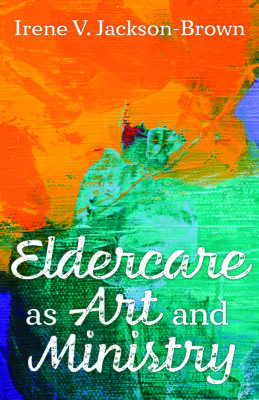
 Irene V. Jackson-Brown
Church Publishing, 136 pages
There are some things in life that we think should just come naturally and therefore need no instruction. However, experiences like growing up, becoming parents, entering into significant relationships and providing eldercare teach us that – although we might have some natural instincts – we often need help. We do better with the expert support of professionals who have been there before, and who can equip us to tackle these challenging phases of life.
Irene V. Jackson-Brown has studied eldercare in her career as a senior-serving professional and has lived it while caring for aging parents and aunts. She has paid attention to the changes that have occurred in and around older adults who rely upon their families, friends and paid caregivers to advocate and assist as their need for support increases and changes. Through her book, she provides reader-friendly insight into a field that is fairly new and very likely of interest to all families with an older adult. As she reminds us, “the word ‘eldercare’ has only been in use since 1960” — just five years before Medicare was introduced.
Jackson-Brown views the compassionate work of eldercare as true ministry and an opportunity for congregations to engage with their older adults. “Being fully present to an aging, frail or sick person – listening, visiting, showing empathy, consoling, laughing, crying and joking – is among the many ways of engaging in a ministry of presence,” says Jackson-Brown. She demonstrates great sensitivity to the spiritual responsibility that our faith compels us to take for one other.
Eldercare can take many forms, and Jackson-Brown names them as: activist, advocate, nurturer, helper, organizer, observer, questioner, entertainer, problem-solver, investigator, peacemaker, coordinator and researcher. She clearly says that eldercare is not about just one person’s work but “a gaggle of relationships” (a client system) all working on behalf of the care receiver.
Jackson-Brown illustrates why it’s necessary for multiple caregivers to take a cohesive approach with examples like this: “I coordinated his care with a team that included a primary care physician, a cardiologist, a neurologist, a psychiatrist, a radiologist, two ophthalmologists with separate specialties, a dermatologist, a podiatrist, a dentist, professional caregivers and nurses,” she writes, continuing to describe all the relationships she managed on the older adult’s behalf, including family, friends, city and federal governmental agencies, a transportation company, a home health agency, a hospital, an assisted living community and the church.
What I liked most about this book was the chapter “Eldercare Lingo, Skills, and Tips,” which deciphered the technical jargon of acronyms, words and phrases that need to be understood. I enjoyed the practical advice and case studies spread throughout the book, and her use of priceless vignettes such as the stories of “Mr. Jackson’s Potato Salad” and “Aunt Ruth’s Kale Salad.” This book is a great primer to eldercare, and will be appreciated most by family members, church leaders, paid caregivers, facility staff and healthcare educators or students. Jackson-Brown keeps elders in the center of their own care, and never forgets that they come first. The book was so enjoyable that it left me wanting more chapters!
Presbyterian Outlook supports local bookstores. Join us! Click on the link above to purchase “Eldercare as Art and Ministry” from BookShop, an online bookstore with a mission to financially support local, independent bookstores. As an affiliate, Outlook will also earn a commission from your purchase.
Kitty Hahn-Campanella is a PC(USA) church pastor and a hospice chaplain in Seminole, Florida.