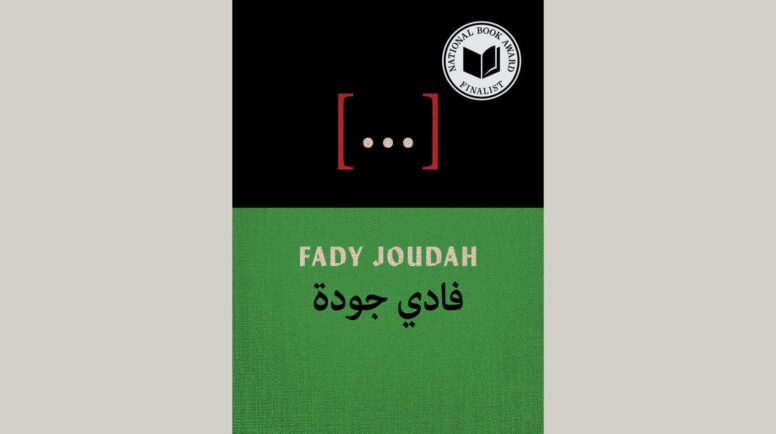
[ … ] Poems
By Fady Joudahe
Milkweed Editions, 100 pages
Published March 5, 2024
[ … ] is a wordless title, a paradox. Two square brackets enclose an ellipsis. From the Greek “to leave out,” an ellipsis indicates an omission of words. Conversely, square brackets represent the words an author adds to a quotation to provide context and clarity. Therefore, the title evokes both erasure and the effort to speak. As a pictogram, it resembles a bombed-out building, with rubble between the walls.
Many poems in this collection share the book’s title, as if author Fady Joudah recognizes the paradox of an outsider’s writing about the atrocities of the Gaza war for an English-speaking audience. He dedicates this work to “the relatable and unrelatable, the translatable and untranslatable Palestinian flesh.” Paradox indeed.
Joudah was born in Texas to Palestinian refugee parents. He grew up in Libya and Saudi Arabia before returning to the United States for medical school. He has witnessed atrocities in his volunteer work with Doctors Without Borders as a doctor.
So, how does a Palestinian American write about Gaza? The opening poem explains: “I write for the future / because my present is demolished.” Many poems describe such violence: “Too many kids got in the way / of precisely imprecise / one-ton bombs.” Anger ripples off the page with such bitter language.
Other poems describe despair. “Mimesis” represents the war through the author’s experience of gently capturing a baby frog that had wandered into his home “during the extermination of human animals live on TV.” As he returns the frog safely to freedom, the poet begins to weep, acutely aware of the loss of many other lives. More poems display the genius of engaging readers’ empathy by using ordinary items like onions, apricots and bees. The statistics regarding the destruction and displacement in Gaza are overwhelming; Joudah’s poems specify the particular to describe the universal, adding context and clarity to the indescribably tragic.
An accomplished translator, Joudah is well-versed in traditional forms of Arabic poetry. Sufis use melodic maqams, meaning “place of residence,” to imagine a spiritual journey. In his maqam-inspired poetry, Joudah similarly vows, “I refuse / what the war wants: that the path I seek in peace be sought through war.” Abrahamic scriptures prefigure voices calling for retribution and vengeance in modern politics. Yet they also include prophetic cries for peace through developing a radical empathy rooted in the belief that we are children of the same God, the Creator of all humankind. In another maqam, Joudah writes, “You will be when we be.”
The longest pieces in [ … ] are prose poems. In “Maqam for a Green Silence,” Joudah asks hospital patients what he considers “the mother of all questions: what are you afraid of?” The poet confesses his fear of silence, which I take to mean annihilation — remember his stated intention to write for the future on behalf of a ruined present. Yet the title of that poem once again contains a paradox: “green silence” suggests growth from quiet, perhaps something that merely seemed dead. Might green silence even contain resurrection? Was not the garden tomb’s emptiness first a silence? Joudah points to “Palm trees: the natural reserves for the phoenix ashes.”
If the title, [ … ], resembles a bombed building, perhaps hope for Palestinians will indeed rise from the rubble.
Presbyterian Outlook supports local bookstores. Join us! Click on the link below to purchase [ … ] Poems from BookShop, an online bookstore with a mission to financially support local, independent bookstores. As an affiliate, Outlook will also earn a commission from your purchase.
Sign up for Page Turners, our monthly email newsletter, to receive book-related content in your inbox once a month.