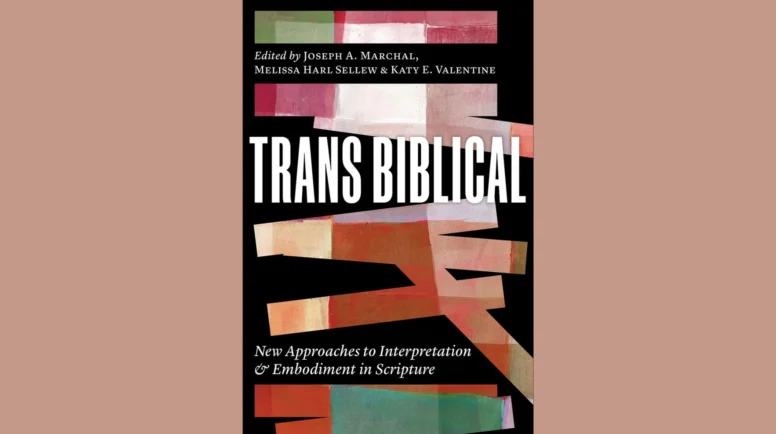
Trans Biblical: New Approaches to Interpretation and Embodiment in Scripture
Joseph Marchal, Melissa Sellew, Katy Valentine, Editors
Westminster John Knox Press, 280 Pages
Published April 8, 2025
What does it mean to take a “trans hermeneutical” approach to the Bible and ancient Near East literature? A collection of essays, Trans Biblical: New Approaches to Interpretation and Embodiment in Scripture, invites anyone to see themselves through the trans perspective, no matter their gender identity. When we read the Bible with a trans perspective, characters such as Jael from the Book of Judges, Jacob from Genesis, and Mordecai from the Book of Esther transcend their defined roles and connect readers with the broad definition of a trans experience.
In one essay, Joy Ladin writes, “[I] simplified my approach … to reading from a trans perspective, by which I mean reading with awareness of and attention to the slippage between biblical characters and the roles and categories, including those not related to gender, with which they are identified.” The editors dive deeply into Biblical and non-Biblical ancient texts, providing a curated selection of academic pieces offering a spectrum of perspectives.
As an out, trans, non-binary pastor, I appreciated this text immensely. My perspective transformed through the detailed and nuanced coverage of topics such as Jael’s non-traditional femininity and role as a mother to Israel. Rather than imposing modern Western language and expectations on ancient characters and communities, the authors reframe the biblical characters as people who have crossed boundaries of gender and cultural expectations, even in their own time. For example, Jael is presented as masculine in her agency and murder of Sisera, but maternal in her defense and care for Israel. By holding masculinity and femininity in congruence with each other, readers can come to their own conclusions about the social and political implications of non-traditional gender roles and their impact on modern culture.
Rather than place modern Western language and expectations on ancient characters and communities, the authors reframe the biblical characters as people who have crossed boundaries of gender and cultural expectations, even in their own time.
I look forward to sharing the perspectives I’ve gleaned from this book with clergy colleagues and expounding on them in sermons and Bible studies. This text presents itself as trans-centered — it’s written and edited by trans people and lifts long-silenced literary voices on a topic that impacts us all. By not centering the transgender experience, but instead presenting a broad trans perspective, Trans Biblical opens the door to all, inviting readers to understand better what it means to exist in a world in which trans folks defy cultural expectations.
Trans Biblical poignantly states, “When we look to the reality of gender diversity in the Bible, we can draw life-giving conclusions.” By centering trans voices, book editors Joseph Marchal, Melissa Sellew and Katy Valentine push back against the narrative that life is binary—gender diversity has always and will always exist in God’s vast creation. Particularly in this volatile political climate, I recommend that all pastors and academics include Trans Biblical in their libraries. However, it may be challenging for those without a strong academic background in Biblical literacy and history. It is the first academic text of this nature to bring tears to my eyes and allow me to feel seen — particularly in a vocation that often pushes trans people to the outskirts.
Presbyterian Outlook supports local bookstores. Join us! Click on the link below to purchase Trans Biblical: New Approaches to Interpretation and Embodiment in Scripture from BookShop, an online bookstore with a mission to financially support local, independent bookstores. As an affiliate, Outlook will also earn a commission from your purchase.
Sign up for Page Turners, our monthly email newsletter, to receive book-related content in your inbox once a month.