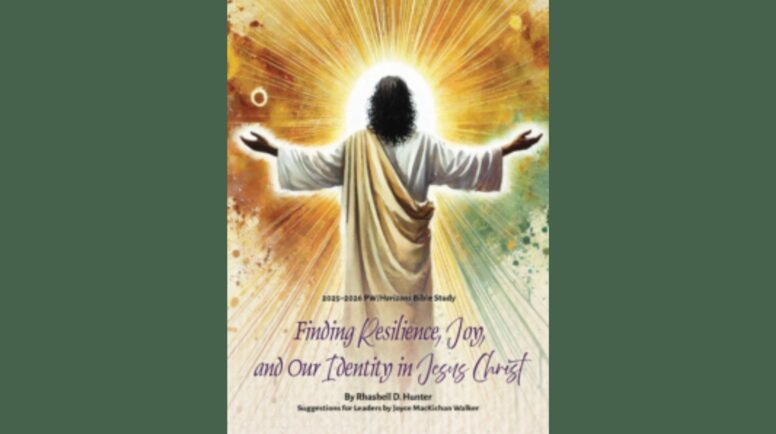
Finding resilience, joy and our identity in Jesus Christ
Rhashell D. Hunter’s Horizons Bible Study
Lesson 5: The Gift of the Woman Who Was Poor, Mark 12:38-44
The writer of the Gospel of Mark would not make it as a modern journalist. There is so much we are not told about the widow in Mark 12:41-44. We don’t know her name, who her husband was, whether she had children or if she inherited property from her husband. There is no interview where Jesus explains how he knew she had given all she had. No reporter is asking the widow, “Why did you give everything you had to live on to God? Surely, that is foolhardy.”
The little we know has given growth to sermons about the “widow’s mite.” Generally, the meaning of the text was said to be that if a widow can give out of her poverty, then we can give out of our comparable wealth. The widow is generous with the pittance that she has; she gave her all. Therefore, we can give a tithe — 10% of our income.
However much the widow may have been used as an example to emulate, I would wager we don’t identify with her. We have never been so poor that we have given everything to God. Growing up, I learned that God loves a cheerful giver. However, as a young adult, I lived paycheck to paycheck. God got what was left over after I paid bills. I was a worried, not a joyful, giver.
We don’t know why the widow gave. Maybe she was grateful that her adult son had brought her to live in his household, since she had no means to provide for herself. Perhaps she had won a court case and had pledged her life to God in return. Gratitude is a marvelous motive for giving. Keeping a gratitude journal, listing that for which we are thankful – materially, emotionally and spiritually – can buoy our spirits and give us fresh eyes through which we can see God’s abundance. The widow, as a generous giver, can be helpful to us if we meditate on God’s care and generosity in our own lives and in the life of the church.
There is also a broader meaning to this story. What precedes the story of the widow is this:
Jesus taught, “Beware of the scribes, who like to walk around in long robes and to be greeted with respect in the marketplaces and to have the best seats in the synagogues and places of honor at banquets! They devour widows’ houses and for the sake of appearance say long prayers. They will receive the greater condemnation” (Mark 12:38-40).
Jesus contrasts insincere religious leaders with the faith of the widow. Jesus links the poverty of the widow with abuse by the scribes. Widows were not allowed to manage their late husbands’ property, writes Dawn Ottoni Wilhelm in Preaching the Gospel of Mark, and needed a scribe to help with the legal work. Perhaps the scribes took more in fees than deserving or cheated widows out of their homes. Some kind of economic exploitation was happening. Financial exploitation of poor people is still with us.
Jesus notices the widow and names the abuse of those who have power. He sees the root cause of her poverty in a system that benefits the “haves” over the “have-nots.” Do we notice those with little status? Do we name how the wealthy abuse poor people in our financial systems?
David Lose believes this story tells us about God. In Jesus, we know God’s character, priorities, and who God notices. “God sees [the widow] … and God cares about her … . God also sees our struggles, recognizes our challenges, cares about where we are hard pressed to make ends meet,” Lose writes at “In the Meantime.”
The affirmation that Jesus loves us can bring us an abiding joy. We affirm that God loves us and everyone. God accepts us where we are and sees who we can become as individuals and as the church. Jesus draws our attention to generosity and justice and calls us to follow him.
You can purchase the PW/Horizons Bible study book through the PC(USA) Church Store.
Want to receive Horizons content in your inbox? Sign up for our worship resources newsletter here.