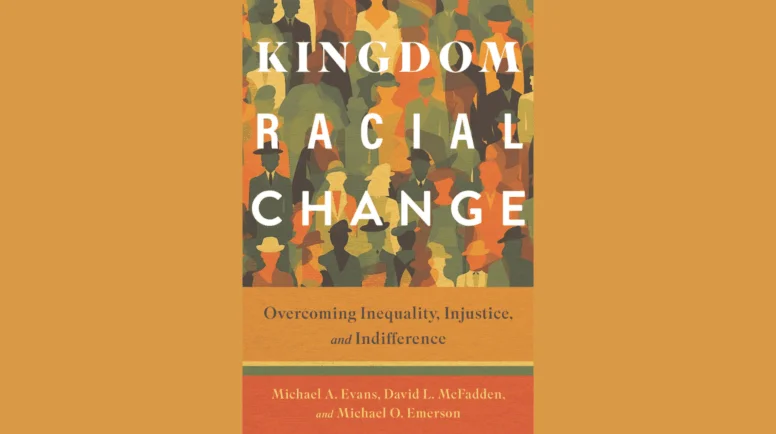
Kingdom Racial Change:Overcoming Inequality, Injustice, and Indifference
By Michael A. Evans, David L. McFadden and Michael O. Emerson
Eerdmans, 184 pages
Published June 10, 2025
When a pastor, an academic and a medical doctor come together, it isn’t the opening of a joke — it’s to envision a radically different future where all God’s people can flourish. In Kingdom Racial Change, each man shares individual snippets from childhood, educational experiences and careers, before jointly drawing conclusions and offering guidance to help readers realign society with God’s desires.
“Kingdom Racial Change is the sum total of the processes that must occur for us to get back into biblical, godly alignment across racial groups,” they write, acknowledging that this is not for the faint of heart. Yet they come to the work from deep personal relationships and convictions. Michael Evans, a pastor, grew up between Detroit and Chicago’s southside, where he met his friend and co-author David McFadden, now a doctor practicing in Illinois. Together, they founded the Unity Men’s Group of Chicago, where they create opportunities for men from different racial and cultural backgrounds to become friends and eradicate “divisiveness and racism.”
The third author, Michael Emerson, brings his research interests as the Baker Institute’s Chavanne Fellow in Religion and Public Policy to bear on his personal narrative. While McFadden and Evans, both Black men, vulnerably offer stories of unfair treatment and systemic barriers to entry, Emerson, a White man, shares the story of his family’s flight from Detroit into nearby suburbs and eventually to rural Minnesota. Following their stories, the authors invite the possibility of changes at personal and collective levels, ranging from the individual (spiritual lives, close friendships and family ties) to the collective (repentance, reparations and repair), covering the importance of joining and creating social networks, organizations and social movements.
The authors’ first-person narratives are a highlight, yet their reflections are, at times, heavy-handed. They write as if uncertain they are making their point clearly enough; the result of this anxiety is that readers already familiar with systemic racism will not find many new nuggets in Kingdom Racial Change. In my experience with predominately White, mainline churches, discussion of structural racism has been in the forefront over the last decade. While the authors do not offer remarkably new insights, they do share compelling narratives that may change the stony-hearted—those who have yet to recognize God’s hope of unity in the church.
Admittedly, the authors come from a more conservative theological tradition than my own, yet I would have been heartened by more theologically rich language about how Whiteness has been embedded in American Christianity. There are nods to the “Religion of Whiteness,” but the shout outs to these diseased theologies do not mine the depths of the problems within churches or political systems. The authors’ lack of engagement with the rich work of Willie James Jennings, Kelly Brown Douglas, Chicagoland’s own Brian Bantum is surprising. Despite these shortcomings, Kingdom Racial Change would be a strong starting point for church staff or small groups who have yet to encounter the entanglements of religion, race and policy.
Presbyterian Outlook supports local bookstores. Join us! Click on the link below to purchase Kingdom Racial Change from BookShop, an online bookstore with a mission to financially support local, independent bookstores. As an affiliate, Outlook will also earn a commission from your purchase.
Sign up for Page Turners, our monthly email newsletter, to receive book-related content in your inbox once a month.