This past month, I received a message from a friend asking what it would take to host a vigil in town. As a clergy leader, I knew the answer instinctively: we would gather. I responded quickly and we moved into planning — connecting with other leaders and turning a desire to gather into the reality of creating sacred space.
The vigil was not simply a moment to name how the world feels on fire, or to voice the anxiety and fear we carry. It was time set aside to come together as a community — to find practical ways to connect with our neighbors, to remember our shared humanity and interconnectedness. It was an act of witness: empathy and compassion made visible. A chance to see one another as God’s beloved children, beyond the labels and systems society imposes.
We gathered on a cold winter night, patches of snow still clinging to the park grounds. As we set up, people arrived ready to help. One person brought extra candles. Another group prepared hot chocolate and tea. Someone tested the sound system. A few stood at the park entrances, welcoming people in. It was a quiet, beautiful unfolding — neighbors, both familiar and unknown, shaping a space of hospitality together.
As we began gathering near the stage, I noticed two men sitting at the top of the park, above the crowd, watching in silence. They did not engage with those passing by or with one another. At first, I assumed they were simply staying on the periphery. But as another leader pointed them out, I wondered if they were there to observe what we might say or do.
They never joined the gathering. Though they didn’t appear menacing, their presence carried an uneasiness — a reminder that there is still work to do. I suspect they came out of curiosity, perhaps even fear. As we prayed, they eventually stood up and left. I don’t know what they expected or what they feared, but I do know this: I regret not extending an invitation to them. I don’t know whether they would have accepted it, but I wish I had tried.
On that cold winter evening, … we entered the holy work of humanizing our neighbors.
That night held beauty they missed. We prayed, observed silence, listened to a community leader speak about gathering in anxious times, and practiced active listening. Participants were invited to share emotions they were carrying and stories that named those feelings. In small groups, we listened deeply. Again and again, people were reminded they were not alone.
Looking around, I saw clusters of people huddled together — smiling, nodding, laughing softly, hugging. It felt as though walls were coming down, brick by brick, and neighbors were beginning to see one another more clearly.
Moments like this are vital. They help communities survive – even thrive – when the world feels determined to fracture us. Vigils call us back to one another, resisting the labels that divide us into “us” and “them.” The moment we embrace those divisions, we deny our shared humanity.
Throughout history, labeling has been used to control and divide. Our calling is to resist that pull, to remember who we are and whose we are. We look to Christ, who broke barriers and defied social norms, revealing the kingdom of God we are called to embody.
At this moment in our world, the church cannot remain silent or insular. That is not where Christ is found.
At this moment in our world, the church cannot remain silent or insular. That is not where Christ is found. When we move beyond fear into faithful action, we remember that our neighbors are God’s beloved — and that we are bound together by a shared humanity.
As I reflect on that night, my one lingering regret remains those two men at the edge of the gathering. They, too, were invited into this work of remembering our common humanity.
I don’t know what comes next for our community, but I hope we gather again. I hope we build on the groundwork laid that night and return to that sacred space where people are seen, heard, and held.
In a polarized world, empathy is not optional. It is central to who we are as followers of Christ — to love God and love our neighbors.
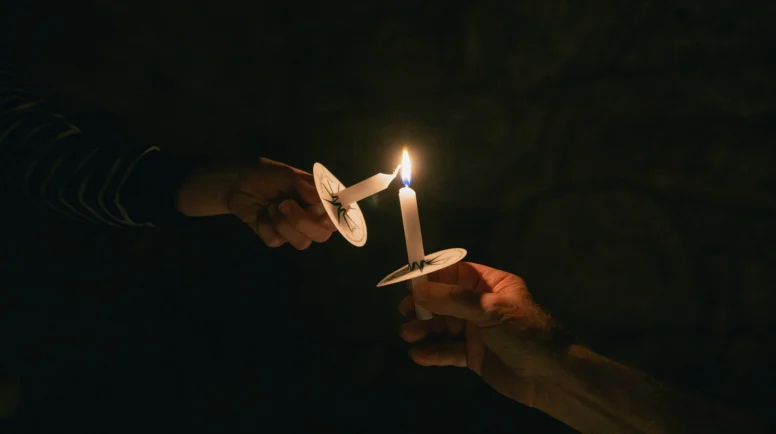
On that cold winter evening, with hot chocolate in one hand and a candle in the other, we entered the holy work of humanizing our neighbors. It was a gift, and it is only the beginning.
The church cannot host one event and call it done. We must keep showing up, keep creating space, keep extending the invitation. In a polarized world, empathy is not optional. It is central to who we are as followers of Christ — to love God and love our neighbors.
When we love our neighbors, we love God. And in doing so, we offer our hurting world something both healing and freeing, a beautiful, divine gift.