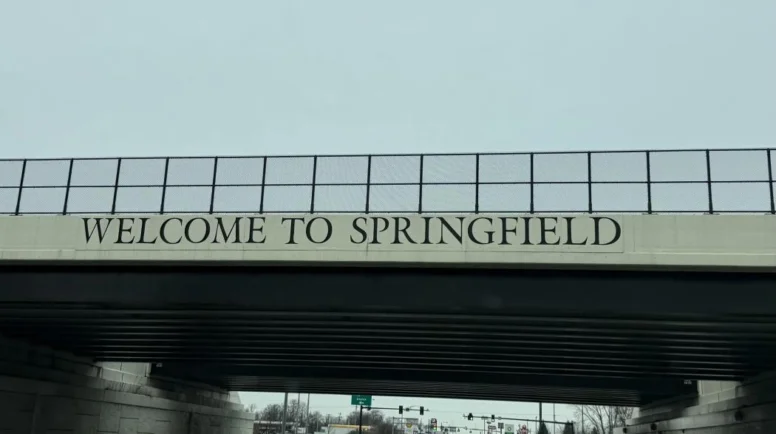
Springfield, Ohio — Nearly a month after a federal judge’s ruling stopped the termination of deportation protection for Haitian immigrants, many in Springfield, Ohio, still are holding their breath.
Temporary Protective Status (TPS) offers immigrants legal standing, worker permits and protection from deportation. It first was offered to Haitian immigrants living in the U.S. after the 2010 catastrophic earthquake that destroyed much of the capital city, Port-au-Prince, and other cities.
Though Temporary Protective Status still applies, federal authorities have appealed the decision, and TPS could be cut in a moment’s notice. Bomb threats disrupted government offices, places of worship and advocacy centers a week after U.S. District Judge Ana Reyes’ decision. The city remains on tenterhooks.
On Tuesday evening, the local NAACP hosted two members of the group’s Legal Defense Fund. Emahunn Rahem Ali Campbell, assistant counsel, and Victor Dempsey, a community organizer, listened as community members expressed their fears.
Some people quoted in this story will not be named out of fear of reprisals.
Campbell said Department of Homeland Security officials have made it clear that as soon as TPS ends, Immigration and Customs Enforcement officers will immediately begin detention arrests.
“What needs to happen to protect our community members?” Dempsey asked. “When our kids are grandparents, will they tell the same stories we tell?”
Vehicles that resemble those used by U.S. Immigration and Customs Enforcement are parked at local hotels. Suspicious visitors show up at homes. Neighbors watch out for neighbors. And it’s not only the Haitian immigrants who are afraid to leave their house.
A woman said her neighbor’s son won’t walk to play basketball after school. Another said she knows people who won’t attend community choir. Others won’t go to work.
Community groups take food and other necessities to the homes of those afraid to go out. An NAACP member said he often works from home for fear of detention.
The immigrants’ fear isn’t simply detention or leaving a community in which they have settled. Their home country has been labeled as “Do Not Travel” by the U.S. State Department for six years. Gangs control 90% of the capital city, Port-au-Prince. A new government in place after several years still is not stable.
With their protection from deportation evaporating, thousands of Haitian families will face detention and expulsion to a home country ripped apart by violence and government collapse.
The Rev. Viles Dorsainvil said while strategy and organization is essential for the short term, the community needs to advocate for larger changes.
“Until we have a strong immigration policy, this will continue to happen,” he said. “The immigration conversation in the U.S. is a vicious cycle. It never resolves.”
Dorsainvil is executive director of the Haitian Community Help and Support Center.
The Rev. Adam Banks of First Baptist Church, Springfield, also spoke of changes needed for the future of the city. He is a part of the Amos Project, a social network securing help for the vulnerable in Ohio.
“We are together in this season,” he said, “standing in solidarity with our Haitian neighbors, providing services. We are building safety and democracy, securing long-term investment in the Southside, loving our neighbor and our neighborhood.”
Dorsainvil said support from the community provides untold help for the immigrant community.
“People outside of Springfield should know that Haitians families in Springfield still live with so much uncertainty,” Dorsainvil said. “Commuting is a serious issue since they can’t renew their driver license. Secondly, they are in need to pay for legal service, rent, utilities, et cetera.”
Many groups and organizations in Springfield “are mobilizing resources to support those families,” Dorsainvil said.
Embracing their Haitian neighbors hasn’t been linear, said the Rev. Jody Noble of Covenant Presbyterian Church.
“Like all cities, the people of Springfield have very different views about welcoming immigrants,” she said. “The city and her leaders have found ways to hold everyone together in these truly trying times.”
The faith community has been at the forefront of caring for neighbors.
“I believe in the power of prayer,” Noble said. “I invite our brothers and sisters in Christ to please pray for God to give our city and her leaders the wisdom and strength to all continue to hold together in the days to come.”
By Cindy Corell, Global Ecumenical Liaison